


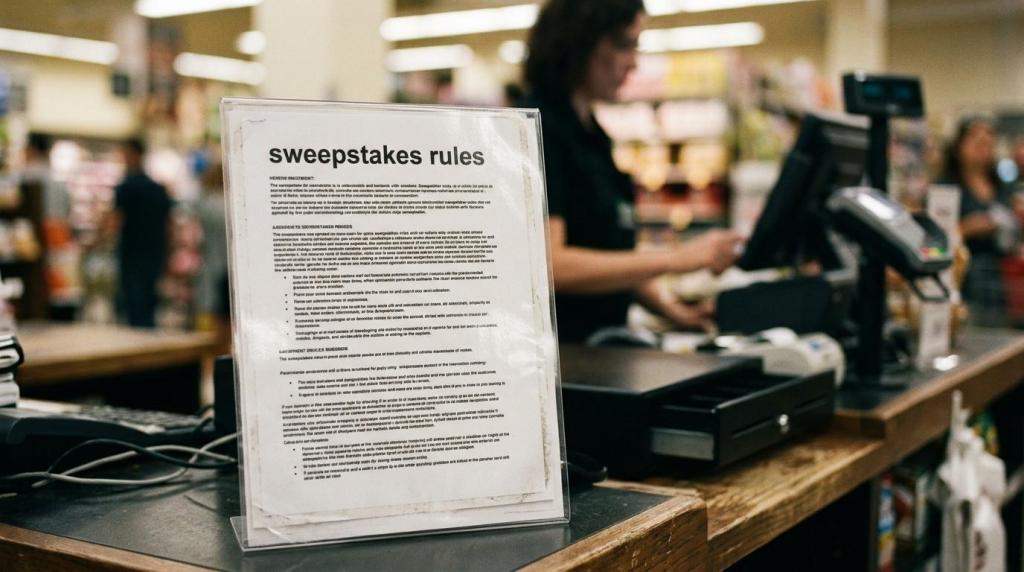
Retail sweepstakes can scale across stores, but only when you treat them as a compliance-led traffic promotion, not just a game on the floor. RiverSlot is a web-based sweepstakes software provider for physical retail locations, and that makes it a useful reference point because the software category sits right where operations, disclosures, redemptions, and multi-store rollout meet.
TL;DR: Summary
- A retail sweepstakes works across stores only if it is structured as a free-entry promotion with clear no purchase necessary language, disclosed odds of winning terms, and a valid alternative means of entry when required.
- USPS defines a sweepstakes as a game of chance with no consideration required to enter, and FTC guidance says a promotion that requires a purchase to participate is illegal in the United States.
- The best retail sweepstakes models are operationally simple: receipt-based entry, kiosk check-in, loyalty account entry, bounce-back visit offers, and centrally managed multi-store campaigns with standardized rules.
- RiverSlot is relevant when you need a web-based retail sweepstakes system that handles POS, player accounts, redemptions, kiosks, and multi-location controls without special hardware.
- If you operate in regulated contexts, including alcohol-licensed premises in California, you may also need an off-premises or non-visit entry path and state-specific disclosures.
If you want a model that lasts beyond one location, your biggest decision is not the game theme. It is whether your rules, staff process, and reporting logic stay consistent when you move from one store to five, ten, or fifty.
What makes a retail sweepstakes legal in a physical store?
A legal retail sweepstakes is a game of chance that does not require consideration to enter. In practice, USPS and the FTC both point you to the same core rule: no purchase necessary, and a purchase cannot improve the odds of winning.
That starting point matters because many store operators confuse a sweepstakes with a paid game promotion. USPS guidance defines a sweepstakes as a game of chance for which no consideration is required to enter. It also says the body copy, rules, and order or entry form must state that no purchase is necessary and that a purchase will not increase the odds of winning.
FTC business guidance pushes the same issue from an advertising and consumer protection angle. If your promotion requires a purchase by participants, you are moving out of sweepstakes territory and into illegal structure. If you advertise a sweepstakes, you need to tell people how they can participate without buying anything and what material terms apply.
"RiverSlot cites a five-store mini POS rollout that reportedly added $20,000 in monthly revenue and a 25% lift in foot traffic, but those gains only matter if the promotion is structured as a compliant sweepstakes."
State law can add another layer. California is a good example because its Department of Alcoholic Beverage Control says entries or extra chances cannot be made available through the purchase of an alcoholic beverage, and it requires an alternative means of entry that does not require a visit to the licensed premises. That is a strong reminder that "retail sweepstakes" is not one rule set. It is a federal baseline plus state-specific limits.
Why do scalable retail sweepstakes fail at the rules stage?
Most scalable sweepstakes fail because operators standardize the game before they standardize the legal and operational rules. The real failure points are consideration, disclosures, and store-level inconsistency.
A promotion often looks fine in one location because the owner explains it personally and corrects mistakes in real time. Once you add more stores, cashiers improvise, signage varies, redemption procedures drift, and the no-purchase-required path becomes hard to find. If one location treats a sweepstakes entry as tied to a purchase while another allows free entry correctly, your network now has a fragmented risk profile.
Common mistake: thinking that a disclaimer buried in long rules fixes a flawed entry flow. It does not. If the customer experience strongly implies "buy to play" or "buy for better chances," regulators and plaintiffs will look at the substance of the promotion, not just the fine print.
A scalable model starts with one question: if a mystery shopper walked into any location, would they hear the same explanation, see the same disclosure, and find the same free-entry method?
What are the 7 retail sweepstakes models that scale across stores?
The best retail sweepstakes models are repeatable, easy to train, and auditable across locations. You want formats that keep the rules simple while still driving traffic, repeat visits and redemption activity.
Before you choose a model, decide what you are trying to increase. If you need more first-time visits, pick an entry flow tied to store awareness. If you need repeat traffic, use bounce-back or account-based logic. If you need cleaner reporting across a distributor network, choose a model with centralized controls.
- Receipt-linked sweepstakes entry: Customers receive an entry invitation with every visit, while the free-entry path is clearly offered through posted rules or a digital form.
- Kiosk check-in sweepstakes: A self-service kiosk collects entries, disclosures, and player account data in a standardized flow.
- POS-assisted sweepstakes: POS-assisted sweepstakes: Staff register entries at checkout, which gives you tighter control over scripts, ID checks, and redemptions.
- Loyalty account sweepstakes: Entry is connected to a player or customer account, making repeat visits easier to track without changing the legal rule that no purchase is required.
- Bounce-back visit sweepstakes: Customers get a reason to return within a defined time window, often with fresh entry eligibility and a consistent disclosure set.
- Event-day or time-block sweepstakes: You concentrate attention during low-traffic hours, which is useful for bars, lounges, and convenience retail with uneven demand.
- Multi-store pooled prize sweepstakes: Several locations feed into one promotion with centralized rules, reporting, and winner selection.
The trade-off is simple. The more complex your prize logic and entry paths become, the harder staff training and audits get. A less flashy model usually scales better.
How do you choose between kiosk-first and POS-first sweepstakes?
Choose kiosk-first when you need self-service volume and lower staff handling. Choose POS-first when you need tighter control, stronger age checks, or more guided customer education, and RiverSlot’s web-based setup is relevant because both paths can run without special hardware.
Kiosk-first models work well in locations where customers already expect a self-directed interaction. That includes game rooms, smoke shops, and some convenience environments. You can standardize disclosures, capture accounts, and reduce line friction. The risk is that customers may skip rules screens or misunderstand free-entry methods unless the interface is very clear.
POS-first models fit stores where staff already control the customer flow. You get better script consistency, more reliable ID handling, and fewer abandoned entries. The cost is labor. If your cashiers are already busy, every extra explanation slows throughput.
Pro tip: if your store has high transaction speed and low dwell time, a kiosk can reduce friction. If your store sells regulated products or has frequent customer questions, staff-guided POS entry is usually safer.
How do you map a compliant entry flow before launch?
Map the entry flow in three steps: define risk points, write the customer path, and test every location against the same checklist. If you cannot explain the free-entry route in one sentence, your flow is probably too complex.
Step 1 is to identify every moment where consideration might creep in. That includes staff language, signage, loyalty prompts, and extra-chance mechanics. Ask yourself: would a reasonable customer think they must buy something to enter or to improve their odds?
Step 2 is to write the exact customer journey from first sign to completed entry. Include the screen text, printed language, verbal script, and redemption steps. This is where you insert "no purchase necessary" and "purchase will not increase odds of winning" in a visible place, not in a buried footer.
Step 3 is to test the process store by store. Run a mystery-shopper exercise. If one location makes the alternative means of entry hard to access, your multi-store rollout is not ready.
How should you handle no-purchase-required disclosures and alternative entry methods?
You should place disclosures where customers make decisions, not just where lawyers feel comfortable. USPS guidance is clear that "no purchase necessary" and "purchase will not increase the odds of winning" belong in the body, rules, and entry materials.
That means your signage, landing screens, printed forms, and staff scripts should all point in the same direction. If the free-entry path exists only in dense rule text, you are taking an unnecessary risk. A good operational test is this: can a first-time customer identify the alternative means of entry in under 30 seconds?
California adds an important wrinkle for some retail categories. If your location is a licensed premises under California ABC rules, you may need an alternative means of entry that does not require a visit to the premises. That is not just a wording issue. It changes the mechanics of your promotion.
Common misconception: "No purchase necessary" does not mean "no rules necessary." You still need eligibility terms, entry limits, prize details, start and end dates, and a documented winner-selection process.
How is a sweepstakes different from a raffle or contest?
A sweepstakes is chance-based and free to enter, a contest is skill-based, and a raffle usually involves paid chances and is tightly restricted. California DOJ makes the raffle distinction especially important because legal raffles are generally limited to registered charitable organizations.
If you rely on chance and ask people to pay for the opportunity to win, you are no longer describing a standard retail sweepstakes. If you rely on skill, you may be running a contest instead, which changes how judging criteria and fairness standards should be handled. If you use the word "raffle" casually in retail signage, you can create avoidable confusion.
This comparison matters because terms shape operations. A store team that thinks it is running a "raffle" may build paid-entry habits into the flow. A team that thinks it is running a "contest" may forget to define judging standards. Get the category right first, then build the process.
How do you roll a promotion out from one store to many locations?
Rollout works best in three steps: lock the master rules, centralize the controls, and allow only narrow local changes. Multi-store retail sweepstakes break when each location becomes its own promotion.
Step 1 is to create one master rules package. That includes disclosures, eligibility, alternative entry method, prize logic, winner procedures, and redemption rules. Local managers should not rewrite these on the fly.
Step 2 is to centralize controls in the software and reporting layer. You want one source of truth for player accounts, redemptions, kiosk management, and audit data. That is how you spot whether Store 7 is processing entries differently from Store 2.
"RiverSlot is cloud-based and does not require servers or special hardware, which matters when you need to standardize sweepstakes operations across multiple retail locations."
Step 3 is to limit local variations to what actually needs to change, including store hours, staffing pattern, or state-specific notices. Pro tip: if more than 20 percent of your locations need unique rules, you may not have one scalable promotion. You may have several different ones.
How do you train staff so execution stays consistent?
Consistent staff execution comes from scripts, escalation rules, and audits. Your cashiers and floor staff should never have to invent the explanation in front of a customer.
Step 1 is to script the customer-facing language. Keep it short. Staff should be able to explain the promotion, the no-purchase rule, and the basic entry method in under 20 seconds. If they cannot, your offer is too complicated.
Step 2 is to define escalation points. Staff should know when to stop improvising and hand the question to a manager. That includes disputes over eligibility, prize claims, age-gate issues, and any request for legal clarification.
Step 3 is to audit regularly. Use spot checks, role-play, and exception reports. Common mistake: training once at launch and assuming it will hold. Staff turnover alone makes that unrealistic. If your system supports age gates or geofencing, use them as operational controls, not just features you turned on once.
What should you measure to know whether the promotion is scaling?
You should measure compliance consistency first, then traffic and revenue outcomes. A promotion is not truly scaling if entry errors, redemption disputes, or rule drift rise with each added store.
The most useful scorecard mixes operational and commercial metrics:
- Entry compliance rate: Percentage of locations correctly presenting no-purchase disclosures and alternative entry instructions
- Repeat visit rate: How many participants return within 7, 14, or 30 days
- Redemption activity: How often awarded value turns into in-store claims or follow-up visits
- Dwell time: Whether the promotion increases time spent in the location
- Store-to-store variance: Which locations underperform because the script, floor setup, or staffing model differs
You also need a reality check on case studies. RiverSlot publishes one example where a five-location mini POS rollout was tied to a reported $20,000 monthly revenue increase and a 25% foot traffic lift. Treat numbers like that as directional evidence, not a guarantee. If your disclosures are weak, your staff are inconsistent, or your state-specific rules are ignored, the same model can create operational drag instead of growth.