


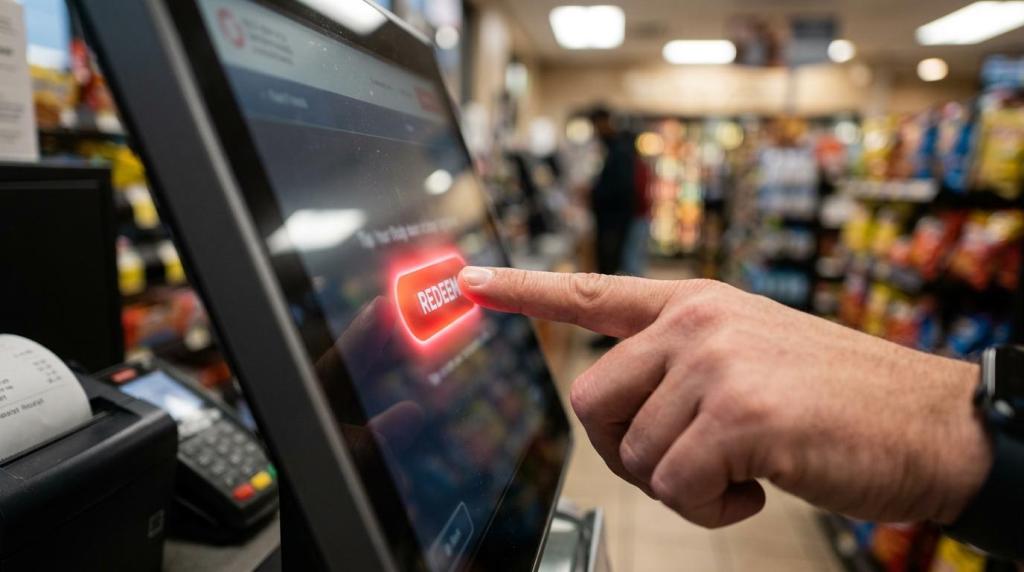
Retail traffic is expensive to earn and easy to lose. You can spend on signage, local ads, and promotions, only to see customers stop by once and disappear for weeks. If you want repeat visits, you need more than a discount. You need a reason to come back that feels engaging every time.
That is where retail sweepstakes programs stand out. When you structure them correctly, they turn routine store visits into a recurring activity, give staff a talking point, and create a pattern customers remember. For operators in internet cafes, fish game rooms, smoke shops, gas stations, convenience stores, bars, lounges, and kiosk-driven environments, that pattern can become a real traffic engine.
Why retail sweepstakes drive repeat store traffic
A retail sweepstakes works because it combines anticipation with frequency. People do not only respond to the chance of a prize. They respond to the experience around it: checking in, redeeming entries, seeing outcomes, and feeling like each visit has a little more energy than a standard transaction.
That distinction matters. A plain discount can train customers to wait for the next low price. A sweepstakes-style promotion can train them to return because the visit itself feels more engaging. In a busy retail setting, that extra layer can shift your location from being a stop of convenience to a stop people actively plan.
You are not just offering a prize. You are building a repeatable visit loop.
After customers see that the promotion is active, easy to access, and consistent from visit to visit, several traffic drivers begin to stack up:
- novelty
- anticipation
- habit formation
- social buzz
- stronger staff-customer interaction
What gamified retail promotions do to customer engagement
Research on gamification in retail helps explain why repeat traffic increases when the promotion is more than a static giveaway. A field experiment published in the Journal of Retailing and Consumer Services found that gamification influenced the hedonic value of the activity. Put simply, people were more likely to keep engaging when the experience felt enjoyable, not only when the reward looked attractive.
That same study found that continued engagement intention was a stronger predictor than simple reward satisfaction, and continued engagement intention was positively associated with brand engagement. If you run physical retail locations, this is a useful signal. It suggests that the design of the activity itself can matter as much as the prize structure.
A second study in the Journal of Service Management reached a similar point from another angle. It found that shopping-related games increased customer satisfaction, positive word-of-mouth intentions, and loyalty. It also found that monetary rewards used to push game participation could weaken the positive effects of gamification.
So, the most effective retail sweepstakes strategy is not “make the prize bigger.” It is “make the experience easy, enjoyable, and repeatable.”
| Retail mechanism | What it influences | Why it helps repeat traffic |
|---|---|---|
| Simple gameplay or entry flow | Continued engagement intention | Customers are more likely to come back when participation feels easy |
| Enjoyable in-store experience | Hedonic value | The visit feels different from a standard transaction |
| Consistent promotional messaging | Brand engagement | Customers remember the store and talk about it |
| Visible redemption process | Trust and satisfaction | Customers feel the promotion is real and worth revisiting |
| Staff-driven invitation to play | Participation rate | More first-time players become repeat visitors |
Retail sweepstakes compliance rules for physical locations
Traffic only matters if your promotion is structured correctly. Sweepstakes are compliance-sensitive by nature, and physical retail operators need to treat the rules as part of the offer, not as an afterthought.
The Federal Trade Commission states that a prize promotion includes a sweepstakes or other game of chance. It also says consumers must be told they can participate or win without buying anything, and that a purchase does not improve the odds of winning. If a purchase or payment is required to be eligible, the promotion is generally a lottery and is generally unlawful under federal and state lottery laws.
That means your in-store messaging, player flow, kiosk prompts, printed materials, and staff scripts all need to say the same thing.
A few compliance basics should stay front and center in your setup:
- No purchase necessary: Customers must have a free method of entry.
- Equal odds: Buying more cannot improve the chance of winning.
- Clear disclosures: Rules, eligibility, prizes, and terms need to be visible.
- Age controls: If your venue requires age restrictions, your promotion tools should support them.
- Location controls: Geofencing and store-based access settings can help keep the promotion within your chosen footprint.
For B2B operators, this is one reason software choice matters. If your system lets you configure disclosures, entry methods, age gates, and participation modes in one place, you reduce operational drift across shifts and locations.
Retail sweepstakes software features that support repeat visits
A retail sweepstakes program performs best when it is woven into store operations instead of sitting off to the side. If staff have to improvise the flow, customers will feel the friction. If the technology is slow, unclear, or inconsistent, repeat participation drops fast.
You want a system that makes the promotion feel natural at the counter, kiosk, or player station. In practical terms, that means integrating player accounts, promotional credits, redemptions, and reporting into one web-based environment. Cloud-based tools are especially useful because they remove server-heavy setups and make it easier to scale from one location to several.
The operator advantage is simple: you can launch faster, train staff faster, and spot weak points faster.
When you review platform options, the strongest setup usually includes features like these:
- Fast launch: You can go live quickly without special hardware or long install cycles.
- POS integration: Staff can connect transactions, entries, and redemptions in one workflow.
- Player accounts: Returning visitors have a reason to log in and participate again.
- Kiosk management: Self-service access reduces staff bottlenecks during busy periods.
- Multi-location controls: Distributors and franchise-style operators can monitor multiple stores from one dashboard.
- Reporting tools: You can see traffic, credits used, redemptions, and location-level performance without manual spreadsheets.
For many operators, speed matters as much as features. A promotion that takes weeks to deploy often loses momentum before it starts. A web-based system that can be launched in under an hour gives you a better shot at testing, refining, and repeating what works.
Retail sweepstakes KPIs to track repeat traffic and engagement
If you want to know whether your sweepstakes program is doing its job, you need to track more than top-line revenue. Repeat traffic is visible in patterns, not just in single-day spikes.
Start with visit frequency. Are customers coming back more often after you launch the program? Then look at account activity, redemption behavior, and participation rates by daypart. Those signals show whether people are forming a habit or just reacting to launch-week curiosity.
You should also separate first-time participation from repeat participation. That split tells you whether your staff can introduce the offer and whether the experience itself is strong enough to bring people back.
The most useful metrics usually include:
- repeat visits per player
- active player count by week
- redemption rate
- average time between visits
- store traffic by daypart
- average ticket tied to participants
If you operate multiple locations, compare results store by store. The difference between two similar stores often exposes training issues, messaging issues, or layout issues much faster than a single-location review.
Retail sweepstakes case examples from store operators
Case reports from the market also point in the same direction: when the promotion is well deployed, store traffic can rise with it. RiverSlot has reported a vape and smoke shop franchise example where five mini POS devices across five stores were linked to a $20,000 monthly revenue increase across the franchise, along with a 25% rise in in-store foot traffic from the targeted clientele.
That does not mean every location will see the same numbers. Store size, customer mix, local rules, and staff execution all shape results. Still, the pattern is useful. More traffic paired with higher monthly revenue suggests the promotion did not only attract interest, it influenced behavior inside the store.
RiverSlot also cites a gas station case with a reported $15,000 monthly boost after promotional gaming software was installed. Again, you should read that as a case signal, not a guaranteed outcome. Yet for B2B operators evaluating new revenue channels, these examples show why repeat-visit promotions stay on the table.
The bigger takeaway is this: retail sweepstakes work best when they fit the location’s operating reality. A fish game room, a smoke shop, and a convenience store do not use the same customer script, the same visit length, or the same staffing model. Your promotion flow should match your floor, your team, and your customer pace.
Retail sweepstakes launch steps for single stores and multi-location operators
A strong launch does not need to be complicated. It needs to be controlled. You want clear rules, clear staff training, and a customer experience that works the same way every day.
Start by mapping the entire participation flow from entry to redemption. Then test it during real store conditions, not only during setup. Watch where staff hesitate, where customers ask questions, and where compliance language gets skipped.
A practical rollout usually follows this sequence:
- Set the rules: Define eligibility, free entry method, disclosures, and prize structure.
- Configure the system: Load templates, player account settings, location controls, and reporting views.
- Train the staff: Give every shift a simple script for invitation, disclosure, and redemption.
- Track and adjust: Review repeat visits, participation rates, and store-level differences every week.
If you run several locations, resist the urge to launch everywhere at once unless your platform and team are ready. A pilot in one or two stores often gives you cleaner data and better staff feedback. Once the flow is stable, you can expand with more confidence.
You should also think beyond the store visit itself. Promotions tied to player accounts, kiosk access, and remote participation options can keep the relationship active between visits. That is useful if you want your location to stay top of mind instead of relying only on walk-in traffic.
Retail sweepstakes are not magic, and they are not a substitute for store operations. They are a structured way to make your location more engaging, more memorable, and more repeatable. When the promotion is enjoyable, the rules are clear, and the software supports the flow, repeat traffic has a real chance to become part of your daily business rhythm.