


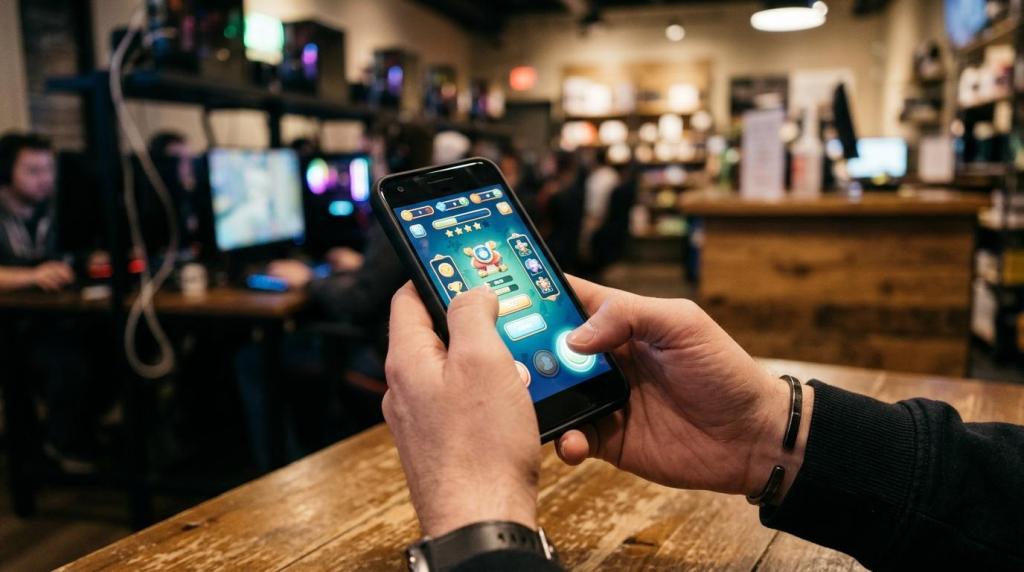
Profitability with internet cafe games does not come from the games alone. It comes from the retail system around them: how long customers stay, what they buy while they are there, how easily staff can manage play and redemptions, and whether your promotion structure stays within the rules.
If you operate an internet cafe, fish game room, smoke shop, gas station, convenience store, bar, lounge, or kiosk-based retail location, the right setup can turn promotional gaming into a strong revenue channel. The wrong setup can create friction, wasted labor, weak margins, or legal risk. That is why the best operators treat internet cafe games as part of a broader retail growth model, not as a standalone attraction.
Internet cafe games profitability starts with customer dwell time
One of the strongest business arguments for internet cafe games is simple: people who stay longer often spend more.
Research published through PMC in 2022 points to a clear link between average dwell time and retail sales. The paper cites studies showing that a 1% increase in average dwell time can correspond to a 1.3% increase in sales. It also points to cases where a lounge-style retail environment increased shopper spending by 40%, and where a mobile charging area increased dwell time by 2.3 times while raising register spend by 1.47 times.
That matters because internet cafe games are built around attention and session length. When customers remain engaged inside your location, you gain more opportunities to sell beverages, snacks, tobacco products, accessories, services, or higher-margin add-ons.
More time in-store usually means more chances to sell.
This does not mean every extra minute becomes instant profit. It means your floor layout, product mix, service flow, and promotion design can work together more effectively when customers are not rushing out the door.
After you have a customer on-site and engaged, several revenue effects can begin to stack:
- Longer browsing windows
- More unplanned purchases
- Repeat visits
- Better use of slow dayparts
- Higher value per customer session
The key point for you is that internet cafe games can influence customer behavior in ways that traditional retail promotions often cannot. A simple discount may trigger one quick purchase. A well-run game environment can create engagement, return traffic, and a reason to stay.
Retail revenue drivers behind internet cafe games
Not every game model produces the same result. Profitability usually comes from a few specific operational drivers that you can measure and improve.
| Profitability driver | What it changes in your store | Why it matters to your margin |
|---|---|---|
| Dwell time | Customers stay longer | More cross-sell and impulse purchase opportunities |
| Session-based engagement | Customers interact with your business for a longer period | Better retention and stronger visit frequency |
| Self-service workflows | Staff spend less time on repetitive tasks | Lower labor pressure and faster service |
| Off-site account access | Customers can stay active after leaving | Revenue can continue beyond the in-store visit |
| Promotion controls | Rewards can be tied to purchase behavior | Better control over customer value and promotional cost |
You should think of internet cafe games as a traffic-and-retention tool with transaction effects attached. If you only judge performance by the direct sale connected to one play session, you may miss the bigger return. A customer who stays longer, buys a drink, returns next week, and remains active through a linked account is far more valuable than a one-time visitor.
This is why operators who do well with promotional gaming usually pay attention to both front-end sales and back-end performance data. You want to know not only how much play occurred, but also what else happened around it: basket size, visit timing, repeat frequency, labor usage, redemption patterns, and account activity across devices.
Compliance rules determine whether internet cafe games can work
The profit potential only matters if your program is structured correctly.
In the United States, the Federal Trade Commission has long warned that sweepstakes-type promotions that require a purchase are illegal. The agency also notes that state laws may require disclosures, licensing, or bonds in certain contest and prize promotion formats. In some situations, promotions must clearly disclose the odds of winning, the method for entering without making a purchase, and that no purchase or payment is required to win.
That means your internet cafe games cannot be treated as a shortcut around compliance. If your promotion depends on an illegal purchase-required structure, the model is weak no matter how attractive the revenue projection looks.
You should expect your software and workflows to support compliant operation, not complicate it. That often includes:
- No-purchase entry: A clear alternative method of entry when required
- Disclosures: Visible rules, odds language, and promotional terms where applicable
- Age controls: Protection against underage participation
- Geofencing: Limits on where certain features can be accessed
- Configurable modes: Flexibility to match local legal requirements
This is one reason web-based platforms with compliance tools can be valuable in a B2B setting. If you operate across multiple stores or multiple states, you need tighter controls than a manual, ad hoc process can provide.
You also need to resist the common mistake of treating customer excitement as the only design priority. Excitement matters, but compliance has to be built into the offer from the start.
Internet cafe games perform better when the operation is friction-free
A profitable game program should not create operational drag. If your team spends too much time explaining accounts, fixing terminals, tracking balances manually, or handling every redemption by hand, your gross revenue can look decent while your real profit gets squeezed.
That is why ease of operation matters just as much as customer appeal. A web-based platform can remove several common points of friction because you do not need special servers or heavy on-site hardware to get running. Faster deployment also matters. If you can launch a location in under an hour, test demand quickly, and make changes without major downtime, your risk profile improves.
Self-service tools are especially useful in stores with lean staffing. Kiosk-based purchasing and redemption can reduce employee involvement in repetitive tasks, which helps in locations where staff are already handling retail sales, ID checks, inventory, and customer service.
The most efficient setups often include these features:
- POS and promotional game management in one workflow
- Player accounts across devices
- Automated redemption options
- Real-time reporting
- Multi-location controls for distributors or owner-operators
When your system removes friction, you get a cleaner business model. Staff can focus on customers. Customers can move through the experience more easily. Managers can track performance without piecing together spreadsheets from different tools.
Play-at-home internet cafe games extend revenue beyond the store
One of the most interesting profit drivers is what happens after the customer leaves.
A traditional retail visit has a hard stop. The shopper walks out, and the sales window closes until the next visit. Internet cafe games can change that when your platform supports account-based play across devices and approved access methods. RiverSlot’s product materials describe play-at-home features and single player accounts that can remain active beyond the physical location, while still supporting revenue for the business.
That changes the economics.
Instead of relying only on foot traffic, you can continue the customer relationship outside the store. That can increase engagement between visits, support reactivation campaigns, and make your location more than a one-time entertainment stop.
There is also a behavioral reason this works. Research from the OECD points out that newer audiences often respond well to experiences that are accessible, interactive, targeted, and gamified. While that report was not about internet cafe retail specifically, the behavioral signal still matters: many users respond to systems that are easy to use and feel active rather than passive.
If your promotion structure is compliant and your account system is well managed, off-site engagement can support:
- Retention: Customers stay connected to your brand between visits
- Frequency: Players have more reasons to return to the location
- Revenue spread: Earnings are not limited to the in-store window
- Promotion response: Special offers can be targeted by behavior and timing
This is especially useful for retailers with uneven traffic patterns. If your store gets busy at certain hours but quiet at others, account-based engagement can help smooth revenue across the week instead of concentrating everything in one narrow period.
Internet cafe games are more profitable when promotions are intentional
A profitable game environment is not just “buy something, get something.” It should be planned around your margins, your customer mix, and your store goals.
You may want one promotion strategy for a smoke shop and a different one for a lounge or convenience store. A high-frequency, low-ticket location may benefit from small recurring promotions that bring people back often. A destination-style game room may prioritize longer sessions and stronger retention. A multi-location operator may need standardized templates with location-level controls.
That is why customizable promotional logic matters. You want the ability to connect rewards to purchase amounts, usage patterns, timing windows, account status, or campaign goals.
A focused promotion plan usually answers a few practical questions:
- What behavior do you want: longer stays, larger baskets, repeat visits, or off-site reactivation?
- What can you afford: promotion cost per session, per visit, or per customer account?
- What should vary by location: local rules, customer preferences, and traffic patterns?
When you answer those questions first, the games become a business tool rather than a generic feature.
What to measure before you expand internet cafe games to more locations
If one location is performing well, the next step is not guesswork. It is measurement.
You should track both retail outcomes and game-related activity. Looking at only one side can lead to bad decisions. A location may show strong game usage but weak total profit because labor or promotional cost is too high. Another may show moderate game activity but excellent total store performance because dwell time drives profitable add-on sales.
Pay close attention to metrics like average transaction value, repeat visit rate, session length, redemptions, labor per shift, account activity, and sales by daypart. If you use kiosks or self-service redemptions, compare those locations against staff-heavy workflows to see where margin improves.
A practical scorecard can include:
- Store sales before and after launch
- Average dwell time or session time
- Unplanned purchase lift
- Promotion cost by customer segment
- Off-site activity by account
- Redemption volume and labor impact
This is where cloud reporting becomes useful. If you run more than one location, you need a consistent way to compare results and spot patterns quickly. The stores that win with internet cafe games are usually the ones that keep refining the model, not the ones that treat launch day as the finish line.
When you combine strong promotion design, low-friction operations, off-site engagement, and compliance-minded controls, internet cafe games can become a serious retail profit engine rather than a side attraction.