


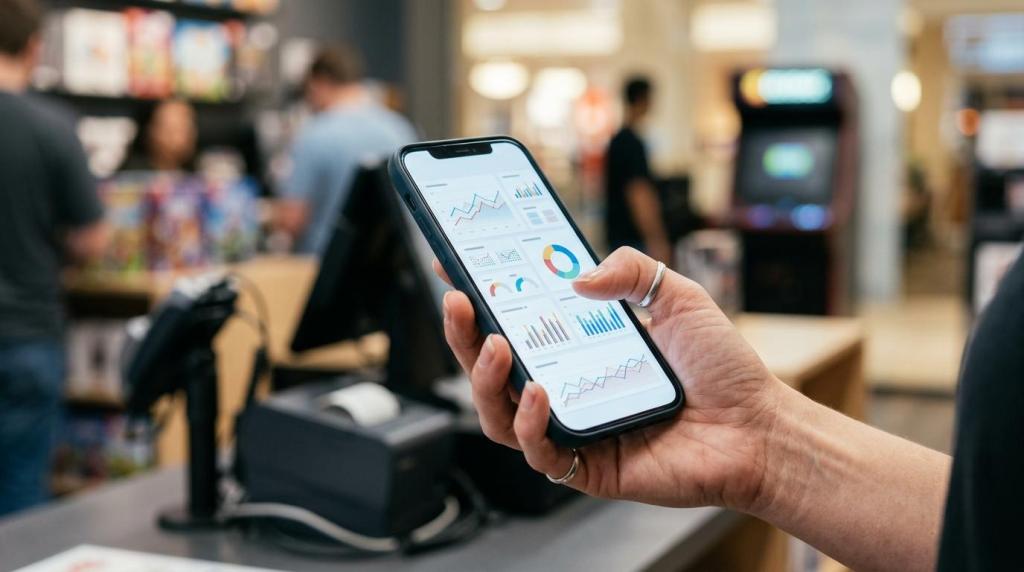
Running a retail gaming location gets complicated fast. You are not only managing gameplay. You are also handling point of sale activity, player tracking, redemptions, staff permissions, kiosk uptime, reporting, and the daily pace of a physical store.
When those tasks live in separate tools, or worse, on paper and memory, simple routines turn into delays. A web-based gaming software platform changes that by putting core store functions into one connected system that you can access without heavy on-site infrastructure.
That shift changes more than where the software lives.
Web-based gaming software centralizes store workflows
In a physical gaming or sweepstakes location, speed matters. You need staff to move from sign-up to transaction to redemption without bouncing between disconnected screens. You also need visibility into what happened at the register, what happened at the terminal, and what happened with each player account.
Web-based gaming software brings those activities into one operating layer. Instead of treating POS, player tracking, redemption handling, and reporting as separate jobs, the platform ties them together. That gives you a cleaner workflow at the counter and a clearer record in the back office.
Retail cloud platforms outside this niche have promoted the same value for years: real-time visibility, less manual tracking, and better performance from centralized systems. That same model fits gaming retail operations especially well because your store depends on fast transactions and accurate account activity all day long.
Here is what that often looks like in practice:
| Store operation | Disconnected setup | Web-based setup |
|---|---|---|
| POS transactions | Separate cash process and manual reconciliation | Transactions tied to player and store activity |
| Player accounts | Logged in multiple places or tracked by staff memory | Managed in one central system |
| Redemptions | Slow verification and higher error risk | Recorded and validated in platform |
| Reporting | End-of-day manual review | Near real-time dashboards and summaries |
| Multi-location oversight | Store-by-store follow-up | Centralized visibility across locations |
| Hardware support | Local server issues and maintenance | Cloud access with less on-site overhead |
A system like this does not remove the need for good operations. It gives your team a better structure for carrying them out.
Gaming software simplifies POS, player accounts, and redemptions
At the store level, simplification starts with the counter. If your POS process is separate from your gaming workflow, staff lose time moving between tasks. They may need to confirm balances in one place, log a sale in another, and check redemption status somewhere else. That slows service and creates avoidable mistakes.
A web-based gaming platform brings those workflows together. Your staff can create or access player accounts, load credits, review account activity, and process redemptions from the same environment. That means fewer handoffs and less guesswork during busy hours.
The benefit is not only speed. It is consistency. When your transaction records and player actions sit in one system, you reduce mismatched numbers at closeout and make it easier to review exceptions. If a customer has a question, your team has a much better chance of resolving it on the spot.
In many locations, the biggest daily gains come from centralizing routine actions like these:
- account lookup
- credit loading
- redemption checks
- shift review
- kiosk status
- transaction history
You also get a better customer experience. Players do not see the software architecture behind your store, but they do notice when service feels organized. Fast lookups, clean redemptions, and fewer transaction disputes help your location feel more professional and more dependable.
Cloud-based gaming software reduces setup and maintenance work
Traditional on-site software can create a hidden operations tax. Local servers, manual updates, hardware compatibility issues, and network troubleshooting take time away from running the store. If you operate more than one location, that burden multiplies quickly.
A web-based model cuts much of that overhead. Instead of planning around server installation and routine server maintenance, you are working with software that is designed to run through the web and connect across your devices. In many cases, that means you can launch faster and scale without a long IT checklist.
For store owners and distributors, this matters because growth often happens in stages. You may start with one room, then add stations, then add another site. A cloud-based platform gives you a cleaner path to do that without rebuilding your technical setup each time.
That usually shows up in a few practical ways:
- No local server: Less on-site equipment to maintain
- Faster deployment: New locations can be configured without long installation cycles
- Remote access: You can review operations without being physically in the store
- Simpler updates: Changes happen through the platform rather than manual patching on every machine
If your business depends on physical retail traffic, you want software that supports uptime, not software that becomes another thing to babysit.
Real-time reporting and inventory visibility improve daily decisions
Store operations get easier when you can see what is happening now instead of waiting until the end of the day. This is one reason cloud retail systems have been adopted so widely across other retail categories. Real-time reporting lets you spot problems earlier and act before they affect the whole shift.
In a gaming retail environment, reporting is about more than sales totals. You need visibility into player activity, redemptions, staff actions, terminal usage, and promotion performance. When those numbers sit in one place, you can review them with much less effort.
If your location also sells retail items, inventory visibility becomes part of the same operational picture. You do not want to manage gaming activity in one silo and store inventory in another if both affect staffing, cash flow, and customer traffic. Connected store data helps you schedule smarter, stock better, and react faster.
The strongest reporting setups tend to support questions like these:
- What is moving today: Promo usage, account loads, redemptions
- Who needs attention: Locations, shifts, or devices with unusual activity
- What needs adjustment: Staffing, promotions, kiosk placement, store hours
This is where web-based software becomes a management tool, not just a transaction tool. You are not only recording activity. You are using current data to run the business with more control.
A good dashboard also reduces the time you spend chasing answers. Instead of calling each store, asking for screenshots, or waiting for end-of-day notes, you can review key numbers from a centralized point. That saves time for owners, managers, and distributors alike.
Multi-location gaming software gives you stronger control across stores
Once you operate more than one location, inconsistency becomes expensive. One store may follow the correct redemption process, while another uses a shortcut. One manager may watch the numbers closely, while another only reviews issues after they grow. Without a central system, those gaps are hard to catch.
Web-based gaming software gives you a shared operating framework across the network. You can manage user permissions, review performance, monitor location activity, and standardize key processes from one place. That is valuable for distributor networks supporting multiple stores and even more valuable for independent operators.
You also gain a clearer view of scale. Instead of asking whether a second or third location is possible, you can ask whether your current system is ready for it. If the platform already supports location management, reporting, kiosk oversight, and staff access controls, growth becomes easier to plan.
For multi-store operators, that kind of control often leads to better habits:
- More consistent redemption procedures
- Faster issue response
- Cleaner reporting across locations
- Easier manager accountability
One location can run on hustle for a while. A network needs structure.
Compliance tools and access controls support safer store operations
Operational simplicity is not only about speed. It is also about reducing risk. If your store handles age-restricted access, location-based restrictions, or different promotional modes, your software should help enforce those rules rather than leaving them to staff memory.
That is why web-based gaming platforms often include tools like age gates, geofencing, configurable modes, and staff access levels. These features support day-to-day discipline. They also help you create more consistent operating conditions across shifts and locations.
Staff controls matter just as much. Not every employee should have the same permissions. You may want some team members to handle account creation and standard transactions, while managers retain access to higher-level reporting, configuration, or redemption review. When access is clearly defined inside the platform, your store runs with fewer gray areas.
A cleaner permission structure can help you with:
- Training: Staff learn the screens and actions that match their role
- Security: Sensitive functions stay limited to approved users
- Auditability: User actions are easier to review later
This is especially useful when you are onboarding new employees or supervising several shifts in the same week.
Gaming software for physical retail locations should fit how you actually operate
Not all gaming software is built for the same business model. A physical retail sweepstakes room, fish game setup, smoke shop, gas station, lounge, or kiosk network has different needs than a generic online gaming platform. Your software has to match the pace and realities of in-store operations.
That means the right platform should support physical retail workflows first. You want a system built around counter transactions, player accounts, redemptions, kiosk management, store reporting, and location oversight. If those features are treated as add-ons instead of core functions, your team will feel the friction every day.
You should also look closely at how quickly the system can be deployed and how much technical overhead stays on your side. A cloud-based setup with no special server requirements gives you more flexibility, especially if you want to test a concept, add locations, or extend play beyond the venue through approved channels.
When you evaluate options, focus on operational fit:
- Store workflow fit: POS, accounts, redemptions, kiosks, reporting
- Launch speed: How fast you can go live without major setup delays
- Support model: Whether help is available when the store is open
- Scalability: Whether the same system works for one store and many stores
If you choose well, the software stops feeling like a separate project. It becomes part of how your store runs every day, with less friction, better visibility, and more room to grow.