


Choosing software for a sweepstakes location is not just a technology decision. It is an operating model decision.
For owners of internet cafes, fish game rooms, smoke shops, gas stations, convenience stores, lounges, and kiosk-based locations, the right platform has to do several jobs at once. It has to support sales, manage player accounts, control game access, reduce staff workload, protect the business, and help the location stay within the rules of the market it serves. If any one of those pieces is weak, the entire setup becomes harder to run.
That is why feature selection matters so much. Strong internet cafe sweepstakes software should make daily operations easier while giving operators better visibility, tighter control, and room to grow.
Core internet cafe sweepstakes software features for daily operations
At the center of any solid platform is operational control. The software should connect the front counter, the player account, the game terminal, and the reporting layer into one system. When those parts are disconnected, staff spend time fixing errors, balancing numbers, and explaining issues to customers.
A modern platform should also be web-based and easy to launch without heavy hardware requirements. That matters for single-store operators, but it matters even more for distributor networks and multi-location groups that need faster rollout, centralized oversight, and less on-site maintenance.
The most useful daily-operation features usually include:
- Session timers
- Player accounts
- POS transactions
- Redemption tracking
- Terminal controls
- Audit logs
- Remote updates
- Location-level reporting
Those basics sound simple, but together they determine whether a store runs smoothly on a busy evening or falls behind at the counter.
Player account and session management features that reduce staff friction
Session and account management should be one of the first areas an operator reviews. In a sweepstakes model, the platform needs to accurately track the relationship between purchases, promotional entries, gameplay, and redemption activity. Manual workarounds create risk.
A strong system should support guest accounts, repeat-player accounts, and tiered customer profiles where needed. It should let staff quickly enroll a new customer, verify required details, assign access rules, and reload funds or promotional value without creating duplicate accounts. A single wallet tied to a player profile is especially useful because it allows consistent tracking across terminals and, where permitted, across connected devices.
The software should also manage timed usage automatically. That includes starting sessions, pausing them, ending them, and storing a clear record of activity. If a location sells internet time, service packages, or store-based promotions that trigger sweepstakes entries, the software should keep those records distinct but linked. That separation helps with bookkeeping and supports a cleaner compliance structure.
Just as important, terminals should launch only approved software. Operators do not want players accessing the underlying operating system, changing settings, opening unauthorized programs, or creating support problems for staff.
Payment, POS, and redemption features in sweepstakes software
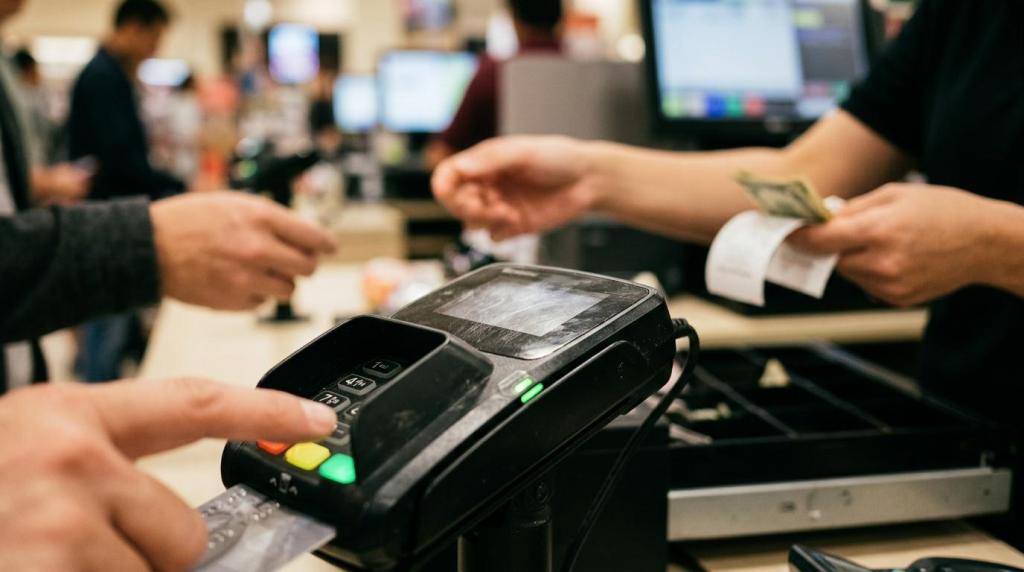
Payments are where software either saves time or creates chaos. A good platform should accept common payment methods, issue receipts, update the player balance instantly, and record the full transaction trail without requiring staff to jump between systems.
For many operators, the POS side is just as important as the game side. Staff need a clear cashier workflow for purchases, reloads, account lookups, balance checks, redemption handling, and shift reconciliation. In mixed-use retail environments, this matters even more because the same location may also sell store merchandise, drinks, tobacco products, or other retail items.
A useful way to think about feature priorities is to separate what every location needs from what adds extra value as the business expands.
| Feature area | Must-have capability | Growth-focused capability |
|---|---|---|
| Payments | Cash, card, receipt printing | Digital wallets, gift cards, mobile-friendly checkout |
| Player wallet | Single account balance | Cross-device access where allowed |
| Redemptions | Clear location-based redemption records | Configurable rules by location or jurisdiction |
| POS controls | Cash drawer, shift totals, cashier permissions | Multi-store summaries and distributor oversight |
| Pricing | Fixed packages and reloads | Flexible promos, time-based offers, loyalty-triggered bonuses |
When payment and redemption tools are built into the same platform, reporting becomes more reliable. That gives owners a much better view of what is being sold, what is being redeemed, and where staff may need additional controls.
Compliance and security features for internet cafe sweepstakes software
Compliance should never be treated as an add-on. It should be built into the software at the workflow level.
The strongest platforms help operators enforce age restrictions, location restrictions, promotional rules, and record retention requirements without depending on staff memory alone. That means the software should be able to display required disclaimers, support free-entry paths where needed, store consent records, and document how entries and outcomes are handled. If a location operates across different states or countries, configuration flexibility becomes even more important.
Security belongs in the same conversation. Sweepstake systems handle account balances, transaction data, user details, and operational controls. A weak login policy or incomplete logging structure can create serious business exposure. Operators should expect encryption, role-based permissions, secure admin access, and full event history.
The most valuable safeguards include:
- Age verification: Block underage access before gameplay starts
- Geofencing: Prevent play in restricted locations when required
- Audit logging: Record transactions, sessions, connection attempts, and gameplay events
- Role permissions: Limit what cashiers, managers, and owners can change
- Admin security: Strong passwords, hashed credentials, and multi-factor access for sensitive functions
- Compliance modes: Configurable operation for jurisdictions with specific sweepstakes rules
- Data protection: Encrypt data in transit and at rest, with controlled retention policies
A platform that helps operators document compliance is often just as valuable as one that helps them process sales. It gives the business a clearer operating record and supports faster response if a question comes up from a regulator, a payment processor, or an internal auditor.
Game library and terminal control features that protect the player experience
Game variety matters, but control matters more.
Operators naturally want a strong library with popular titles, consistent updates, and the ability to turn individual games on or off by location. Fresh content can help repeat traffic, and flexible game management helps owners adjust the floor to match customer demand. Yet none of that works well if terminals are difficult to manage.
The software should give operators centralized control over every station, kiosk, or device in the location. Staff should be able to see active terminals, restart a session if needed, push updates, disable a machine, or reboot a station remotely. That lowers downtime and reduces trips from the counter to the floor.
The user interface should also be clear and fast. Players should be able to log in, view balances, understand available promotions, and start approved games without confusion. On the admin side, owners should not need deep technical training to control content, pricing, permissions, or machine status.
In practice, good terminal control is one of the fastest ways to lower support calls and improve customer flow.
Reporting and analytics features that support smarter store decisions
Many operators first shop for software based on games or pricing. Over time, they usually realize reporting is what shapes performance.
A quality reporting suite should show what is happening right now and what has happened over time. Real-time dashboards help staff monitor active sessions, sales volume, prize activity, and machine usage. Historical reports help owners spot trends, compare locations, and make more confident decisions about staffing, promotions, and floor layout.
The reporting layer should answer questions like these:
- Which terminals produce the most activity?
- What hours generate the strongest sales?
- Which promotions drive reloads rather than one-time visits?
- How much is each cashier processing?
- Which locations need different game mixes or pricing?
Export options are also important. CSV, PDF, and printable reports help operators share data with accountants, managers, and compliance teams. Multi-location businesses should expect location filters, roll-up reporting, and side-by-side comparisons.
Multi-location management features for growing sweepstakes businesses
Growth changes what “good software” means.
A single-location operator may focus on quick setup, cashier ease, and simple reports. A multi-store owner or distributor will care more about standardization, permissions, remote oversight, and launch speed across new locations. The platform should scale without forcing the business into separate systems for each store.
That usually means a centralized dashboard, location-based settings, customizable templates, shared promotions where appropriate, and permission structures that map cleanly to owners, supervisors, store managers, and front-line staff. Cloud-based delivery is especially useful here because it reduces the need for local servers and allows updates to happen faster.
For expanding businesses, a few features often create outsized value:
- Centralized oversight: View store activity, balances, and alerts from one dashboard
- Location controls: Set pricing, promotions, and permissions by venue
- Rapid deployment: Add a new site without a long hardware or server project
- Remote support: Resolve common issues without waiting for an on-site visit
When the software scales well, expansion becomes an operational project, not a technical rebuild.
Loyalty, promotions, and player retention features that extend revenue
Sweepstakes software should not stop at transaction processing. It should also help stores bring customers back.
Loyalty tools can include cashback-style rewards, point tracking, visit frequency triggers, tiered player levels, birthday offers, daily login bonuses, community jackpots, and time-limited campaigns. In the right setup, these features can create better repeat traffic without adding complexity for staff.
Promotional tools should be easy to configure from the admin side. Operators should be able to schedule offers, send approved messages, adjust templates, and track redemption results. That is especially useful in retail environments where the business wants to create traffic on slower days or reward repeat customers in a structured way.
For some models, remote engagement can also matter. If the platform supports approved play-from-home or off-site promotional interaction where legally permitted, it can keep the customer connected to the store beyond in-person visits. The key is making sure redemption rules, geofencing, and account controls remain tied to the originating location and applicable regulations.
Questions operators should ask when comparing internet cafe sweepstakes software
The feature list on a sales page is only the start. Operators should ask how those features work in live conditions, under staff pressure, and across real compliance demands.
A vendor conversation becomes far more useful when the questions are practical and store-centered.
- Can the platform separate purchases, promotional entries, and redemption records clearly?
- How does the system enforce age gates, location rules, and required disclosures?
- What can managers control remotely without calling support?
- How quickly can a new location go live?
- What reports are available by cashier, terminal, player activity, and store?
- Does the software support the hardware already in place?
- How are updates, support, and issue resolution handled during business hours and after hours?
Good answers to those questions usually reveal whether the software is built for real operators or just designed to look complete in a demo.
For B2B buyers, that distinction matters. The best internet cafe sweepstakes software is not simply the one with the longest feature list. It is the one that helps a location operate with more control, less friction, stronger reporting, and better readiness for whatever the market demands next.