


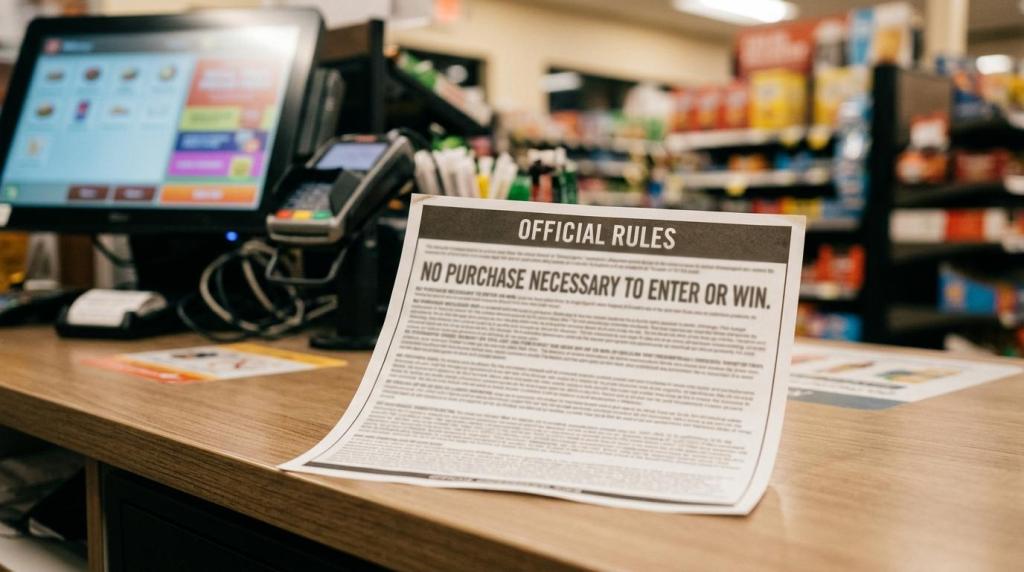
Retail promotional sweepstakes work best when your offer is attractive and your disclosures are hard to miss. If you run a sweepstakes store, internet cafe, fish game room, smoke shop, or c-store, the strongest promo ideas are the ones your staff can explain in 10 seconds and your system can audit later.
TL;DR: Summary
- The best promotional sweepstakes ideas for retail stores combine a clear customer incentive, like welcome bonuses, bounce-back offers, reactivation campaigns, or play-at-home access, with real no purchase necessary entry, posted official rules, and ad disclosures that are clearly and conspicuously displayed.
- FTC enforcement shows the biggest risk is implying that a purchase is required or improves the odds of winning. In April 2025, the FTC said it sent more than $18 million in refunds tied to misleading sweepstakes claims, and its Publishers Clearing House complaint focused on dark patterns that suggested buying increased winning chances.
- State rules are not uniform. Connecticut requires ad disclosures near the prize description, in at least the same size and typeface, including verifiable retail value, odds, chance, and prize restrictions. Washington does not authorize the common for-profit “sweepstakes” format unless it fits a specifically authorized gambling activity.
- If you use bonus offers, kiosks, SMS, or play-at-home features, your operational setup matters as much as your marketing copy. Age gates, geofencing, staff scripts, redemption controls, and multi-location reporting reduce avoidable risk.
- If your promotion cannot survive one basic test, “Would a regulator or customer think buying more improves the chance to win?”, revise it before launch.
You get better results when you treat the promotion, the alternate free entry method, and the signage as one system. That is the real difference between a promo that drives repeat traffic and one that creates confusion, chargebacks, or regulatory attention.
What makes a promotional sweepstakes offer work in a retail store?
The strongest promotional sweepstakes offers combine a simple customer incentive with FTC-grade disclosure discipline and a trackable POS workflow.
Your offer needs to answer three questions fast: why should the customer participate, what action are you trying to increase, and what must be disclosed at the point of promotion. In most retail sweepstakes environments, that means tying the campaign to a measurable behavior like first visit, second visit, inactive-player return, or low-traffic daypart.
A common mistake is assuming the biggest advertised prize will always perform best. In practice, many stores get steadier results from smaller, repeatable promos because they improve visit frequency and are easier for staff to explain. If your goal is weekday traffic, a bounce-back incentive often beats a one-time grand prize.
Your back office matters too. If you cannot reconcile entries, redemptions, and store-level results inside one system, you will have trouble proving what happened when a customer questions the offer or a distributor wants location comparisons.
Which legal rules matter most before you advertise a promotional sweepstakes?
FTC guidance, Connecticut disclosure rules, and USPS standards all point to the same core rule: do not imply a purchase is needed to win.
At a federal level, the core issue is deception. The FTC’s recent action against Publishers Clearing House focused on dark patterns and messages that made consumers think a purchase was necessary or would improve their odds. That is exactly the kind of language sweepstakes stores need to avoid at the counter, in text campaigns, and on kiosk screens.
At a state level, details get stricter. Connecticut says a sweepstakes winner cannot be required to buy anything or pay any fee, and ads must disclose the verifiable retail value, the element of chance, the odds of winning, and prize restrictions in immediate proximity to the prize description. USPS guidance for mailed sweepstakes also stresses that disclosures must be clearly and conspicuously displayed and that winners must have an equal chance whether or not they buy.
The key legal concept is consideration. If a participant has to pay, or do something of value that effectively functions like payment, you may be moving out of sweepstakes territory and into raffle or gambling issues. That is where state-by-state review becomes essential.
What are 9 promo ideas for sweepstakes stores?
The most useful promotional sweepstakes ideas are trackable, easy to explain, and built around disclosures your staff can actually follow.
You do not need gimmicks. You need promotions that fit store traffic patterns, customer retention goals, and the compliance realities of your jurisdiction.
- RiverSlot configurable bonus campaigns: Useful when you need purchase triggers, play-frequency rules, redemptions, and reporting in one web-based workflow across one store or many.
- New-player welcome offer: Give a simple first-visit promotion with the no-purchase entry method posted at the counter, kiosk, and rules page.
- Bounce-back return promo: Reward a second visit within 48 or 72 hours to build habit instead of one-off traffic.
- Slow-day happy hour campaign: Put extra promotional value on underperforming dayparts, but keep odds language separate from sales language.
- Birthday or anniversary bonus: Use an objective date trigger that is easy to automate and easy to audit.
- Inactive-player reactivation: Target customers after 14, 30, or 60 days with SMS or email and a clearly dated expiration window.
- Multi-location passport promo: Let players participate across several approved locations under one official rules framework.
- Play-at-home follow-up access: Extend engagement after the store visit when your jurisdiction and controls allow remote participation.
- Seasonal prize calendar: Run monthly themes with posted prize values and consistent rules rather than one oversized grand-prize push.
If you choose any of these, build the free entry path at the same time you build the creative. That step is not optional.
How do you write compliant sweepstakes ads step by step?
FTC and USPS standards make the process straightforward: write the claim, place the disclosures next to it, then test what customers actually see.
Step 1: Draft the offer in plain language. Start with the incentive, the eligibility basics, and the time window. If your ad says “win,” “bonus,” or “prize,” it should also direct people to the official rules.
Step 2: Put required disclosures in immediate proximity. If your state requires prize value, odds, restrictions, or the element of chance, do not bury that in tiny footer text. Connecticut is explicit on proximity and type size. A common mistake is making the rules technically available but visually invisible.
Step 3: Test the ad in real conditions. Check the poster from six feet away, the kiosk screen under glare, and the mobile message preview on an actual phone. If the no-purchase message disappears in practice, regulators will not care that it existed in your design file.
This is where “clearly and conspicuously displayed” becomes operational, not theoretical.
How should you set up a no-purchase entry method step by step?
Connecticut and Montana make the baseline clear: no purchase means no purchase, no fee, and no weaker chance of winning.
Step 1: Define a real alternate method of entry. It can be in-store, by mail, online form, or another documented path, depending on counsel and local rules. What matters is that it is usable and not designed to discourage participation.
Step 2: Match the odds and treatment. The USPS standard is equal chance of winning whether or not merchandise is ordered. If purchased participants get faster access, better odds, or a separate prize pool, you may have a problem even if a free path technically exists.
Step 3: Train staff and document fulfillment. Staff should never say, “Buying more gives you a better chance,” unless your counsel has approved a structure that is lawful in your jurisdiction and fully disclosed. In many sweepstakes settings, that statement creates the exact risk you are trying to avoid.
A hidden free-entry link does not fix a misleading ad. That misconception causes more trouble than most operators expect.
How do bonus-credit promos compare with big-prize sweepstakes?
Bonus-credit promos usually win on retention, while big-prize sweepstakes usually win on short-term attention.
If you want predictable repeat visits, smaller recurring value often performs better. Customers understand it quickly, staff can explain it without a long script, and you can test 48-hour, 7-day, or monthly windows against actual revenue. The prize cost is also easier to control.
Big-prize campaigns can work when you need reach, grand reopening buzz, or distributor-wide visibility. The trade-off is volatility. You may get more top-of-funnel interest but weaker repeat behavior, and disclosure scrutiny goes up because prize value, restrictions, and odds become central to the ad.
If your store is stable and you want better player frequency, start with bonus-credit logic. If your store is new and foot traffic is low, one higher-visibility prize campaign can help, but only if the rules and creative are extremely clean.
How does play-at-home access compare with in-store-only promotions?
Play-at-home access expands lifetime value, while in-store-only promotions reduce compliance surface area.
Remote participation can keep customers active after they leave the venue. That helps with reactivation, multi-day campaigns, and customer convenience. For operators using cloud-based systems, it can also reduce dependence on foot traffic alone.
The trade-off is control. Once you add play-at-home access, you need stronger age verification, geofencing, account management, and support processes. If your promotion crosses state lines digitally, your legal review becomes more important, not less.
In-store-only promotions are simpler to manage. Staff can verify identity, signage is easier to standardize, and local operational issues are easier to spot. If your current challenge is training or rule consistency, fix that first before adding remote access.
How do you launch a promotional sweepstakes across multiple locations step by step?
RiverSlot-style multi-location tools help, but the launch still depends on disciplined rules, localized disclosures, and store-level reporting.
Step 1: Standardize the master offer. Define one campaign goal, one eligibility model, one expiration framework, and one official rules template. This prevents location managers from improvising language that changes the legal meaning.
Step 2: Localize only what must change. Store hours, participating locations, age gates, geofencing limits, and state-specific disclosures may need local edits. Washington, Connecticut, and Montana are examples of why one national creative file is rarely enough.
Step 3: Monitor execution daily in the first week. Check redemptions, voids, AMOE requests, and staff feedback. If one store shows a very different entry or redemption pattern, that often signals training gaps or signage confusion before it signals customer demand.
The trade-off here is control versus speed. Full central control slows rollout a bit, but it usually saves you from expensive inconsistency.
What disclosure mistakes create the most risk for sweepstakes stores?
The highest-risk mistakes are the ones the FTC and USPS have warned about for years: hidden terms, purchase pressure, and misleading prize presentation.
Most problems start with copy, not software. The ad gets written like a sales flyer, then the legal language gets squeezed into a corner.
- Purchase implication: Any wording that suggests buying is required or improves odds can trigger deception concerns.
- Tiny or distant disclosures: If prize limits, odds, or restrictions are far from the main claim, “available in rules” may not save you.
- Missing state-required details: Connecticut expects immediate-proximity disclosures around prize descriptions.
- Untrained staff scripts: A cashier or host who improvises can create risk even when your printed rules are solid.
- Version drift: Your SMS, poster, kiosk, and website must match the same official rules set.
A pro tip many operators miss is simple: audit spoken language, not just printed language. Regulators and customers hear the pitch before they read the fine print.
Which states require extra caution for promotional sweepstakes?
Washington and Connecticut deserve special attention, and Montana is a useful reminder of how consideration changes the legal analysis.
Washington’s Gambling Commission says the common for-profit “sweepstakes” format is not legal there unless the activity complies with rules for an authorized gambling activity. It also defines a promotional contest of chance as a for-profit business giving free tickets so participants can be eligible to win a prize, and those tickets may not involve consideration. That makes Washington a state where assumptions can get you in trouble fast.
Connecticut is stricter on ad format. It requires prize descriptions and the related disclosures to appear together, in at least the same size and typeface. If you use small print or put restrictions on another screen, you may fail the disclosure standard even if the facts are technically present.
Montana states that sweepstakes can be a free promotional game of chance for consumers and that no purchase is necessary. It also says that requiring payment or valuable consideration can convert the activity into a raffle. If you operate across several states, this is why one legal memo from one jurisdiction is not enough.
What metrics should you track to see whether a sweepstakes promo is profitable?
POS and CRM data tell you the truth faster than ad impressions do, especially when you compare lift, prize cost, and repeat behavior by location.
You should track both marketing performance and compliance signals. A promotion that increases traffic but also creates staff confusion, AMOE disputes, or unusual redemption reversals is not actually healthy.
- Repeat-visit rate: Measure 7-day and 30-day return behavior after campaign exposure.
- Average net revenue per active player: Compare promo cohorts against a control window.
- Prize and bonus cost ratio: Track promo cost as a percentage of incremental revenue, not total revenue.
- AMOE volume: A sudden spike may mean your offer is attracting only free-entry behavior or that messaging is unclear.
- Redemption timing: Fast redemption can be good, but unusual same-day patterns can signal scripting or abuse issues.
- Store variance: If one location outperforms all others, check signage, staffing, and rules compliance before copying the result.
If repeat visits rise, prize cost stays within your target range, and staff error stays low, you have a promotion worth scaling. If traffic rises but net value falls, revise the mechanic before you increase spend.