


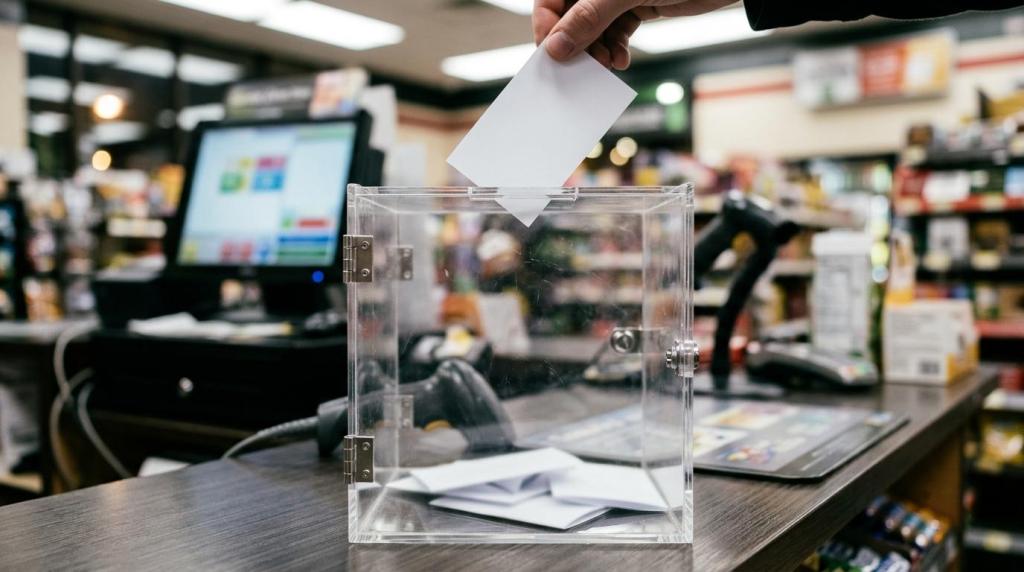
Promotional gaming for store chains is not just a marketing tactic. It is an operating model where retail promotions, sweepstakes rules, and multi-location execution all have to work together, which is why RiverSlot, a web-based provider in this category, is a useful reference point for what chains need in practice.
TL;DR: Summary
- Promotional gaming for store chains works best when you pair compliant sweepstakes structure with centralized software for purchases, bonuses, redemptions, and multi-location management.
- FTC prize promotion rules can require no purchase necessary, odds of winning disclosure, and free-entry instructions before payment when the promotion is run by phone.
- USPS guidance also treats sweepstakes as promotions that never require a purchase to enter and win, so your free-entry method must be real, clear, and operational.
- Massachusetts defines sweepstakes broadly and separately restricts some electronic machines or devices used through an entertaining display, which makes state-by-state review essential.
- RiverSlot is relevant when you need one web-based system for physical locations, but software features do not replace legal review or local compliance checks.
If you run a chain, the hard part is rarely the idea itself. The hard part is making sure every store follows the same rules, disclosures, redemption process, and reporting logic without creating risk at the register, kiosk, or marketing channel.
What is promotional gaming for store chains?
Promotional gaming for store chains is a retail promotion system built around prizes, chance-based outcomes, and store-level execution. In practice, it usually connects purchase activity, bonus credits, redemption workflows, and reporting across one or many physical locations.
You will often hear related terms like sweepstakes, prize promotion, fish game software, kiosk software, and sweepstakes POS. They overlap, but they are not identical. A prize promotion is a broad regulatory term used by the Federal Trade Commission in some contexts. A sweepstakes is usually the promotional structure operators talk about day to day. The software layer then handles the operational side: purchases, bonus awards, player accounts, kiosk access, redemptions, and audit trails.
A common misconception is that promotional gaming is just a game catalog. For a chain, it is closer to a rules engine plus store operations. If one store awards bonuses differently, posts outdated rules, or redeems prizes outside policy, your risk grows fast.
Why is compliance non-negotiable for promotional gaming?
Compliance is mandatory because FTC and USPS guidance make clear that sweepstakes and prize promotions need specific disclosures and a real free-entry path. If your promotion touches phone marketing, email, or physical retail execution, you need channel-specific controls.
The FTC says that under the Telemarketing Sales Rule, a prize promotion includes any sweepstakes or game of chance, or claims that someone has won or may be eligible to receive a prize. Before a consumer pays for goods or services in that setting, the seller or telemarketer must disclose the odds of winning, that no purchase or payment is necessary, and how to enter without paying.
USPS Publication 546 reinforces the same core principle: a sweepstakes never requires a purchase or fee to enter and win. It also says your mailing should clearly state that no purchase is required, that a purchase will not improve winning chances, and that rules and entry procedures should be included. If your chain uses printed offers, counter cards, or direct mail, that language matters.
"RiverSlot includes age gates, geofencing, and configurable modes, which matters when compliance controls need to match local operating rules."
One practical tip is to treat compliance as an operating workflow, not just a legal document. Rules hidden on a back-office PDF will not help your cashier, kiosk attendant, or store manager during a customer interaction.
What promotional gaming software capabilities matter most for store chains?
The most important capabilities are centralized controls, compliant promotion logic, and multi-location reporting. RiverSlot is one example of a web-based platform aimed at physical retail operators who need POS, kiosk, player account, and redemption management in one system.
When you compare platforms, look past the game library and focus on what your stores must do every day:
- Centralized administration: one dashboard for all stores, users, and settings.
- Promotion logic: purchase-linked bonuses, spend thresholds, frequency rewards.
- POS controls: cashier workflows, transaction tracking, redemption records.
- Player account handling: balances, sessions, identifiers, access rules.
- Kiosk management: screen behavior, account login, usage controls.
- Compliance tools: age gates, geofencing, configurable modes, rule display.
- Reporting and scaling: store-level, region-level, and distributor-level visibility.
The trade-off is simple. The more flexible your platform is, the more important permissions, templates, and approval workflows become. If every store manager can improvise promotion settings, your chain loses consistency fast.
How do you set up a compliant no-purchase entry process?
You set up a compliant no-purchase entry process by making the free method real, clear, and equal in treatment to paid participation. FTC and USPS guidance both point in that direction.
Start by deciding exactly how someone can enter without buying. That could be an in-store request, a written method, or another clearly documented route. The key is not just listing it in rules. Your staff must know how to process it, and your system must track it so the free-entry path is not ignored in practice.
Then make sure the free-entry instructions appear where the paid offer appears. If your store signage promotes prizes at the register, the no-purchase method cannot live only in a manager binder. If your chain uses phone promotion, the FTC expects the disclosure before payment.
Finish by testing equal treatment. A common mistake is giving purchase-linked participants quicker access, better visibility, or cleaner instructions while making free entry hard to find or awkward to complete. If your free-entry path is harder in a way that changes practical access, regulators may not view it kindly.
How do you disclose odds and prize-promotion terms across channels?
You disclose odds and core terms by matching the disclosure to the channel and timing it before payment or commitment. FTC rules are especially clear on phone promotions, and CAN-SPAM adds separate duties for commercial email.
Begin with the odds question. If the odds of winning can be calculated in advance, disclose them in a plain format. If they cannot be calculated in advance, the FTC says you should say that and explain the factors used to calculate the odds. That point matters when prize pools, participation volume, or promotion windows can change.
Next, standardize the language across channels without copying it blindly. Your phone script, kiosk screen, receipt text, counter signage, and printed rules can all carry the same core facts, but each one needs a format that fits the interaction. A cashier prompt is not the same as a website terms page.
Last, keep one master rules version and push updates from that source. A practical tip here is to stop store-by-store edits unless legal and operations both sign off. Version drift is one of the easiest ways for a chain to create contradictory disclosures.
How do you manage multiple stores from one promotional gaming platform?
You manage multiple stores well by standardizing rules, permissions, and reporting in one system. RiverSlot frames this as a web-based way to manage kiosks, POS, player accounts, and redemptions together instead of running separate store-by-store setups.
Start with templates. Your promotion names, bonus triggers, redemption policies, and user roles should be created once and applied by location or region. That keeps Store 12 from inventing a different cashier flow than Store 3.
"RiverSlot says chain operators can manage kiosks, POS, player accounts, and redemptions together in one web-based system."
Then build your exception reporting around the few metrics that actually expose risk: unusual redemptions, manual balance adjustments, high-void transactions, and rule overrides. If a district manager sees those early, you can fix a process problem before it becomes a chain-wide habit.
Finish with controlled rollouts. Push new promotions to a pilot group, check redemption behavior and staff usage, then expand. A common mistake is launching chain-wide on day one when you have not tested signage, register prompts, and front-line training together.
Promotional gaming vs gambling: what is the practical difference for operators?
The practical difference usually turns on how prize, chance, and consideration are structured under applicable law.
Sweepstakes operators focus on removing required consideration through a genuine free-entry method, while gambling analysis can shift sharply by state and by device type.
For store chains, this is where labels can mislead. Calling something a sweepstakes does not make it compliant. Regulators and courts look at how the promotion actually works. They can also look at the machine, the display, the redemption flow, and whether participation is tied to payment in a meaningful way.
Massachusetts is a useful example because its law defines sweepstakes broadly as any game, advertising scheme, plan, or other promotion in which a person may enter to win or become eligible to receive a prize based on chance, with or without payment of consideration. That broad definition sits alongside a separate restriction on certain electronic machines or devices used to conduct or promote a sweepstakes through an entertaining display.
If your operating model relies heavily on electronic presentation, you should treat device-level analysis as part of the legal review, not an afterthought.
Centralized cloud platform vs store-by-store setup: which works better?
A centralized cloud platform usually works better for chains because it reduces version drift, speeds updates, and gives you multi-location visibility. A store-by-store setup can work for isolated operators, but it is harder to govern at scale.
The strongest case for cloud-based promotional gaming is operational consistency. If you can update rules, disable a promotion, change redemption settings, or review reports from one system, you cut down on manual intervention and conflicting store practices. You also avoid the pain of maintaining local servers or special hardware in every location.
The trade-off is dependence on disciplined user permissions and reliable connectivity. If your stores have unstable internet service, you need documented fallback procedures. If you do not control who can edit promotions centrally, you can make one bad change everywhere at once.
A common mistake is assuming decentralization lowers risk because each store can adapt locally. In reality, local improvisation often increases compliance risk because your signage, rules, and redemption records stop matching from store to store.
How do email and phone promotions change your obligations?
Email and phone promotions change your obligations because FTC telemarketing rules and CAN-SPAM duties apply by channel, not just by promotion type. If you market the same prize promotion in different ways, your compliance tasks multiply.
On the phone side, the FTC focuses on what must be disclosed before a consumer pays for goods or services in a prize promotion. That includes no-purchase language, odds information, and free-entry instructions. If your chain uses outbound calls or scripted phone offers, train to the script and audit recordings when allowed by law.
On the email side, the CAN-SPAM Act requires a clear opt-out method in commercial email and gives recipients the right to stop future messages. The FTC also says a seller may be responsible if it offers something like extra sweepstakes entries in exchange for forwarding a message. That means promotional gaming cannot be treated as a side note inside general email marketing.
A good operating rule is to keep a separate compliance checklist for each channel. What works on a register sign will not cover a phone script or commercial email footer.
What should you check before expanding into Massachusetts or other strict states?
You should check state definitions of sweepstakes, machine restrictions, redemption rules, and any industry-specific exceptions before expanding. Massachusetts is a high-value example because it addresses both sweepstakes and entertaining-display devices in plain statutory language.
The state defines sweepstakes broadly, then makes it unlawful to possess with intent to operate, or to place into operation, an electronic machine or device to conduct a sweepstakes through an entertaining display or to promote a sweepstakes through such a display. It also includes a narrow exception for some grocery retailers when the sweepstakes is directly related to grocery sales and prizes cannot be redeemed for cash.
That matters because state risk is not only about your general promotion model. It is also about the exact retail category, redemption method, machine behavior, and visual presentation. If your chain spans smoke shops, convenience stores, bars, kiosks, and game rooms, you may need different operating rules by state or even by store type.
If your concept uses electronic entertaining display, then state-specific counsel and product configuration should come before rollout. If your legal model checks out, then software controls like geofencing, age gates, mode settings, and centralized reporting can help you enforce that model consistently across locations.