


Retail sweepstakes compliance is not one checklist. RiverSlot is a web-based provider of sweepstakes software for retail locations, and that category operates inside a rule set shaped by federal marketing law plus state promotion law.
TL;DR: Summary
- Retail sweepstakes compliance needs a channel-based workflow. If you run promotions in-store with RiverSlot or market them by mail, phone, or email, review each channel separately before launch.
- Federal rules split by channel: USPS mailing standards govern mailed sweepstakes materials, the FTC’s Telemarketing Sales Rule governs prize promotions by phone, and CAN-SPAM governs commercial email.
- Your baseline checks should cover no purchase necessary language, odds of winning, sponsor identification, free-entry instructions, opt-out or removal handling, and state-specific disclosure or licensing triggers.
- A single master rules document is not enough. If the same offer appears in direct mail, a call script, and an email, each version can create a different compliance issue.
- Software can help with logs, templates, kiosk settings, and location controls, but it does not replace legal review for state law, disclosures, or campaign approvals.
If you operate physical retail promotions, your real exposure often comes from workflow drift. The game, POS, and kiosk can stay unchanged while your mail piece, call script, or email footer creates a separate legal problem.
What does retail sweepstakes compliance actually cover?
Retail sweepstakes compliance covers more than official rules. If you use RiverSlot in stores or any similar platform, you still need channel-specific checks under USPS, FTC, CAN-SPAM, and state law.
You are managing three layers at once: the entry method, the marketing method, and the disclosure method. A compliant in-store promotion can still fail if the mailed flyer omits required statements, if the call script asks for payment too early, or if the email lacks a working opt-out link. That is why compliance is an operating system, not a one-time document.
A common mistake is to treat compliance as only a game-setting issue. In practice, regulators look at how a consumer was solicited, what they were told, whether no-purchase entry was real, and whether your odds, sponsor, and prize details were disclosed clearly and conspicuously.
"RiverSlot includes legal and compliance tools like age gates, geofencing, and configurable modes, which are useful when you need location-level control."
Your workflow should also cover suppression requests, consumer data handling, and version control. If a promotion changes halfway through a campaign, you need a record of who approved the new language, which locations used it, and when it went live.
Why must you map the promotion channel before drafting disclosures?
You should map the channel first because USPS, the FTC, and CAN-SPAM regulate different conduct. A compliant mail piece can still fail if the same offer is reused by phone or email without new disclosures.
Start with a simple question: how will the consumer first encounter the promotion? If the answer is direct mail, USPS mailing standards become central. If the answer is a phone campaign, the FTC’s Telemarketing Sales Rule controls the sequence and content of disclosures. If the answer is email, CAN-SPAM applies even before you get into general deceptive advertising risk.
If your campaign uses more than one channel, do not assume your legal review is portable. The same prize, same brand, and same store can require different disclosure placement, different opt-out mechanisms, and different approval steps depending on delivery.
A useful rule is this: if the channel changes, your compliance checklist changes. That one habit prevents many avoidable errors.
What workflow checks should every retail sweepstakes operator use?
Most operators need seven workflow checks. If you miss channel mapping, free-entry design, disclosure review, suppression handling, state review, approval gates, or recordkeeping, your promotion can break even when the game logic stays unchanged.
You can turn those checks into a repeatable operating process across one location or fifty.
- Channel map
- Offer classification
- No-purchase entry review
- Disclosure and creative review
- Opt-out and suppression controls
- State law and expansion check
- Approval archive and audit log
Each item should be assigned to a real owner. Channel map belongs to marketing or operations. No-purchase entry review and state review usually require legal input. Approval archive belongs to whoever controls campaign deployment. If nobody owns a step, that step will fail when volume increases.
If you run multiple locations, centralize the checklist and localize the execution. Your store managers should not improvise sponsor language, prize descriptions, or alternate entry instructions at the counter.
How do you review direct mail sweepstakes materials step by step?
Direct mail needs a structured review before printing. USPS mailing standards require “no purchase necessary,” “purchase will not increase the odds,” sponsor identification, contact address, rules, odds, prize quantity, prize value, and any scheduled payments.
Step one is to inventory every mailed component. That means the outer envelope, the main letter, the entry form, any order form, and the official rules. USPS standards focus on the body, rules, and order or entry form, so you need to confirm the required statements appear where the standard expects them, not only on a landing page or in a separate packet.
Step two is disclosure testing. Check whether the sponsor or mailer is identified, whether a valid contact address is included, and whether the rules disclose odds of winning, quantity of prizes, value of prizes, and whether any prize is paid over time. “Free entry available” is not enough if the rest of the material implies a purchase improves the chance of winning.
Step three is suppression handling. If your mail campaign allows recipients to ask that you remove them from all lists, you need a documented process to honor that request within the required window, including a 60 days from receipt standard where applicable.
The misconception to avoid is easy to spot: hiding the key no-purchase language in dense terms does not solve the problem. Your review should test visibility, placement, and consistency before anything goes to print.
How do telemarketing prize promotion rules change your script and payment flow?
Phone promotions need script control before any payment request. Under the FTC’s Telemarketing Sales Rule, a prize promotion must disclose odds, free-entry instructions, and that no purchase or payment is required to win.
The first step is classification. If your script says someone has won, has been selected, may be eligible, or can receive a prize, the FTC can treat it as a prize promotion. That applies even when the promotion is wrapped into a sales conversation.
The second step is sequencing. Required information has to be given before the consumer pays for goods or services offered. If your agents discuss payment, membership, top-up credits, or related sales before delivering the required prize promotion disclosures, your workflow is backwards.
The third step is script review for “guaranteed item” language. FTC guidance explains that even a guaranteed item can count as a prize if the specific item is not identified at the time of the offer. A common mistake is to rename it as a bonus or free gift and assume the rule disappears. It does not.
If you use calls at scale, quality assurance matters as much as drafting. You need approved scripts, agent training, monitored calls, and a correction process when teams drift from the script.
How is email compliance different from mail and phone sweepstakes marketing?
Email compliance is not the same as mail or phone compliance. FTC CAN-SPAM guidance adds a valid postal address, a working opt-out link, and clear identification of the message’s commercial nature.
That means your email workflow has both legal and technical checkpoints. The copy has to avoid misleading win claims, the footer needs a valid postal address, and the unsubscribe mechanism has to function. If you offer extra entries or awards in exchange for forwarding the message, the seller may still be responsible for CAN-SPAM compliance.
Mail and phone focus heavily on no-purchase entry mechanics and prize disclosures at the point of solicitation. Email adds message labeling, sender identity, and opt-out operations. So if your team clones a mailed sweepstakes offer into an email blast, you still need a separate email review.
California DOJ consumer guidance is also a useful reality check here. It warns that sweepstakes signups can lead to more telemarketing calls, junk mail, and spam email when participant information is sold. Even when that warning is aimed at consumers, you should read it as an operational prompt: your privacy disclosures, vendor controls, and list-sharing practices need the same discipline as your prize language.
What state law reviews should happen before launch and before expansion?
State review should happen twice: before launch and before expansion. The FTC notes that states may add disclosures, licensing, or bond requirements on top of federal sweepstakes rules.
You need a state matrix, not a generic national assumption. Federal rules set a floor. State law can raise it based on where consumers enter, where the sponsor operates, how prizes are awarded, and how the offer is advertised.
Use your state review to answer four questions:
- Launch state: What extra disclosures or prohibited terms apply where the promotion begins?
- Multi-state reach: Do any states trigger licensing, bonding, registration, or notice duties?
- Data practices: Does your entry process create state-specific privacy or marketing consent issues?
- Expansion event: Does adding locations, kiosks, or channels change which states are implicated?
A strong habit is to reopen the state review whenever you change the prize pool, campaign channel, or geographic reach. You do not need new game code to create a new legal exposure.
How do sweepstakes differ from raffles and gambling promotions?
Sweepstakes, raffles, and gambling promotions are not interchangeable. A sweepstakes removes required payment to enter; a raffle usually sells chances, and California limits lawful charitable raffles to registered charities using gross receipts for charitable purposes.
Your compliance workflow should start with the classic legal structure: prize, chance, and consideration. If all three are present, you are moving toward lottery or gambling risk. In a lawful promotional sweepstakes, consideration is removed through a genuine no-purchase method of entry.
That is why “no purchase necessary” is not just a slogan. It has to be real in operation. If a paid purchase is required, or if paying increases the odds of winning, you are outside normal sweepstakes compliance. FTC guidance is direct on this point: sweepstakes-type promotions that require a purchase by participants are illegal in the United States.
Do not confuse a raffle with a retail sweepstakes. California DOJ explains that raffle legality in California is limited to charitable organizations registered with the Attorney General, and at least 90% of gross receipts must be used for charitable purposes. If you are a retail operator, calling a promotion a raffle can create the wrong legal frame immediately.
How can software support audit trails, kiosks, and multi-location controls?
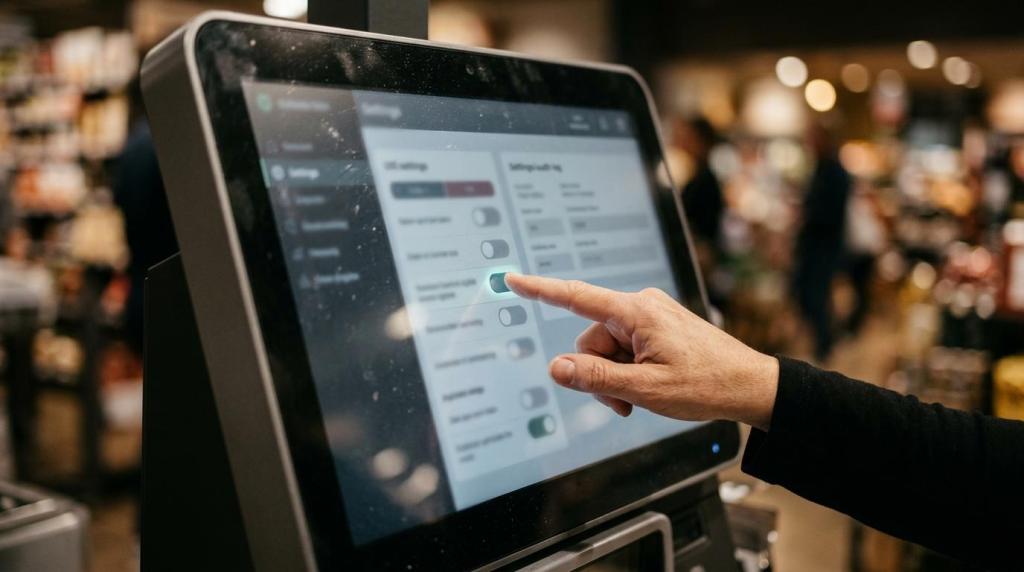
Yes, software can reduce workflow failures. RiverSlot and other web-based retail sweepstakes systems can centralize rules, account logs, kiosk settings, and location controls, which makes multi-store reviews easier to document.
The operational value is straightforward. You want one place to manage promotion templates, player accounts, redemptions, reporting, and kiosk management. If your system also supports age gates, geofencing, and configurable modes, you can apply control logic consistently instead of relying on handwritten store instructions.
That said, software is a control layer, not a legal opinion. It can help you document who changed the promotion, what was displayed on a kiosk, and which locations were active on a given date. It cannot decide whether your email subject line is misleading or whether a new state requires a bond.
"RiverSlot is cloud-based, needs no servers or special hardware, and can launch in under 1 hour."
When you evaluate platforms, ask practical compliance questions. Can you archive rules by version? Can you restrict which managers edit promotion text? Can you apply location-specific settings without changing every terminal by hand? If the answer is yes, your compliance workflow becomes easier to maintain as your footprint grows.