


If you run a retail location, you already know traffic alone does not build a strong business. You need repeat visits, clear offers, smooth operations, and a reason for customers to come back. Promotional sweepstakes can support all four when they are structured the right way.
That last part matters most.
A promotional sweepstakes is not just a fun add-on at the counter. It is a regulated business activity with real disclosure rules, operational demands, and state-by-state legal questions. If you treat it like a casual marketing idea, you create risk. If you treat it like a controlled retail program, you give your store a real chance to grow.
What promotional sweepstakes mean for retail owners
For retail owners, promotional sweepstakes are usually built to drive engagement around products, visits, or store activity while awarding prizes based on chance. In a physical location, that can connect to promotional credits, kiosk play, player accounts, point-of-sale activity, redemption workflows, and store reporting.
The core legal concept is simple. A sweepstakes is a promotion where prizes are awarded by chance, and a person does not have to pay an entry fee or make a purchase to have a chance to win. Guidance from the United States Postal Service makes that distinction clear. The Federal Trade Commission also states that sweepstakes-style promotions that require a purchase by participants are illegal in the United States.
That means your offer is not just about customer excitement. It is about structure, disclosures, and execution.
When you set up a promotional sweepstakes program well, it can support several retail goals:
- repeat visits
- promotional engagement
- player retention
- redemption activity
- Store efficiency: connect promotions to POS, player accounts, and reporting
- Location growth: run one program in a single store or across a multi-location network
Promotional sweepstakes vs lottery rules in retail promotions
Retail owners need to know the legal difference between a sweepstakes, a lottery, and a contest. This is where many businesses get into trouble.
A lottery generally includes three elements: prize, chance, and consideration, which is usually some form of payment or required purchase. USPS guidance explains that if chance decides the winner and an entry fee or payment is required, you are moving into lottery territory. That is not a line you want to cross by accident.
A contest is different because winners are chosen by skill, not chance. A sweepstakes is driven by chance, but it must not require a purchase or fee to enter and win. That distinction affects how you advertise, how you write official rules, and how your staff talks about the offer in-store.
Here is a simple comparison:
| Promotion type | Winner chosen by | Purchase required to enter? | Main compliance concern |
|---|---|---|---|
| Sweepstakes | Chance | No | Clear disclosures and official rules |
| Lottery | Chance | Yes | Generally prohibited unless authorized by law |
| Contest | Skill | May vary by law and structure | Judging criteria and fair administration |
You should also remember that state laws can add extra requirements. FTC guidance notes that some states may require specific disclosures, licensing, registration, or a bond for certain promotions. So even if your program seems straightforward, you still need a jurisdiction review before launch.
Promotional sweepstakes disclosure rules for retail locations
Once you decide to run a promotional sweepstakes, disclosures move from “nice to have” to mandatory business practice.
USPS guidance says your rules should clearly disclose that no purchase is required and that making a purchase will not improve the chances of winning. FTC guidance points to similar disclosure expectations, and in telemarketing contexts the Telemarketing Sales Rule requires clear statements about how to enter without buying anything, the odds of winning, and the fact that no purchase or payment is required to win.
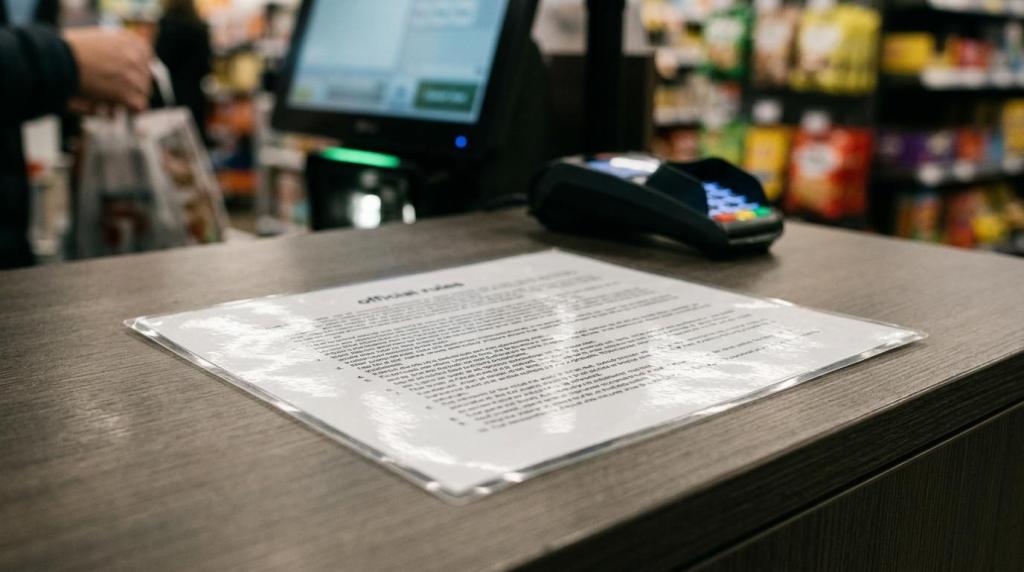
In a physical retail setting, those disclosures should not be buried. They should appear where the promotion is presented, where entries or promotional credits are discussed, and in your official rules. If you use kiosks, digital screens, printed signage, or cashier scripts, the message should stay consistent across all of them.
You also need to think beyond the “no purchase necessary” line. A sound retail sweepstakes setup usually includes eligibility terms, entry methods, prize descriptions, timing, location restrictions, and redemption procedures. If your store operates in more than one state, or serves customers across state lines through a play-at-home feature, the review becomes more important.
Your core disclosures should cover these points:
- No purchase necessary: say it clearly and in plain language
- No improved odds from purchase: buying something cannot increase the chance of winning
- Official rules: list eligibility, dates, entry method, prize details, and claim process
- Free entry method: explain how a person can enter without paying
- Jurisdiction review: check whether a state requires registration, licensing, or a bond
- Marketing consistency: make sure signage, staff language, kiosks, and online materials match
One more practical point: staff training matters. A compliant written policy can still fail if employees say the wrong thing at the counter. If your team suggests that buying more improves a customer’s chances, you have a problem even if your printed rules say otherwise.
Retail sweepstakes software for physical store operations
Running a promotional sweepstakes manually is possible. Running it well, at scale, is another matter.
Physical retail locations need systems that do more than display a game or record a sale. You need a platform that helps control promotions, track player accounts, manage redemptions, support kiosks, and produce reports you can actually use. If you operate multiple stores, you also need standard settings, central visibility, and the ability to push consistent promotions across locations.
This is where software built for retail sweepstakes operations stands apart from generic giveaway tools. A physical location has different needs than an online-only campaign. You may be handling in-store transactions, promotional credits, fish game setups, kiosks, age-gated access, geofencing, multi-store oversight, and location-specific rules.
A web-based platform built for this model can reduce friction fast. RiverSlot, for example, positions its software for physical retail locations, including internet cafes, fish game rooms, smoke and vape shops, gas stations, convenience stores, bars, lounges, kiosks, and distributor networks. The platform is cloud-based, does not require servers or special hardware, and is built around POS activity, player accounts, reporting, kiosk management, and redemptions.
That matters because the business case is not just about getting live. It is about getting live with control. RiverSlot also states that locations can launch in under one hour, get 24/7 support, avoid setup and support fees, and pay only for used credits. For operators, that lowers the barrier to testing a program while keeping the focus on daily store performance.
Promotional sweepstakes software features that help retail compliance
Software does not replace legal advice, but it can help you run your program in a more controlled way.
If you are evaluating platforms, focus on the operational and compliance-adjacent functions that support how your store actually works. RiverSlot states that it offers legal and compliance tools such as age gates, geofencing, and configurable modes, along with customizable promotions and templates. Those features can help you set location-specific rules, control access, and keep promotions more consistent across stores.
This is where software value becomes easy to measure:
| Operational area | What you need | Software support that helps |
|---|---|---|
| Entry and promotion flow | Clear process tied to store activity | POS integration and promotion templates |
| Customer controls | Verified access and account management | Age gates and player accounts |
| Location restrictions | Rules that match where you operate | Geofencing and configurable modes |
| Prize and redemption handling | Accurate records and clean workflows | Redemption tracking and reporting |
| Multi-store oversight | Standard settings and visibility | Distributor tools and centralized management |
| Revenue extension | Engagement beyond the store visit | Play-at-home access tied to a single account |
No platform can promise that your setup is lawful in every jurisdiction. RiverSlot itself warns operators not to assume software or settings are lawful in all states or for all retail operations, and advises legal review. That is the right position. Good software gives you tools. Your legal structure still needs its own review.
Multi-location promotional sweepstakes management for operators and distributors
If you manage more than one location, your risk and your upside both increase.
A single-store operator can often spot issues quickly. A multi-location group or distributor network faces a different challenge: one weak process can spread across every site. Inconsistent rules, mismatched signage, outdated promotion templates, and uneven staff training create exposure that multiplies with scale.
That is why central control matters. You want to roll out approved promotions, monitor performance, review redemption trends, and keep account activity visible without relying on manual reports from every store.
Useful multi-location controls often include:
- standardized templates
- centralized reporting
- kiosk oversight
- account permissions
- location-based settings
- Distributor visibility: monitor store activity across a network
- Faster rollout: deploy approved offers without rebuilding each setup from scratch
For B2B operators, that kind of control is not just convenient. It protects margins, reduces avoidable mistakes, and makes it easier to train staff around one process instead of ten.
Promotional sweepstakes planning for compliant retail growth
Before you launch or expand, build your plan around legal review, operational discipline, and customer clarity.
Start with your jurisdiction. State and local rules can differ, and the details matter. Some locations may allow a structure that others do not. Some may require filing steps or additional disclosures. If your promotion touches telemarketing, remote access, or cross-state participation, the review gets even more specific.
Then move to your official rules and store process. Your rules should match what happens at the register, on the kiosk, in staff scripts, and in reporting. If a customer asks how to enter without buying anything, every employee should give the same answer. If a regulator reviews your materials, the same rule set should appear across every touchpoint.
A smart rollout often follows this order:
- Review state and local requirements with legal counsel
- Draft official rules and required disclosures
- Configure software settings for location, age, and promotional controls
- Train staff on approved language and entry procedures
- Audit signage, kiosks, and reports before opening the program
- Recheck the program as rules, locations, or promotion types change
If you take that approach, promotional sweepstakes stop being a loose marketing idea and become a managed retail program. That shift is where stronger operations usually start. You move from reacting to daily issues to running a system that can support repeat business, cleaner administration, and growth across one location or many.