


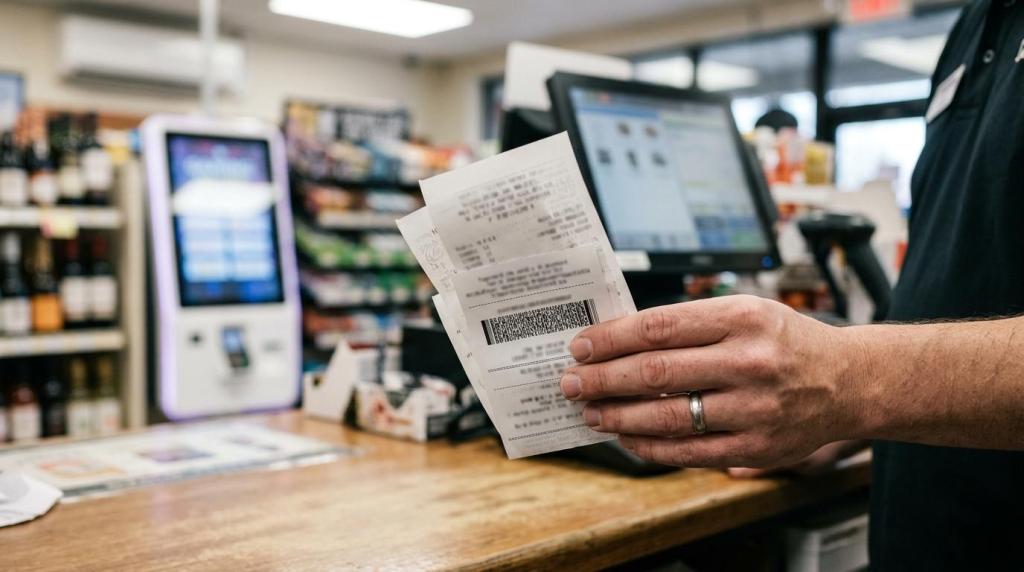
Promotional game software is the system behind a sweepstakes-style retail promotion. You use it to connect purchases or promotional entries to game play, manage customer activity, handle redemptions, and keep your team working from one consistent workflow.
That matters because this software is not just about entertainment. In a physical location, you are also running sales, tracking player accounts, monitoring staff actions, printing receipts, managing kiosks, and producing reports you can actually use. If your software is weak, every one of those jobs becomes harder.
If you operate an internet cafe, fish game room, smoke shop, gas station, convenience store, bar, lounge, or kiosk-based location, you need software that treats promotional gaming as a business system, not just a game screen.
Promotional game software definition for retail sweepstakes businesses
Promotional game software is a retail platform that lets you offer game-based promotions to customers in a controlled, trackable way. In many setups, a customer buys a product or service and receives promotional access to a game. The software then records the transaction, applies the promotion rules, tracks the player session, and manages any redemption flow tied to the offer.
That is why promotional game software sits somewhere between a POS system, a player account platform, and a content management system. It has to support front-counter operations while also handling game access, promotional credits, prize records, and reporting.
A strong platform usually includes much more than game content alone.
- POS workflows
- Player registration
- Promotional credit tracking
- Redemption tools
- Staff permissions
- Reporting dashboards
- Kiosk management
- Multi-location controls
In other words, promotional game software is the operating system for your location’s promotional gaming program.
How promotional game software works in store operations
The day-to-day flow is usually straightforward. A customer makes a qualifying purchase or receives an approved promotional entry. The software logs the transaction, applies the promotion, and gives the customer access to a game session or promotional credits. Staff can view the account, help the customer redeem valid winnings, and close out the interaction inside the same system.
For you, the real advantage is consistency. When your software connects sales, entries, game access, and redemption records, you reduce confusion at the counter. Staff do not have to jump between disconnected tools or guess how a promotion should be applied.
This also gives you tighter control over reporting. You can track which promotions are working, which locations are producing the best results, and how player activity changes over time. That is especially useful if you manage multiple stores or support a distributor network.
The table below shows the main parts of promotional game software and why they matter in a retail setting.
| Component | What it does | Why it matters to you |
|---|---|---|
| POS workflow | Connects purchases and promotional entries | Keeps sales and promotions tied together |
| Player accounts | Stores customer activity, balances, and play history | Supports repeat visits and cleaner service |
| Promotional games | Delivers the game experience tied to the offer | Drives engagement inside the location |
| Redemptions | Tracks prize claims and payouts | Helps staff process awards accurately |
| Reporting | Shows sales, promotion use, and player trends | Helps you make better operating decisions |
| Kiosk controls | Manages self-service access in store | Reduces staff load and supports volume |
| Multi-location tools | Centralizes oversight across stores | Gives operators and distributors cleaner visibility |
When the software is web-based, you also avoid many of the problems tied to local servers and heavy hardware setups. That can mean faster deployment, easier updates, and simpler support.
Promotional game software compliance and disclosure requirements
This is where many operators make the mistake of thinking the software is only a technical tool. It is also part of your compliance posture.
In the United States, sweepstakes-style promotions are closely tied to consumer protection rules. The Federal Trade Commission has taken action against businesses that used dark patterns or weak disclosures that made people think a purchase was required to enter or that buying would improve their odds. That is a serious warning for any operator using promotional games in a retail environment.
State consumer agencies have made similar points. Guidance from Connecticut says promotions can be deceptive or unfair if they misstate winning chances, number of winners, prize value, prize availability, or if they require an entry fee, service charge, purchase, or similar consideration to enter. Even when your promotion is valid, your wording and interface still need to be clear.
That means your software should help you present the promotion honestly at every stage: before entry, during play, and at redemption. Small disclaimers hidden below buttons or unclear messages at the kiosk can create risk. If the system design pushes people toward the wrong impression, that is a problem.
Your software should support clear disclosures like these:
- No purchase necessary: customers must be able to see that a purchase is not required to enter or win, where applicable
- Alternative entry method: the system should support a lawful way to participate without buying
- Odds of winning: rules and promotional materials should explain the odds or how they are determined when required
- Material costs or conditions: any limits, fees, time windows, or redemption rules should be clearly presented
- Prize availability: customers should not be misled about how many prizes exist or whether a stated prize is actually available
You also want records. If a regulator, partner, or internal manager needs to review how a promotion was configured, changed, or redeemed, your software should provide an audit trail. That includes staff actions, promotion settings, timestamps, and player activity where appropriate.
None of this replaces legal review. You should still work with qualified counsel before launch and whenever you enter a new state or country. Good software does not remove legal obligations, but it can make those obligations easier to carry out correctly.
Essential promotional game software features for operators
Once you move past the basic definition, the next question is practical: what should the software actually do for your business?
First, it should reduce friction in the store. If your cashier has to memorize special rules, if your kiosk freezes under normal traffic, or if your reports are too messy to read, you are paying for complexity instead of control. A retail operator needs software that helps staff move fast and stay accurate.
Second, it should give you a clear management layer. That includes access controls, location settings, reporting, and templates you can reuse. If you manage more than one store, this becomes even more important. Multi-location oversight is not a bonus feature. It is the difference between scalable growth and constant cleanup.
The strongest platforms usually include features like these:
- Role-based staff access: control who can redeem, edit promotions, or view reports
- Age gates and geofencing: support access restrictions based on policy and location rules
- Configurable promotion modes: adjust game formats and promotional settings for different store models
- Cloud-based deployment: avoid on-site servers and simplify updates
- Custom templates: keep branding and offers consistent across locations
- Distributor dashboards: monitor multiple operators from one place
- 24/7 support access: reduce downtime when you need help outside standard business hours
If you run fish game rooms or other specialized promotional formats, game variety matters too. Your software should support the content types your customer base actually wants, while still keeping the back office side organized. The game may attract the player, but the system keeps the location profitable.
What weak promotional game software costs your business
Bad software rarely fails all at once. It chips away at margins and trust.
You see it in slow staff training, missing reports, unclear promotions, disputed redemptions, and inconsistent customer experiences from one shift to the next. If the platform also lacks strong disclosure support, the cost can go far beyond efficiency and move into consumer complaints or regulatory scrutiny.
That is why the best buying decision is not the cheapest system on paper. It is the system that gives you control, clarity, and room to grow.
How to choose promotional game software for your retail model
Start by matching the software to your operating model, not just your current game count. A single-location internet cafe has different needs than a distributor managing ten stores, but both need dependable POS workflows, reporting, and promotion controls.
You should also ask how quickly the system can be deployed and how much hardware it requires. Web-based platforms can often go live much faster than server-heavy setups. That matters if you want to open quickly, test a concept, or roll out new locations without a long technical project.
When you compare vendors, use a simple scorecard.
- Can your staff learn the system fast and use it without workarounds?
- Does the platform support clear sweepstakes disclosures and lawful promotional setups?
- Can you manage sales, player accounts, redemptions, and reports from one place?
- Does it scale cleanly from one location to many?
- Will support be available when your store is actually open?
Ask to see the workflow from sale to redemption, not just a demo of the game screen. Ask how the system handles no-purchase entry methods, rule display, account history, and location-level permissions. Ask what reports you can export on day one. Those answers tell you much more than a flashy front end.
If you want a strong long-term result, choose promotional game software that treats compliance, operations, and growth as part of one system. That is how you turn a promotion into a repeatable retail program instead of a patchwork process your team has to babysit every day.