


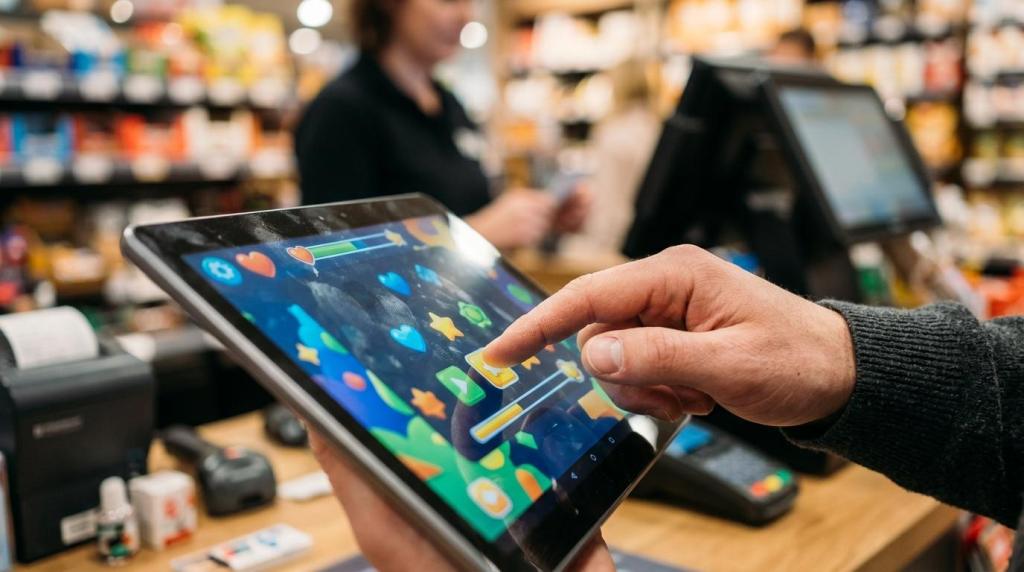
Retail marketing works better when it gives people a reason to participate, not just purchase.
That is where promotional gaming earns its place. Instead of asking customers to respond to another discount sign or loyalty reminder, you give them a simple, structured experience tied to a visit, a purchase, or a promotional entry. Done well, it can hold attention longer, create repeat traffic, and turn a routine stop into something customers remember.
For physical retail operators, this matters more than ever. You are competing for time, foot traffic, and wallet share in environments where many buying decisions happen fast. A game-based promotion can shift the mood inside the store, support higher engagement at the point of sale, and give your staff a more compelling offer than “buy this, get that.”
Academic research supports the basic idea. Studies on gamification in marketing have linked game mechanics to stronger purchase intention and higher customer engagement. At the same time, regulators are clear that sweepstakes-style promotions come with real legal limits. So the opportunity is real, and so is the need for discipline.
Why promotional gaming increases retail customer engagement
Promotional gaming works because it changes the role of the customer. Instead of being a passive shopper, the customer becomes an active participant. That shift is small on the surface, but powerful in practice. Participation creates attention, and attention often leads to stronger recall, longer dwell time, and more repeat visits.
A recent experimental study with 184 participants found that gamification marketing had a significant effect on purchase intention when compared with non-gamified marketing. The same study pointed to perceived “brand coolness” as a factor between the game-like experience and the customer’s intent to buy. In plain terms, the promotion did not just add entertainment. It changed how people felt about the brand.
A broader research review published in 2025 analyzed 80 articles from 2000 through 2024 and found that gamification and customer experience are meaningful value-generating elements across business settings. That is an important signal for retail operators. Promotional gaming is not a novelty tactic. It is part of a wider pattern in customer behavior.
The practical takeaway is simple: if you want stronger engagement, you need more than signage and pricing. You need participation.
After you frame the promotion the right way, several effects tend to show up quickly:
- Longer in-store attention
- More frequent repeat visits
- Better staff conversation starters
- Stronger offer recall
- Higher perceived excitement around routine purchases
Promotional gaming formats that fit physical retail locations
Not every retail business needs the same game structure. The right format depends on your store traffic, your average ticket, how your staff operates, and whether you run one location or many. A smoke shop, internet cafe, fish game room, convenience store, or lounge may all use promotional gaming, but the mechanics should match the real workflow of the business.
In most physical retail environments, the strongest formats are simple and fast. Customers should be able to understand the promotion in seconds. Staff should be able to explain it without slowing the line. Your system should track entries, play, redemptions, and reporting without adding manual work.
This is where web-based platforms have an advantage. You can run promotions from standard devices, connect them to POS activity, manage player accounts, and adjust offers across locations without local server setup. That keeps the program easier to launch and easier to scale.
| Retail objective | Promotional gaming format | Operational need | Compliance focus |
|---|---|---|---|
| Increase repeat visits | Visit-based reward play | Player account tracking | Clear free entry method if sweepstakes-based |
| Raise basket size | Purchase-triggered promotional entries | POS integration | No claim that purchase improves odds |
| Create destination traffic | Kiosk or in-store game station | Kiosk management and redemption flow | Age gates and location controls where needed |
| Extend engagement beyond the store | Remote promotional access tied to rules | Cloud access and account controls | Consistent disclosures across channels |
| Manage multiple stores | Shared templates and central reporting | Multi-location admin tools | Store-level compliance settings |
You do not need a complicated game to get results. In fact, simple promotions often perform better because they are easier to explain, easier to repeat, and easier to monitor.
Sweepstakes compliance rules for promotional gaming in retail
Promotional gaming can support retail marketing, but only when the structure and advertising stay inside the rules.
In the United States, sweepstakes-style promotions create legal risk when a purchase is required to enter or when customers are told, directly or indirectly, that buying something improves their chances of winning. The Federal Trade Commission has been clear on this point. In a 2023 enforcement action, the agency said it is illegal to tell consumers they must pay to enter a sweepstakes or that purchasing improves the odds of winning. The FTC also required clear, conspicuous, unavoidable disclosures that no purchase is necessary and that buying will not help a person win. You can review that action on the FTC website here.
That is not a technicality. It is the core rule set.
The FTC’s small business advertising guidance also states that sweepstakes-type promotions that require a purchase are illegal in the United States, and that promotions may need disclosures about odds, non-purchase entry methods, and the fact that no purchase or payment is required to win. State laws can add more requirements, including disclosures, licensing, or bonding.
If you run promotional gaming in a retail setting, your compliance process should cover both the offer itself and the way your staff talks about it.
A strong operating standard usually includes these basics:
- No purchase required: Your rules and customer-facing materials should plainly say this.
- No purchase advantage: Buying a product cannot improve the odds of winning.
- Clear disclosures: Important terms should be easy to see, read, and access.
- Alternative entry method: If the promotion is sweepstakes-based, the free method must be real and usable.
- State review: Rules may change by jurisdiction, so legal review matters.
Customer trust is a retail asset, not just a legal issue
Research also points to a less obvious risk. A 2022 academic study described gamification as a strategy that can increase engagement and loyalty, but warned that unethical activity in gamified marketing can damage customer trust and experience. That matters in physical retail because trust is local and immediate. If a promotion feels confusing or misleading, the damage does not stay inside the campaign. It reaches the staff, the brand, and the next visit.
You should treat clarity as part of the customer experience, not just part of the legal checklist.
Promotional gaming software features that matter for B2B retail operators
Once the legal structure is sound, execution becomes the next challenge. A promotion may look attractive on paper and still fail at the store level if it creates friction for staff, slows transactions, or forces you into manual reconciliation.
That is why operators should focus on software features that support real retail conditions. You need a platform that is fast to deploy, simple to administer, and flexible enough to handle both single-site and multi-location needs. Web-based tools are especially useful because they reduce hardware dependency and make updates easier across locations.
The most valuable capabilities tend to be operational, not flashy:
- POS connection: Tie promotional activity to purchases and redemptions without extra steps.
- Player accounts: Track participation, visits, and balances in a structured way.
- Kiosk management: Run self-service experiences that reduce staff burden.
- Reporting tools: Monitor usage, redemptions, and location performance in one place.
- Compliance controls: Age gates, geofencing, and configurable modes help support policy needs.
- Multi-location administration: Push templates, offers, and settings across a network.
If you operate several stores or support distributor networks, centralized control is not optional. It lets you keep promotions consistent while still adjusting for local conditions. That saves time, reduces errors, and gives you a cleaner view of performance.
Measuring promotional gaming ROI in physical retail
Promotional gaming should earn its place like any other retail initiative. You need to measure whether it changes customer behavior, not just whether people say they like it.
Start with a short list of metrics you can review weekly and monthly. You want to see both direct and indirect effects. Direct effects include promotional usage, redemptions, and sales tied to the offer. Indirect effects include repeat visits, larger baskets, stronger traffic during slower dayparts, and new conversations at the register.
A practical scorecard often includes:
- Visit frequency
- Average transaction value
- Redemption rate
- New player account sign-ups
- Revenue by location
- Sales lift during campaign periods
Vendor case material can also offer a directional view of what is possible, as long as you treat it carefully. One reported retail deployment described kiosks rolled out across five franchise locations and a total revenue increase of $20,000 per month excluding extra product sales tied to new customer traffic. That does not guarantee a similar result for your stores, but it shows why operators keep looking at promotional gaming as a revenue and engagement tool rather than a simple novelty.
The best results usually come when you treat promotional gaming as part of your retail system, not as a one-off campaign. That means your promotion rules, staff scripting, reporting, compliance review, and location controls all work together. When they do, you get a marketing tool that can hold attention in the store, support purchase intent, and scale with your business instead of creating more complexity.