


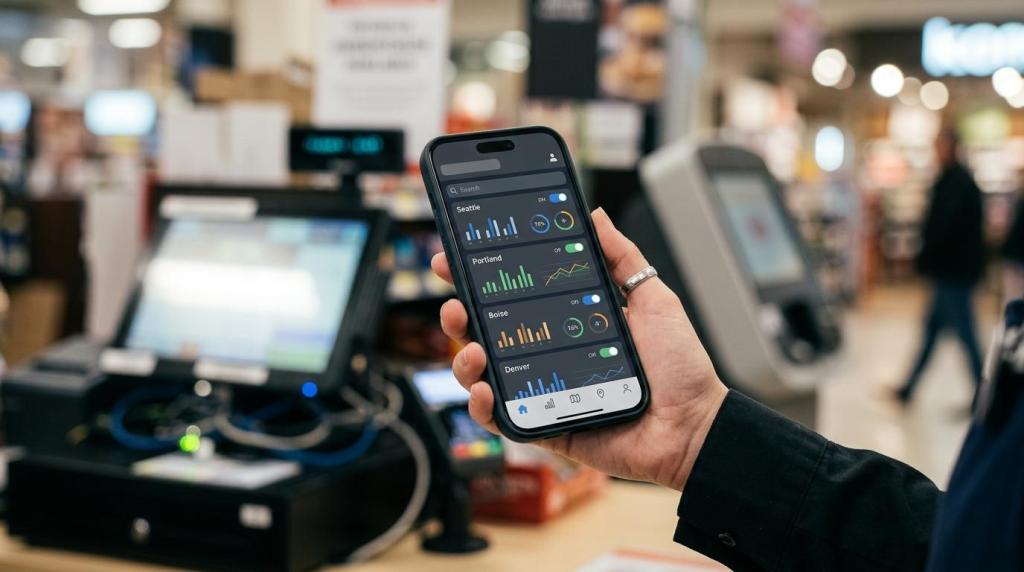
Growth sounds simple when you say it fast: open another store, add more terminals, hire a few people, and repeat what already works.
Your day-to-day experience says otherwise.
When you run a sweepstakes retail operation, expansion adds pressure in every direction at once. You have to keep cashier workflows consistent, track redemptions, monitor player accounts, compare location performance, and make sure each site follows the rules that apply in that city, county, or state. If your systems are patched together, every new location multiplies the friction.
That is where retail software starts to matter less as a tool and more as infrastructure. The right system helps you standardize how your stores operate, while giving you enough control to handle the differences that come with each new market.
Retail software supports sweepstakes growth beyond a single store
A sweepstakes store does not expand the same way a generic retailer does. You are not only moving products across counters. You are managing promotional gameplay, point of sale activity, kiosk access, redemptions, staff permissions, and customer account activity inside a physical retail environment.
That makes software selection a strategic decision. A generic POS may process transactions, but it often stops short of what a sweepstakes location needs to manage at scale. A platform built for this model can combine sales, promotional games, player management, reporting, kiosk oversight, and multi-location visibility in one place.
The U.S. Small Business Administration has noted that POS software can help businesses sell from multiple locations and expand beyond a single physical store. For sweepstakes operators, that principle becomes even more valuable because expansion depends on repeatable store operations, not just payment acceptance.
Multi-location retail software creates consistency where expansion usually breaks down
Once you move from one location to two, inconsistency becomes expensive. One store handles sign-ups one way. Another store trains staff differently. A third site tracks redemption activity in a separate spreadsheet. Soon, you are spending more time fixing process drift than growing revenue.
Retail software gives you a cleaner operating model by centralizing the tasks that should stay the same across the business. That includes common cashier actions, player account workflows, reporting structures, and redemption controls.
A strong system helps you create repeatability in areas like these:
- cashier logins
- player account creation
- promotional credit handling
- redemption tracking
- store-level reporting
- terminal and kiosk oversight
If you plan to grow into a small chain or a distributor style network, repeatability is not optional. It is the difference between managing five locations with confidence and constantly reacting to store-by-store issues.
Expansion software must handle compliance realities at each business location
Expansion is not just a sales question. It is also a location question.
The SBA points out that opening in a new city, county, or state can trigger new registrations, taxes, licenses, permits, and foreign qualification requirements. It also notes that business location affects taxes, zoning laws, and regulations. That matters because a store that works well operationally can still face delays or added risk if your systems do not support location-based controls.
Your software cannot replace legal review, licensing work, or tax registration. It can, though, make compliance easier to manage across locations. When you can configure location-specific settings and monitor store activity from one dashboard, you reduce the chance that each site drifts into its own version of acceptable practice.
What you want is a platform that helps you support local requirements without breaking your overall operating model.
- Location controls: configurable settings by store, market, or terminal group
- Age protections: age gates and account safeguards at sign-in or transaction points
- Access boundaries: geofencing or location-aware restrictions where needed
- Audit visibility: reports that let you review transactions, redemptions, and activity by store
- Role permissions: limits on what cashiers, managers, and owners can change
This is one of the clearest reasons specialized retail software matters for sweepstakes businesses. The more places you operate, the more valuable centralized control becomes.
Retail software connects POS workflows with promotional game operations
In a sweepstakes environment, your point of sale is not isolated from the rest of the customer experience. A sale may trigger account activity. Account activity may connect to promotional game access. Redemptions have to be recorded accurately. Staff need a fast way to handle routine actions without workarounds.
That is why disconnected tools cause trouble. If your POS, player management, and kiosk activity all live in separate systems, staff have to move between screens, duplicate actions, and manually reconcile information. The larger your footprint gets, the more those small delays add up.
A connected retail software platform reduces those handoffs. Instead of treating POS as one tool and promotions as another, you run them as part of the same store workflow. That improves speed at the counter, gives your team fewer places to make mistakes, and makes training easier when you open new locations.
Here is what that looks like in practice:
| Business function | Without integrated retail software | With integrated retail software |
|---|---|---|
| Sales transactions | Manual handoff between systems | POS activity tied to account actions |
| Player account management | Separate records or inconsistent updates | Centralized account handling |
| Redemptions | Staff tracking across notes or spreadsheets | Logged redemption workflows |
| Store reporting | Delayed, fragmented visibility | Real-time or near real-time oversight |
| Multi-store comparison | Difficult to normalize data | Standardized reporting across locations |
| Kiosk monitoring | Local-only visibility | Central oversight across locations |
This is where scale starts to feel manageable. You are not adding more complexity every time you add a store. You are extending the same operating system.
Cloud-based platforms make faster rollout possible
Speed matters when you are opening a new location or testing a new format.
If your software depends on heavy local hardware, on-site servers, or long installation projects, every rollout becomes a production. Cloud-based platforms are stronger for operators who want to move quickly, especially when they are adding kiosks, terminals, or satellite locations.
A web-based setup gives you a few practical advantages. You can activate locations faster, update settings centrally, and reduce your dependence on special hardware. It also becomes easier to support mixed retail environments, whether you are working with a dedicated sweepstakes cafe, a smoke shop, a convenience store, or a bar and lounge adding sweepstakes activity as an additional revenue stream.
RiverSlot positions its platform around that model. It describes a cloud-based system for physical sweepstakes locations that includes POS workflows, player accounts, redemptions, kiosk management, reporting, and tools for multi-location networks. The company also states that stores can launch in under an hour and operate without local servers or specialized infrastructure. For an operator focused on speed, those details matter because they reduce friction at the exact moment growth is most demanding.
Retail reporting gives you the control to scale with confidence
You cannot manage expansion by instinct alone. Once you operate across multiple stores, you need reporting that tells you what is actually happening at each location.
That starts with visibility into sales and redemptions, but it should not end there. You also want to compare store activity, review cashier performance patterns, spot anomalies, monitor kiosk usage, and identify which locations are following the standard model and which ones need attention.
Good reporting helps you answer questions like these before they become problems:
- Which locations are producing the strongest return per terminal?
- Are redemptions trending unusually high at one store?
- Which shifts or teams need better training?
- Are account and transaction patterns consistent across the network?
- Where should you place the next kiosk or add the next terminal?
This is especially useful when you are balancing company-owned stores with distributor relationships or franchise-style growth. Standard reports create a common language across the network. That makes it easier to coach, adjust, and plan.
RiverSlot has shared examples of customers using its software in that kind of expansion path, including a retailer growing from a smaller terminal setup to a much larger footprint and another multi-shop business deploying POS devices across several stores. Those examples do not guarantee the same outcome for every operator, though they do show what becomes possible when growth is supported by systems built for replication.
Sweepstakes retail software helps smaller formats expand too
Not every expansion plan involves opening a full-sized new sweepstakes cafe.
You may be adding a kiosk inside an existing retail business. You may be testing a few terminals in a smoke shop or convenience store. You may be supporting multiple operators as a distributor. In each case, the software still has to do the same job: create a reliable operating structure without requiring enterprise-level complexity.
This is where web-based retail software is especially effective. You can support smaller footprints and hybrid formats while still keeping centralized control. That matters because many sweepstakes businesses do not scale through identical large stores. They scale through a mix of formats, each with different staffing levels, floor space, and transaction volume.
A system that adapts across those formats gives you more room to grow without forcing a redesign every time you enter a new type of location.
What to look for in retail software for sweepstakes stores
If expansion is your goal, you should evaluate software based on how well it supports operational replication, not just today’s transactions. The question is not only “Can this run my current store?” The better question is “Can this run my next five stores with the same level of control?”
The strongest platforms tend to share a few qualities:
- Multi-location management: one dashboard for store oversight and comparisons
- Sweepstakes-specific workflows: support for player accounts, promotions, redemptions, and kiosks
- Cloud deployment: fast setup without server-heavy infrastructure
- Compliance tools: configurable controls for age gates, geofencing, and permissions
- Flexible retail fit: support for cafes, smoke shops, gas stations, kiosks, and mixed-use venues
- Scalable pricing: a model that does not punish you for testing and growing
You should also think carefully about support. When your business depends on daily store uptime, responsive support is not a bonus feature. It is part of your operating model. A platform with 24/7 support, centralized updates, and straightforward onboarding can save you time at launch and reduce stress when issues appear during business hours.
Retail software turns expansion into a system instead of a gamble
If you are serious about growth, you need more than ambition and a good location. You need a way to make store operations repeatable, visible, and easier to control as the business spreads across more addresses.
That is the real value of retail software for sweepstakes stores. It helps you standardize what should stay consistent while giving you enough flexibility to manage location-specific requirements. It helps you connect POS actions to player activity, reporting, kiosks, and redemptions. And it gives you a stronger foundation for opening the next location without rebuilding your process from scratch.
For operators planning regional growth, franchise-style expansion, or multi-store retail rollouts, that shift matters. You stop treating each new store like a one-off project and start running expansion like a system.