


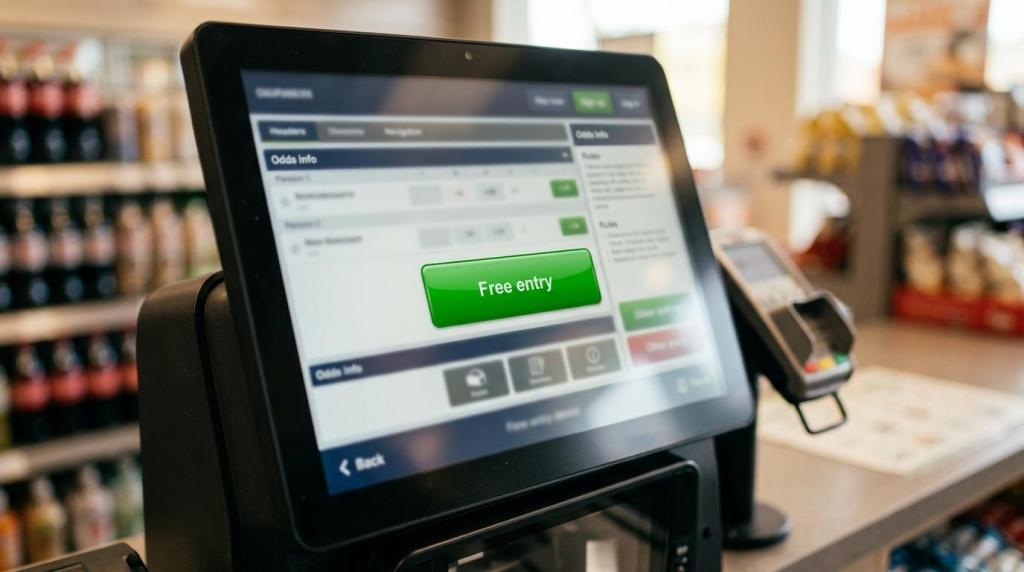
If you run a retail location, promotions need to do more than grab attention. They need to bring people in, fit your daily workflow, and stay on the right side of disclosure and eligibility rules. That is exactly where retail sweepstakes systems stand out.
Used well, a sweepstakes program is not just a game on a screen. It becomes part of your front counter process, kiosk flow, player account setup, redemption activity, and repeat-visit strategy. For stores that depend on traffic, retention, and promotional energy, that can create a real business advantage.
The key is structure. A retail sweepstakes offer only works as a modern promotion when the marketing, the disclosures, and the store operations all support the same goal: a lawful prize promotions that does not drift into purchase-linked lottery risk.
Why retail sweepstakes systems matter in modern retail promotions
Retail promotions have changed. You are no longer limited to punch cards, paper raffles, or one-size-fits-all discounts. You can now run promotions through web-based POS tools, self-service kiosks, player accounts, and cloud reporting that give you a much tighter handle on performance.
That matters because physical retail still runs on repetition. You want customers to return, load value, redeem efficiently, and talk about the experience. A sweepstakes system can support that by turning promotions into a structured, trackable program instead of a loose in-store giveaway.
For many operators, the biggest appeal is not just entertainment. It is operational control. A modern system can connect:
- Store-level promotions
- Kiosk-based engagement
- Player account activity
- Redemption records
- Multi-location reporting
That is a big shift from ad hoc promotions that rely on manual logs, printed slips, or employee memory.
There is also a strong commercial case for it. RiverSlot positions its platform as a web-based retail sweepstakes POS and kiosk system for physical locations, with promotion templates, bounceback bonuses, and multi-location tools. In one published case, a liquor shop reportedly expanded from 10 redemption kiosks to 40 within 12 months. That kind of growth points to a simple reality: when the offer and the operations work together, the promotion can become a meaningful retail channel rather than a side tactic.
What makes a retail sweepstakes promotion valid in the United States
Before you think about themes, game types, or kiosk placement, you need the legal structure right.
At a high level, federal guidance treats sweepstakes as prize promotions. The Federal Trade Commission says consumers must be told key terms before they pay anything. That includes the odds of winning, or a statement that odds depend on the number of entries if that is how the promotion works. Consumers also must be told that they can enter or win without buying anything, and that a purchase does not improve the chances of winning. If payment is required to enter or win, the offer is generally treated as a lottery.
The USPS takes a similar view in mailing-related contexts. It describes a sweepstakes as a promotional device that awards prizes by chance with no purchase or entry fee required to win. USPS rules also require clear and conspicuous disclosures around prize details, sponsor identity, entry procedures, eligibility, odds, geographic restrictions, and timing of winner notification. If mailed sweepstakes matter requires a purchase, or falsely tells someone they have won, it can become nonmailable matter.
That has direct implications for retail operators. Your system cannot just be engaging. It needs to present the right offer structure and the right disclosures at the right moment.
Here is a practical way to think about it:
| Retail sweepstakes area | What your operation needs |
|---|---|
| Entry method | A no-purchase-required path that is real, usable, and disclosed before payment |
| Odds disclosure | Stated odds or a statement that odds depend on number of entries |
| Purchase messaging | Clear language that a purchase will not increase the chance of winning |
| Prize description | Accurate prize details, restrictions, and any material conditions |
| Eligibility controls | Age gates, location limits, and restricted-area handling |
| POS workflow | Staff prompts and screens that do not imply purchase is required to win |
| Kiosk flow | Visible rules, access to disclosures, and consistent customer experience |
| Records and reporting | Entry logs, redemptions, timestamps, and store-level audit trails |
If any one of those pieces is weak, the promotion gets weaker with it.
How retail sweepstakes software supports compliant store operations
This is where software matters more than most operators expect. Compliance is not just a document issue. It is a workflow issue.
If your team is relying on verbal explanations, handwritten notes, or inconsistent store habits, your risk goes up fast. A web-based sweepstakes platform can standardize how offers are displayed, how accounts are created, how free-entry options are handled, and how redemptions are tracked. That creates consistency across shifts and across locations.
A strong retail setup should help you manage several areas at once:
- Disclosures: Present terms in a clear and conspicuous format at POS, kiosks, and account creation points
- Eligibility: Apply age gates, geofencing, and configurable modes based on location rules
- Audit trail: Store timestamps, redemptions, account actions, and reporting history
- Operations: Support cashier workflows, kiosk management, and multi-store visibility
This is one reason cloud-based systems are attractive in physical retail. You can launch faster, make changes centrally, and avoid the burden of local server maintenance. If you operate multiple stores or work through distributors, those benefits become even more noticeable.
It also helps you build better promotions. Instead of running a generic in-store giveaway, you can structure campaigns around visit frequency, time-based bonuses, bounceback offers, or location-specific activity. That gives you more control over performance while keeping the underlying rules consistent.
Where retail sweepstakes promotions often go wrong
Most retail sweepstakes problems do not start with bad intent. They start with sloppy execution.
A store may have proper terms on paper but weak staff training. A kiosk may offer a fun flow but bury the free-entry method. A promotion may say "winner" too early, or frame a purchase as necessary to activate the chance to win. Each of those issues can create exposure.
You should be especially cautious about language, screen order, and consumer perception. If the total customer experience suggests that buying is required, or that the customer has already won when they have not, that is a real problem. Regulators care about what the consumer is told and how the offer actually functions.
Some of the most common red flags look like this:
- Implied pay-to-play messaging
- Hidden entry procedures
- Missing odds disclosures
- Premature winning claims
- Material conditions shown too late
- Free-entry access that is difficult to use
There is also a design risk. If your promotion relies on confusing prompts, pressure tactics, or interface tricks that steer users away from the free-entry path, you are moving into territory many businesses now describe as dark patterns. That is the opposite of what you want. A modern retail promotion should be direct, visible, and easy to explain.
How sweepstakes systems fit retail POS, kiosks, and player accounts
The strongest retail sweepstakes programs are not bolted onto operations. They are built into them.
At the POS, your team needs a fast way to create accounts, apply promotional logic, issue entries, and process redemptions without slowing down the line. At kiosks, customers need a simple interface that reflects the same rules and the same disclosures. In player accounts, you need visibility into balances, promotional activity, and visit behavior.
That three-part connection matters because it turns a sweepstakes system into a retail system.
When these pieces work together, you can:
- reduce manual errors
- keep store policies consistent
- measure performance by location
- respond faster to customer questions
- manage growth without rebuilding the process
This is especially useful in locations that already sell high-frequency consumer products, including smoke and vape shops, gas stations, convenience stores, bars, lounges, and internet cafe environments. In those settings, promotions work best when they are easy to repeat and easy to monitor.
A web-based setup can also open the door to play-at-home extensions where allowed and properly configured, which may give you a way to keep promotional engagement active beyond the store visit. That does not replace the retail experience. It extends its reach.
What to look for in retail sweepstakes software
Not every platform is built for the realities of physical retail. You need software that works at the counter, on the floor, and across locations, not just in a demo.
When you evaluate a provider, focus on the features that reduce operational drag and help you keep the promotional structure clean.
A useful checklist includes:
- Launch speed: You should be able to get a location running quickly without a long deployment cycle
- Support model: 24/7 help matters when your stores operate beyond standard office hours
- Compliance tools: Age gates, geofencing, and configurable access modes should be built in
- Promotion controls: Templates, bonuses, account-based campaigns, and store-specific customization should be easy to manage
- Scalability: The same platform should fit one store, many stores, and distributor networks
- Hardware burden: Cloud delivery with no special servers keeps expansion simpler
You should also ask how the system handles free-entry access, rules display, estimated odds disclosures where relevant, and reporting retention. Those questions are not side issues. They are part of the product fit.
Why multi-location retail sweepstakes programs need central control
Once you expand beyond one store, inconsistencies start to multiply. One manager explains the promotion one way. Another store places disclosures on a different screen. A third location uses an outdated template. That kind of drift can hurt both revenue and risk control.
Centralized software gives you a way to standardize the moving parts without slowing local operations. You can manage promotions by location, review reporting across the network, and update settings without visiting every site. That is a major advantage if you operate franchises, kiosks in partner venues, or a distributor-led footprint.
RiverSlot highlights this kind of scalability in its own market positioning, describing a platform that can support single stores as well as multi-location networks. It also cites a smokeshop franchise case where five mini POS devices across five stores reportedly increased franchise revenue by $20,000 per month while lifting foot traffic from the targeted clientele by 25%. Whether you are testing one location or managing a broader rollout, those are the kinds of outcomes operators are trying to create: repeatable promotions with measurable impact.
The lesson is straightforward. Growth is not just about adding more kiosks or more screens. It is about keeping the promotion structure intact as volume rises.
How to set up a stronger retail sweepstakes program from day one
If you want your promotion to perform, start with operations before graphics.
Write the offer terms in plain language. Make the no-purchase-required path visible. Confirm that your odds statement is accurate. Train staff to avoid casual wording that suggests someone must buy to participate or that buying improves winning chances. Then configure the POS and kiosk flow so the system reinforces those same points every time.
Your rollout plan should cover a few basics:
- Store scripting: Give staff short, approved language for customer questions
- Screen order: Show disclosures before payment, not after
- Free-entry access: Make the method practical, not theoretical
- Recordkeeping: Retain logs for entries, redemptions, and account actions
- Location controls: Match age, geography, and operating modes to the site
That approach gives you something many retailers miss: a promotion that is both marketable and manageable.
And that is where retail sweepstakes systems fit best in modern promotions. They are not just a traffic tool or a kiosk feature. They are the operational layer that helps you run prize promotions with more consistency, more visibility, and more room to grow.