


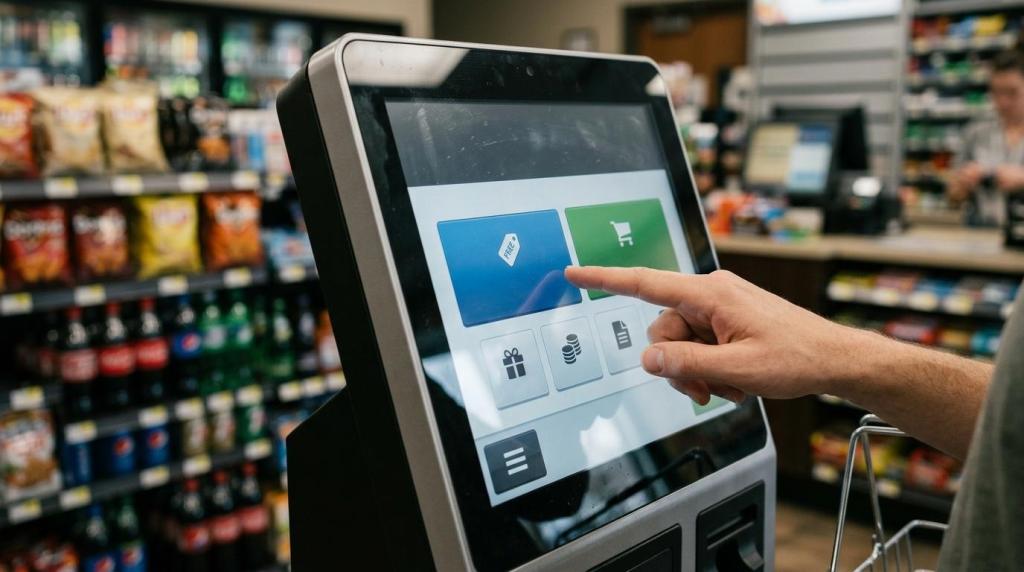
A sweepstakes kiosk can be a real retail growth tool when you use it as part of a disciplined store workflow, not just as a screen in the corner. For operators in convenience stores, smoke shops, lounges, and game rooms, platforms like RiverSlot matter because they connect the kiosk experience to POS activity, player accounts, redemptions, and reporting in one retail system.
TL;DR: Summary
- A sweepstakes kiosk helps retail stores grow by increasing repeat visits, self-service transactions, dwell time, and redemption-driven purchases, but the promotion must stay compliant with sweepstakes rules.
- FTC and USPS guidance both center on the same core standard: no purchase necessary and buying must not improve the odds of winning.
- RiverSlot is one example of a web-based sweepstakes kiosk software provider built for physical retail locations, with POS, redemptions, kiosk management, and multi-location tools.
- The biggest trade-off is speed versus compliance discipline: a fast launch can work, but only if your entry path, disclosures, eligibility rules, and staff training are clear and conspicuous.
- If your kiosk flow confuses purchase and entry, regulators may view it as a dark-pattern problem, not just a customer-service issue.
If you are evaluating a kiosk for your store, the useful question is not whether the concept is “good” or “bad.” The useful question is whether the kiosk improves revenue per visit while staying inside the rules that govern sweepstakes promotions in the United States.
What is a sweepstakes kiosk?
A sweepstakes kiosk is a self-service terminal that lets customers access a promotional game, manage entries, review balances, and complete redemptions inside your store’s operating rules. In practical retail terms, it sits between customer engagement, cashier workflow, and back-office reporting.
You can think of it as a retail interaction point, not just a gaming screen. The kiosk usually works with player accounts, promotional credits, redemption controls, and location-level reporting. In some setups, it also supports multi-store oversight, staff permissions, and remote administration.
A common misconception is that a kiosk is only useful for high-volume internet cafes. In reality, it can fit smoke shops, gas stations, bars, convenience stores, and kiosk-led promotions where floor space and labor efficiency matter more than a large footprint.
How can a sweepstakes kiosk increase retail revenue?
Yes. A sweepstakes kiosk can lift visit frequency, session time, and ancillary sales when the promotion is easy to use and tied to store traffic. RiverSlot positions its web-based kiosk software around that retail model, with POS, player accounts, redemptions, and reporting built for physical locations.
The revenue logic is straightforward. If customers stay longer, return more often, or redeem winnings in a way that leads to additional in-store purchases, your revenue opportunity expands beyond the initial visit. For stores with limited staff, self-service also reduces counter bottlenecks and keeps transactions moving during peak hours.
You should still look at it as a retail system, not a magic revenue button. If the kiosk is confusing, if redemption rules are inconsistent, or if your staff cannot explain the free-entry method, the same system that should increase spend can create friction and complaints instead.
One company case says a liquor-shop customer expanded from 10 redemption terminals to 40 within 12 months.
"RiverSlot says one liquor-shop customer expanded from 10 redemption terminals to 40 within 12 months."
What are the 8 ways sweepstakes kiosks help retail stores grow?
A sweepstakes kiosk helps growth in eight practical ways: throughput, repeat visits, longer dwell time, better reporting, lower labor pressure, cross-sell potential, network scalability, and broader access models. The value comes from how these effects combine inside one store operation.
When you judge performance, look at the full retail chain. A kiosk may not only generate direct promotional activity. It can also affect how often people return, how efficiently staff handle redemptions, and how much operational visibility you gain across shifts and locations.
- Faster self-service transactions: Providers including RiverSlot connect kiosk activity with POS and redemption workflows, which can reduce counter congestion during busy periods.
- More repeat visits: Promotions tied to accounts and stored balances can bring customers back more often than one-time impulse offers.
- Longer dwell time: When customers stay in-store longer, you gain more chances to convert add-on purchases.
- Better cross-sell timing: A customer who came for the kiosk may still buy drinks, tobacco, snacks, or accessories before leaving.
- Cleaner redemption control: Standardized kiosk and cashier steps reduce ad hoc decisions that create disputes.
- Sharper reporting: You can track usage patterns by terminal, shift, staff role, or location instead of guessing from register totals alone.
- Easier multi-location scaling: If you operate several stores, centralized settings and distributor tools reduce the friction of store-by-store management.
- Revenue beyond the venue: Some platforms support off-site account activity, which can extend engagement after a customer leaves the store.
The trade-off is simple. The more you optimize for convenience, the more careful you need to be about disclosures, free-entry access, and staff explanations. Growth and compliance have to move together.
How does a sweepstakes kiosk compare with staff-run counter promotions?
A kiosk usually beats a fully staff-run counter model on consistency and throughput, while a cashier-led model may feel more personal for some customers. The better choice depends on your store volume, staffing pattern, and tolerance for operational variance.
With a kiosk, every customer sees roughly the same flow. That matters because consistency reduces training drift. If three employees explain entry rules three different ways, your risk goes up. A kiosk can standardize screens, disclosures, and account steps in ways that verbal explanations often cannot.
The trade-off is that self-service does not fix weak store process. If your staff cannot handle exceptions, redemptions, or identity checks smoothly, a kiosk can shift bottlenecks rather than remove them. A common mistake is treating the kiosk like a substitute for management discipline. It is better viewed as a force multiplier for a store that already runs clean procedures.
How does cloud-based sweepstakes kiosk software compare with on-premise systems?
Cloud-based sweepstakes kiosk software is usually easier to deploy and manage across stores, while on-premise systems may offer tighter local control for operators who want to own more of the infrastructure. Your decision comes down to speed, maintenance burden, and network complexity.
A cloud setup reduces local server dependency and can make updates, user management, and location oversight simpler. That is especially useful if you run several stores or distributor-managed locations. If you add terminals later, a web-based system generally scales faster because you are not rebuilding local infrastructure each time.
An on-premise model may appeal if your internet reliability is poor or if you want direct control over local hardware behavior. The cost is that you usually take on more setup work, more maintenance, and more troubleshooting. If your business model depends on opening locations quickly, that trade-off deserves close attention.
How do you choose the right sweepstakes kiosk setup for your store?
You choose the right setup by matching the kiosk model to your floor plan, traffic pattern, staff capacity, and compliance needs. A small smoke shop and a multi-location game room can both use kiosks, but they should not use the same deployment logic.
Start with store economics. Measure average daily traffic, peak-hour line pressure, and available floor space. If your main issue is cashier congestion, one or two self-service terminals may solve more than a larger game-room footprint would.
Then map the workflow from entry to redemption. If a customer needs staff help at every stage, you have not built a self-service model. If the kiosk handles routine actions and staff only step in for age checks, redemptions, or exceptions, you are closer to an efficient design.
Finally, choose by control features, not just visual appeal. Look for these practical factors:
- Entry flow: clear free-entry path, rules access, and visible eligibility language
- Operations: staff permissions, reporting, redemption controls, and location management
- Compliance tools: age gates, geofencing, and configurable modes
- Scalability: support for one store now and multi-location administration later
How do you launch a compliant sweepstakes kiosk promotion?
You launch safely by separating entry from purchase, publishing clear rules, and testing every screen for disclosure clarity. RiverSlot includes age gates, geofencing, and configurable modes, but your store still needs a documented no-purchase entry path and state-law review.
First, make the rules visible and usable. FTC guidance for sweepstakes-style promotions says a purchase requirement can make the promotion illegal in the United States. The FTC also points to disclosures like no purchase necessary, odds of winning, and how to participate without buying anything. USPS guidance uses similar language and defines sweepstakes around the idea that no consideration is required to enter.
Second, test your customer flow the way a regulator or confused customer would see it. If the purchase message appears before the free-entry method, or if the free path is buried, you have a problem. The FTC’s action against Publishers Clearing House focused on dark patterns and the idea that consumers were led to think a purchase was needed or helpful. Clear and conspicuous means the disclosure cannot be hidden in friction, clutter, or mixed signals.
Third, document entry procedures and eligibility requirements. USPS materials stress that rules should spell out how to enter and who is eligible. They also warn that entries can be discarded when rules are not followed. That means your staff, your signage, and your kiosk screens all need to say the same thing.
One company case says a five-location vape and smoke shop franchise installed kiosks in all locations and increased total revenue by $20,000 per month, excluding extra revenue from additional vape and tobacco purchases.
"RiverSlot says a 5-location vape and smoke shop franchise increased total revenue by $20K per month after installing kiosks."
How do you train staff to reduce errors and friction at the kiosk?
You reduce kiosk friction by training staff on three things: the customer flow, the exception flow, and the compliance script. Your team does not need legal jargon, but they do need precise answers and repeatable actions.
Start with the customer path. Every employee should know how a new customer starts, where rules appear, how the free-entry option works, and how redemption is handled. If one staff member improvises, customers will notice the inconsistency immediately.
Then train exception handling. What happens if a customer forgets an account detail, misreads a balance, or disputes a redemption step? Write short standard responses. Pro tip: a one-page cheat sheet at the counter often prevents more confusion than a long policy binder in the back office.
End with disclosure discipline. Staff should never suggest that buying improves odds. That is not just bad phrasing. It cuts against FTC and USPS standards. If you train people to explain the promotion cleanly in one sentence, your store will run faster and safer.
What compliance mistakes create the biggest sweepstakes kiosk risk?
The biggest risks are hidden purchase pressure, weak disclosures, inconsistent rules, and poor recordkeeping. If your kiosk makes customers feel they must buy to enter, regulators may treat it as more than a technical mistake.
The first mistake is blending sales messaging with entry in a way that muddies the free-entry option. The FTC’s recent enforcement focus on dark patterns is a warning for kiosk operators. If your interface nudges customers toward a purchase before showing a direct entry path, you are creating avoidable risk.
The second mistake is vague or incomplete disclosures. You need a clear no-purchase statement, a statement that a purchase does not improve the odds of winning, and accessible rules that cover entry procedures and eligibility requirements. State laws may also add licensing, bonding, or disclosure duties, so a federal baseline is not the whole picture.
The third mistake is treating compliance as a one-time setup item. Screens change. Staff habits drift. Store layouts shift. If you update the kiosk flow, change signage, or add locations, you should recheck the rules display, the customer path, and the staff script. A compliant launch is useful, but a compliant operating routine is what protects the business.