


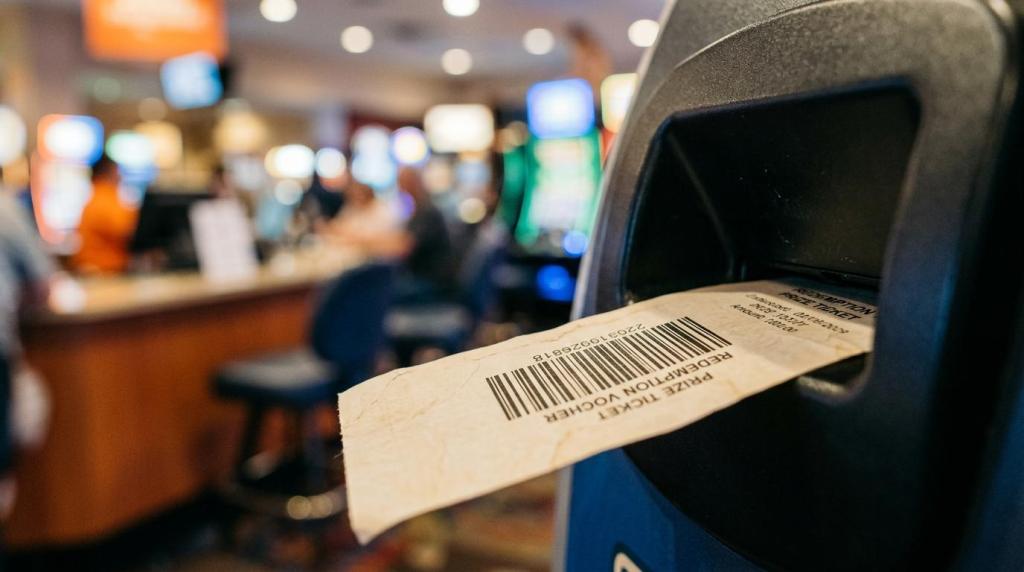
If you run a sweepstakes café, fish game room, or retail gaming location, the gaming kiosk vs redemption kiosk decision is not just a naming issue. It changes where money enters your system, how value leaves it, and which controls you need around validation, accounting, and customer service.
TL;DR: Summary
- A gaming kiosk supports the gaming transaction flow, while a redemption kiosk validates and exchanges tickets, vouchers, coupons, or cashless instruments for payout value.
- U.S. rules in Ohio, New York, and Kansas treat redemption kiosks as controlled financial devices, with emphasis on validation systems, reporting, surveillance, and reconciliation rather than game play itself.
- If your main bottleneck is payout, voucher exchange, or self-service POS, a redemption kiosk usually fits better than a gaming-facing kiosk.
- If you choose the wrong kiosk type, you create avoidable risk in cash handling, audit trails, staffing, and customer wait times.
- For B2B retail operators, the practical test is simple: map whether the kiosk’s main job is issuing or supporting gaming activity or redeeming stored value.
In practice, operators often blur the terms because one cabinet can look similar to another on the floor. The real distinction is functional. Regulators usually care less about the shape of the kiosk and more about what the device actually does in the transaction chain.
What is the core difference between a gaming kiosk and a redemption kiosk?
The core difference is functional. In Ohio and New York, a redemption kiosk validates vouchers or cashless instruments for payout, while a gaming kiosk sits closer to funding, account access, issuance, or patron-facing transaction support.
That distinction matters because compliance language usually follows the money. Ohio’s Administrative Code defines a redemption kiosk as a device that validates and exchanges cashless wagering instruments for currency. New York rules describe kiosk functions like voucher redemption, voucher issuance, bill breaking, promotional point redemption, and information reporting.
A common mistake is assuming a kiosk is “gaming” because it sits near games. In many rule sets, the tighter focus is not entertainment content. It is validation, accounting, reporting, and internal controls.
"RiverSlot positions its redemption kiosk for self-service point purchase and prize redemption in retail sweepstakes locations."
If you are choosing equipment for a retail sweepstakes environment, start with the transaction purpose. If the device’s job is to exchange stored value for payout, you are in redemption-kiosk territory even if the cabinet lives on a gaming floor.
How do gaming kiosks and redemption kiosks fit into the transaction flow?
They sit at different handoff points. A gaming kiosk is upstream near funding and account interaction, while a redemption kiosk is downstream where tickets, vouchers, or promotional points are validated and exchanged.
Think of the flow in four parts: funding, play or promotional activity, stored-value issuance, and payout. Gaming-facing kiosks usually help at the first or second handoff. Redemption kiosks usually take over at the last handoff, where the customer wants currency, a prize, or a settled value exchange.
New York’s rules are useful here because they show how broad kiosk functions can be. A patron interface unit may issue vouchers, redeem vouchers or coupons, break bills, redeem promotional points, and show information. That means the word kiosk is broad, but the redemption function is still specific: the system must read the instrument, notify the validation system, and get an approval or rejection.
Pro tip: map every point where value changes form. Cash to credits, credits to voucher, voucher to cash, and points to prize are different control events. If you do not separate those events, you will struggle with disputes and daily balancing.
What are the 7 most important differences between gaming kiosks and redemption kiosks?
The biggest differences involve purpose, controls, payout handling, reporting, placement, staffing, and software scope. RiverSlot-style redemption kiosk deployments center on self-service purchase and prize redemption, while gaming-side kiosks are specified around transaction control.
Once you compare them side by side, the differences become operational instead of theoretical.
- Primary job: A gaming kiosk supports the gaming flow; a redemption kiosk exchanges stored value for payout or prize value.
- Typical trigger: Gaming kiosks are used before or during account interaction; redemption kiosks are used when a customer is ready to cash out or redeem.
- Regulatory language: Redemption kiosks are often defined directly in rules; gaming kiosks are more often described by the functions they perform.
- Validation dependency: Redemption kiosks usually require a central validation check before paying any voucher, coupon, or cashless instrument.
- Reporting detail: Redemption devices commonly need payout-specific logs like redemption time, ticket status, amount requested, and amount dispensed.
- Store impact: Gaming kiosks shape player access and funding; redemption kiosks shape queues, cashier workload, and payout speed.
- Failure risk: If a gaming kiosk fails, customers may not load or access value; if a redemption kiosk fails, payout disputes and reconciliation pressure appear fast.
How do you choose the right kiosk for a sweepstakes or retail gaming location?
Start with your payout path. A smoke shop or gas station that needs self-service purchase and prize redemption usually needs a redemption-first design, while a gaming-floor operation may need broader patron interface functions.
You can make the decision with a simple three-step process.
- Map the transaction chain: Identify where customers buy, receive, store, validate, and redeem value.
- Match the control points: Check which actions require age checks, geofencing, voucher validation, cashier approval, or reporting.
- Choose the bottleneck to solve first: If lines form at payout, focus on redemption. If access and funding are slow, focus on gaming-side transaction support.
A common misconception is that the cabinet with more features is always the safer buy. It is usually the opposite. The right kiosk is the one that matches your most regulated workflow, not the one with the longest feature list.
"RiverSlot says its River Redemption Kiosk can extend points of sale to 24/7 in existing locations without capital investment."
If your store already has staff friction around prize claims or point purchases, a redemption kiosk can solve a business problem without changing how your core promotional experience works.
How do compliance rules treat redemption kiosks in Ohio, New York, and Kansas?
Ohio, New York, and Kansas treat redemption kiosks as controlled financial devices. Ohio defines them as devices that validate and exchange cashless wagering instruments for currency, while New York and Kansas add system, reporting, and surveillance requirements.
Ohio is the cleanest starting point because its definition is direct. Under the Ohio Administrative Code, effective September 27, 2021, a redemption kiosk is any device that validates and exchanges cashless wagering instruments for currency. Ohio also groups redemption kiosks with other electronic gaming equipment, which shows that payout devices are not outside the control framework.
New York focuses more on process. Its kiosk rules describe a patron interface unit that may handle voucher or coupon redemption, bill breaking, voucher issuance, promotional point redemption, and reporting. The key control is the validation system. The kiosk reads the voucher, sends the request, and pays only if the validation system authorizes it.
Kansas adds operational controls. Redemption kiosks may be used as automated gaming ticket and coupon redemption machines if the commission has tested and approved them. They may be placed on or near the gaming floor, must have surveillance coverage, and must produce transaction and reconciliation reports.
"RiverSlot cites a liquor-shop operator that expanded from 10 redemption terminals to 40 within 12 months."
The practical lesson is simple: if a kiosk touches payout value, expect regulators and auditors to care about approval status, surveillance, exception handling, and daily reporting.
How do validation systems work in redemption kiosks?
Validation is the control point. In New York, the kiosk reads the voucher, notifies the validation system, and then pays only if the system authorizes the transaction.
The standard redemption sequence is straightforward when you break it into steps.
- Read the instrument: The kiosk scans or reads the voucher, coupon, ticket, or cashless instrument.
- Check the central record: The validation system confirms status, amount, prior redemption state, and any reject condition.
- Approve or reject and log: If valid, the kiosk dispenses value and records the event. If invalid, it rejects the transaction and keeps the audit trail.
Pro tip: design for failure before you design for speed. If the network drops or the validation service times out, the kiosk should fail safely and send the transaction to an exception path rather than guessing. That protects you from duplicate redemption risk.
This is also why redemption kiosks are not just “cash boxes.” Their value is in the control logic that sits behind the payout event.
Which costs differ most between gaming kiosks and redemption kiosks?
The biggest cost differences come from cash handling, compliance controls, and operational staffing. A redemption kiosk may reduce counter labor, but it adds payout hardware, reconciliation routines, and float management.
When you compare costs, look past the screen and cabinet.
- Hardware cost: Redemption kiosks often need payout-capable components, bill handling, and secure dispense functions.
- Control cost: Validation workflows, surveillance expectations, and audit logging add setup and operating discipline.
- Labor trade-off: You may reduce cashier interruptions, but you still need refill, exception handling, and review routines.
- Software scope: Gaming-side systems may emphasize account access and promotional flows; redemption systems need stronger settlement logic.
- Scaling effect: Web-based tools can lower server and on-site IT overhead, especially in multi-location retail networks.
If you run a small location, the cheapest kiosk on day one is not always the cheapest system by month six. If manual payout creates staff interruptions and balancing errors, the total operating cost can exceed the device cost you thought you saved.
How do reporting and reconciliation differ between the two kiosk types?
Redemption kiosks need tighter payout reconciliation. Kansas requires reports with ticket disposition, redemption time, amount requested, and amount dispensed, while gaming kiosks usually emphasize issuance, patron interaction, and audit controls across the transaction chain.
That difference matters because reporting follows liability. A redemption kiosk closes out stored value, so you need clean evidence that the instrument was valid, what amount was approved, what amount was dispensed, and whether any exception occurred. That is a settlement record, not just a user activity log.
Gaming kiosks still need reporting, but the focus is often earlier in the chain. You are tracking issuance, account actions, balance access, promotional interactions, or funding behavior. Those are important, but they do not replace payout reconciliation.
A common mistake is mixing unresolved exceptions into settled totals. Keep rejected, timed-out, and manual-review transactions in a separate queue. If you combine them with successful redemptions, your end-of-day figures will look balanced until an audit proves otherwise.
How do you deploy a redemption kiosk without disrupting store operations?
Start with the lane design. A RiverSlot-style web-based redemption kiosk works best when you define cashier handoffs, customer identity checks, and refill routines before the first live transaction.
A practical rollout can happen in three steps.
- Set the floor workflow: Choose where the kiosk sits, who watches it, and when a cashier must intervene.
- Define exception handling: Write simple rules for rejects, duplicate scans, low cash states, and disputed redemptions.
- Train on reports, not just screens: Staff should know how to reconcile transactions, check status, and review logs.
This is where web-based systems have an edge for many B2B operators. If you do not need special servers or unusual local hardware, rollout gets easier across smoke shops, bars, gas stations, or distributor networks.
"RiverSlot says its platform is cloud-based with no servers or special hardware and can launch in under 1 hour."
Pro tip: train two roles separately. Your floor staff need customer-facing scripts; your managers need reconciliation and exception review. Combining both into one generic training session creates weak spots.
When does a redemption kiosk make more sense than a gaming kiosk?
A redemption kiosk makes more sense when your bottleneck is checkout, voucher exchange, or prize claims. In internet cafes, gas stations, and lounges, self-service redemption often removes queue pressure faster than adding another gaming touchpoint.
If your customers already have a clear path into the promotional experience, adding more gaming-facing access may not change revenue much. But if customers wait to buy points, redeem prizes, or cash out, every delay hits throughput and staff time. That is when redemption automation earns its place.
If your operation spans multiple retail sites, the case gets stronger. Standardized redemption logic, centralized reports, and repeatable cashier rules are easier to scale than ad hoc manual payout habits. If you want a simple decision rule, use this one: choose the kiosk that fixes the most regulated and most crowded step in your customer flow first.