


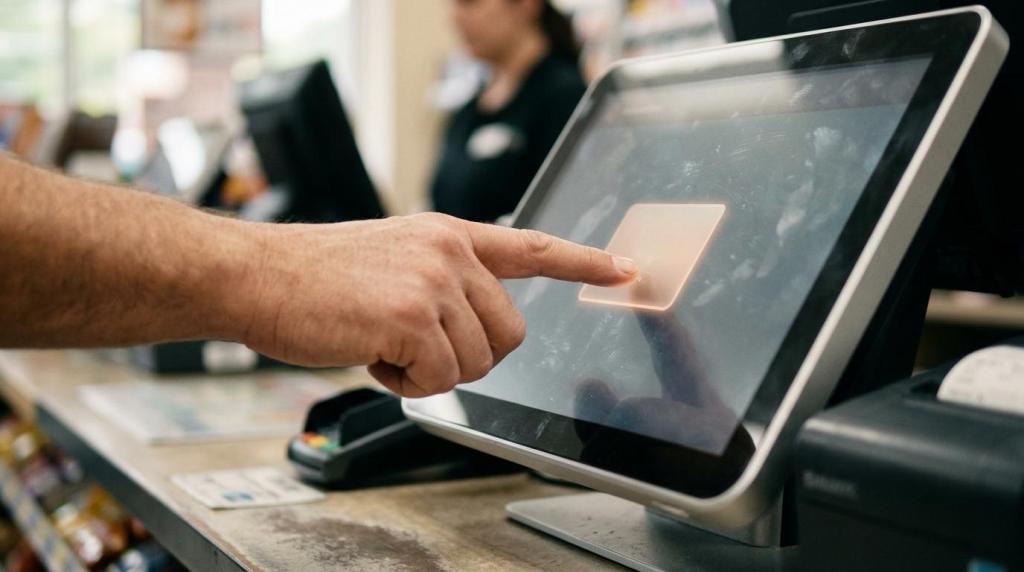
Retailers usually use the term sweepstakes machine to mean a kiosk, terminal, or game station tied to a promotional sweepstakes workflow. What matters most is not the cabinet or screen by itself, but whether your promotion is structured like a lawful sweepstakes instead of a lottery or misleading sales offer.
TL;DR: Summary
- A sweepstakes machine for retailers is usually a kiosk or terminal running location-based promotional gaming software, and the legal baseline is no purchase necessary plus clear and conspicuous disclosures.
- USPS guidance says a sweepstakes awards prizes by chance without requiring payment or an entry fee; if payment is required to participate, you move toward lottery risk.
- FTC guidance says qualifying terms, odds, and any free entry method should be easy to see and close to the claim being qualified; fine print and misleading entry flows can create enforcement risk.
- For physical stores, the real decision is operational: choose software that supports POS, player accounts, redemptions, reporting, age gates, geofencing, and configurable compliance modes.
- If you run a smoke shop, gas station, internet cafe, fish game room, kiosk, or multi-store network, treat the project as a retail compliance system, not just a hardware install.
If you want a usable answer, start with the promotion rules, then fit the machine and software around them. That approach helps you protect the customer experience, give staff a clean process, and avoid the common mistake of treating sweepstakes setup as a simple equipment purchase.
What is a sweepstakes machine in a retail store?
A retail sweepstakes machine is usually a kiosk or terminal running promotional gaming software, not a casino device. In RiverSlot-style setups, the machine connects player accounts, POS activity, redemptions, and reporting inside a physical location.
In practice, the machine is only one part of the system. A retailer may have customer registration, credit loading, promotional entries, game presentation, prize tracking, and redemption controls all tied together. USPS guidance frames a sweepstakes as a promotional device where prizes are awarded by chance and no purchase or fee is required to win. That definition matters more than the look of the screen.
"RiverSlot says its web-based software is built for physical retail locations, including kiosks, POS workflows, fish game setups, and distributor-managed networks."
A common misconception is that a sweepstakes machine is simply a “legal slot machine.” It is not. The safer way to think about it is this: you are operating a retail promotion with game-style presentation, and your compliance posture depends on entry rules, disclosures, odds treatment, and how staff explain the offer at the counter.
How is a sweepstakes machine different from a slot machine or lottery terminal?
A sweepstakes machine is a promotional interface, while a slot machine or lottery terminal is tied to regulated gambling or lottery activity. USPS and FTC guidance make the core dividing line clear: no purchase necessary, equal odds, and truthful disclosures.
Lawyers often explain risk through the three-part lottery test: prize, chance, and consideration. If your promotion has prize and chance, you remove consideration by offering a genuine free entry method. If customers must pay to participate, you create much more risk. USPS also says the odds of winning should be the same whether or not someone orders or buys.
That is why “purchase recommended” language is not enough. If your entry flow, signage, or staff script makes customers think payment improves odds, you may create the same kind of problem the FTC has challenged in enforcement actions. If you are comparing models, think this way:
- A sweepstakes is chance-based with no required payment to enter.
- A lottery includes payment to participate.
- A skill contest depends on skill rather than chance.
If your system is marketed as skill-based, you need objective criteria, consistent scoring, and proof that skill actually determines the outcome. If not, calling it a skill contest does not make it one.
What are the 6 facts retailers should know about sweepstakes machines?
Sweepstakes machines are retail systems first and game displays second. The six facts below are the ones that most often shape launch decisions, vendor selection, and day-to-day compliance.
- Retail systems like RiverSlot are software stacks, not just standalone machines.
- No purchase necessary is the baseline rule for a sweepstakes promotion.
- Clear and conspicuous disclosures matter as much as the offer itself.
- A free alternative method of entry should not reduce a customer’s odds of winning.
- POS records, player accounts, and redemption logs help you create an audit trail.
- State and local rules can change what settings, modes, and workflows are viable.
These facts connect directly. If you only shop for hardware, you may miss the legal and operational layers that actually determine whether the setup works. If you only focus on rules and ignore store workflow, staff will improvise, and that is where disclosure failures often begin.
How do you structure a retail sweepstakes promotion step by step?
You should build the promotion before you install the customer-facing game flow. The cleanest path is define the offer, define free entry, then map how the store will process accounts, credits, and redemptions.
Start with the promotion itself. Decide who is eligible, what prizes exist, how winners are determined, what dates apply, and where the promotion is valid. Then create a genuine free alternative method of entry, often called an AMOE, that gives the same chance of winning as a purchase-linked path. If you cannot explain that free path simply, the structure is probably too complicated for staff and customers.
Next, map the retail workflow. What happens at the counter? How are entries or promotional credits recorded? What does the kiosk show? How does a player redeem a win? If you run more than one location, decide whether each store is independent or whether reporting rolls up to a network view.
"RiverSlot says retailers can launch in under 1 hour, which helps when you need to test the full in-store workflow before going live."
Then test with real scenarios. Ask staff to walk through a free entry, a purchase-linked visit, a payout, a void, and a customer question about odds. Pro tip: if your team only knows how to explain the paid path, your staff training is incomplete.
How do official rules and disclosures need to appear step by step?
Your official rules and disclosures should be visible, plain, and placed near the claim they qualify. FTC guidance is direct on this point: fine print that is easy to miss is not likely to be effective.
Write official rules that cover eligibility, dates, geographic limits, prizes, winner selection, claim deadlines, and the free method of entry. If odds depend on the number of entries, say that clearly. If age or location limits apply, post them where entry decisions are made, not only in a footer or long PDF.
Then place disclosures in the actual user path. If a counter sign mentions purchases, the same sign or nearby sign should also state no purchase necessary and tell people how to enter without buying. If your kiosk has an entry button, make sure it really enters the user when you say it does. The FTC’s action against Publishers Clearing House is a good warning that dark patterns and misleading “official entry” flows can trigger serious consequences, including a proposed order requiring $18.5 million to consumers.
If you use telemarketing or phone-based outreach, the Telemarketing Sales Rule adds its own disclosure requirements. That does not affect every retailer, but if you do call campaigns, you should not treat your in-store rules as the whole compliance picture.
How do sweepstakes machines compare with skill contests and fish game software?
Sweepstakes machines, skill contests, and Fish game software can look similar to customers, but they are not the same legal category. USPS draws the basic line: sweepstakes are chance-based promotions, while skill contests depend on skill.
That difference matters in how you describe the offer and how you configure the system. If the game outcome is determined by chance, you should treat it as a sweepstakes promotion and build around no-purchase-required rules. If you present the activity as a skill contest, you need consistent scoring standards, objective play criteria, and documentation that player skill decides outcomes.
Fish game software adds another layer because it often blends entertainment presentation with promotional or location-based account management. Some retailers assume that if a player interacts actively, the system must be skill-based. That is a risky shortcut. Interactivity alone does not settle the legal question. If chance still controls the result, your workflow should reflect sweepstakes logic, not skill-contest marketing.
How do you choose sweepstakes machine software for one store or many locations?
You should choose software based on compliance controls, retail workflow, and reporting depth. RiverSlot and similar platforms are most useful when they match how your stores actually sell, redeem, and monitor promotions.
The right checklist is operational, not cosmetic.
- Compliance controls: age gates, geofencing, configurable modes
- Retail operations: POS, player accounts, redemptions, kiosk management
- Architecture: web-based access, no servers, no special hardware
- Network visibility: reporting for single stores and multi-location groups
- Commercial model: predictable fees, support terms, used-credit billing
If you operate one location, simplicity and staff training matter most. If you manage several stores or distribute across a network, centralized reporting and location-level controls become much more valuable. A flashy game catalog is less important than whether you can control permissions, review redemptions, and adapt settings by jurisdiction.
"RiverSlot offers no setup or support fees, bills only for used credits, and scales from single stores to multi-location networks."
How do POS, player accounts, and redemptions work step by step?
POS, player accounts, and redemptions should work as one controlled loop. The goal is simple: every promotional credit, play event, and prize redemption should be traceable.
First, the store creates or identifies the player account and records the qualifying transaction or free entry. Second, the system applies promotional credits or entries to that account and presents the game or reveal sequence at the kiosk or terminal. Third, any result that leads to a redemption is processed through the store workflow, logged, and reflected in reporting.
That process helps with more than accounting. It supports customer service, staff oversight, dispute handling, and multi-store monitoring. If a player asks why a balance changed or a prize was redeemed, your team should be able to check the account history quickly.
A common mistake is keeping parts of this process manual. If redemptions live in a notebook while entries live in software, you create gaps that make reconciliation harder and staff errors easier.
When does a web-based sweepstakes machine setup make more sense than local hardware?
A web-based software setup usually makes more sense when you want faster deployment, easier updates, and less on-site maintenance. Local hardware can still fit some stores, but it often adds server management and support burden.
For many retailers, the strongest case for web-based software is operational speed. You can standardize settings, update content, review location data, and support multiple stores without touching a local server at every site. That is especially useful if you run smoke shops, gas stations, kiosks, bars, or cafes with limited technical staff.
Local hardware may appeal if you want tighter on-premises control or have site-specific network constraints. The trade-off is that more local equipment usually means more maintenance points. If you have several locations, that cost shows up in downtime, troubleshooting, and version drift. If your business grows by adding locations, cloud-based reporting and remote administration usually become more important than the cabinet itself.
What compliance mistakes cause the biggest problems for retailers?
The biggest problems usually come from misleading entry conditions, weak disclosures, and poor staff execution. FTC cases and USPS guidance both point to the same lesson: your customer-facing flow has to match the rules.
The most common failures are easy to spot once you know where to look.
- Treating a purchase like a required condition of entry
- Hiding free entry details in small print
- Suggesting that buying improves the odds
- Using “official entry” language for a step that does not actually enter the customer
- Assuming one compliance setting works in every state or locality
The dark-pattern issue deserves special attention. If your signage, kiosk flow, or staff language nudges customers to believe they need to buy to win, regulators may care less about what your long-form rules say. Clear wording beats clever wording every time. If you want a stable retail program, keep the machine, the software, the posted rules, and the staff explanation saying the same thing.