


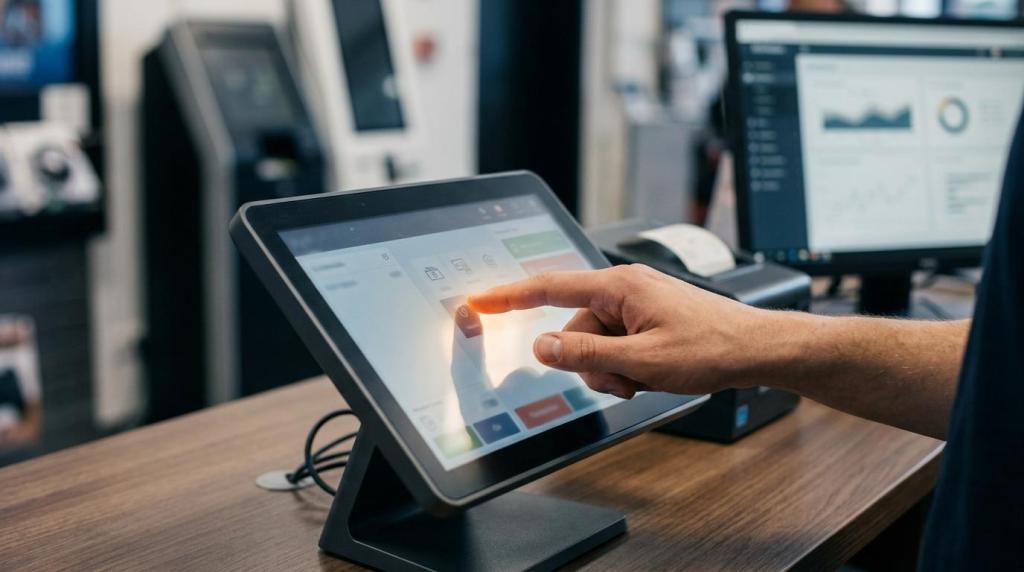
If you run an internet cafe, fish game room, smoke shop, gas station, or kiosk network, your sweepstakes software affects far more than gameplay. RiverSlot is a web-based provider in this category, and its product mix reflects what operators usually care about most: launch speed, POS control, player account management, redemption workflows, and multi-location oversight.
TL;DR: Summary
- Retailers switch sweepstakes software fast when the platform is web-based, avoids local server setup, and combines POS, player accounts, redemptions, and reporting in one system.
- FTC guidance makes compliance a hard filter: sweepstakes promotions cannot require a purchase, and disclosures may need "no purchase necessary," odds of winning, and no-buy entry details.
- U.S. Census Bureau data shows cloud-based technology and specialized software rank among the most important tools for improving business processes, which supports the move away from server-heavy setups.
- RiverSlot’s own retail examples tie multi-location rollout to reported revenue and foot-traffic gains, but you still need state-by-state legal review before launch.
- The fastest successful switches follow a simple order: audit current workflows, compare cloud versus server trade-offs, check disclosure and POS requirements, then pilot one location before expanding.
You do not switch sweepstakes software just to get a new game catalog. You switch because the old setup slows staff, fragments data, creates reporting gaps, or makes compliance tasks harder than they should be.
What is sweepstakes software, exactly?
Sweepstakes software is a retail operating system that combines promotional games, POS transactions, player accounts, redemption controls, and reporting in one workflow. In platforms like RiverSlot, it is often web-based, so you manage locations without hosting a local server.
That definition matters because many owners still think sweepstakes software is just a front-end game screen. In practice, the real value sits behind the counter. You need staff permissions, transaction logging, kiosk controls, account balances, promotion templates, and audit-friendly records.
If your current setup handles only one piece of that stack, your staff ends up stitching together the rest with manual work. That usually means slower checkouts, inconsistent redemptions, and weak visibility across shifts or stores.
A useful test is simple. If you cannot answer who redeemed what, when credits changed, or which location is outperforming others without opening several systems, you do not really have an operating platform. You have disconnected tools.
Why are retailers switching sweepstakes software faster now?
Retailers are switching faster because operations, compliance pressure, and software expectations have changed at the same time. FTC rules, multi-location management needs, and the broader move to cloud-based technology have made older setups feel expensive and slow.
The FTC has long been clear that sweepstakes-style promotions cannot require a purchase in the United States. It also says certain promotions may need disclosures covering odds of winning, how to participate without buying, and the fact that no purchase or payment is required to win. If your software does not help you manage those realities, the switch becomes less about convenience and more about risk control.
At the same time, the U.S. Census Bureau has reported that businesses rated cloud-based technology and specialized software among the most important tools for improving processes and methods. That matters here because sweepstakes operations are not isolated entertainment systems. They are retail workflows with staff, money movement, account controls, and reporting.
Company-reported rollout examples also affect buying behavior. When operators hear about a five-store vape and smoke shop rollout tied to more traffic and more revenue, the switch stops feeling hypothetical.
"RiverSlot says a five-store vape and smoke shop rollout increased revenue by $20,000 per month and lifted targeted foot traffic by 25%."
You should treat any company case as one data point, not a promise. Still, it explains why launch speed, centralized controls, and cleaner reporting now carry more weight than legacy familiarity.
What are the 8 reasons retailers switch sweepstakes software fast?
The main reasons are operational, not cosmetic. You switch when the current platform costs you time, control, or location-level consistency.
-
Faster launch
Web-based systems can reduce setup friction because you are not planning around local servers, local maintenance, or long on-site installs. -
Less IT overhead
If your team is restarting hardware, chasing updates, or dealing with site-by-site fixes, software becomes an operations tax. -
Better POS control
Sweepstake promotions touch transactions, credits, balances, and redemption workflows. If those steps sit outside your core flow, errors rise. -
Stronger compliance handling
You need a practical way to support age gates, disclosure rules, configurable modes, and jurisdiction-specific operating choices. -
Cleaner player account management
Account creation, balances, usage history, and redemptions should be traceable without staff guesswork. -
Real-time visibility
Modern retail teams want dashboards, location comparisons, and staff-level oversight instead of end-of-day spreadsheets. -
Multi-location scale
One-store workarounds usually break at three, five, or twenty locations. Templates, permissions, and distributor controls matter more as you grow. -
Revenue and traffic upside
If the new system helps you run promotions more consistently, redeem faster, and spot weak locations early, the commercial case gets stronger.
How do you audit your current setup before switching?
Start with workflow mapping, not vendor demos. You need to document how credits, redemptions, staff actions, and reports move through your business before you compare platforms.
Step 1: Map the full transaction path. Track what happens from customer sign-up through purchase, account funding, gameplay access, redemption, and closeout. A common mistake is to start with game preferences. Your bigger cost usually sits in cashier actions, exception handling, and reporting delays.
Step 2: Identify control gaps. Look for duplicate entry, manual balance adjustments, unclear staff permissions, and places where one person can change value without an obvious audit trail. If a task depends on "the manager knows how," that is a weak spot.
Step 3: Measure the drag. Time a few live processes. How long does a redemption take? How long does it take to pull store-level performance? How often do staff call for help? If you cannot attach minutes and error counts to the current pain, you will struggle to judge the switch objectively.
This audit gives you a better buying lens. Instead of asking which platform looks better, you ask which one removes the most costly bottlenecks first.
How do you compare cloud-based sweepstakes software with server-based systems?
Cloud-based systems are usually faster to launch and easier to manage than server-based installs, and RiverSlot is one example of the web-based model. Server-based setups can still fit edge cases, but they often add maintenance, hardware dependency, and slower expansion.
The trade-off starts with deployment. Cloud-based software usually means browser access, centralized updates, and less on-site configuration. That lines up with the Census Bureau finding that businesses place high importance on cloud-based technology and specialized software for improving processes.
Server-based setups may appeal if you have strict on-premises preferences or unreliable connectivity. But you pay for that control with more local upkeep, more failure points, and harder multi-location standardization. If each site becomes its own mini-IT project, growth gets expensive fast.
A practical tip: cloud-based does not mean you can ignore connectivity planning. You still need stable internet, device policies, and a fallback procedure for interruptions. Faster architecture helps, but disciplined store operations still matter.
How do you check compliance and disclosure requirements before launch?
You check compliance by reviewing the promotion structure, disclosures, and state-specific rules before you activate a single location. The FTC and state regulators matter more here than any feature checklist.
Step 1: Confirm the promotion does not require a purchase to enter or win. That "no purchase necessary" principle is foundational in the United States. If your operating model cannot support a no-buy entry path, stop there and review the design.
Step 2: Build the required disclosures into your launch materials and operating flow. Depending on the promotion type, that can include odds of winning, how to participate without buying anything, and clear eligibility terms. Do not bury these details where staff cannot produce them.
Step 3: Review state-level obligations. The FTC notes that states may require disclosures, licensing, or bonding for certain sweepstakes promotions. If you operate in more than one jurisdiction, then you need a location-by-location legal review instead of a single national assumption.
A common misconception is that software features alone make you compliant. They do not. Age gates, geofencing, and configurable modes help you implement policies, but they are not substitutes for legal review and written operating procedures.
How should sweepstakes software connect to POS, player accounts, and redemptions?
The best setup connects POS, player accounts, and redemption workflows in one operating flow. Standalone tools can work for small pilots, but they usually create reconciliation issues once transaction volume grows.
The SBA defines a POS system as the hardware and software used for retail transactions, and it points to mobile POS tools and real-time dashboards as ways to support broader operations. That is highly relevant here because sweepstakes activity is not separate from retail activity. It affects cashier actions, account balances, receipts, reporting, and store-level metrics.
When those components live in separate systems, staff tends to rely on memory, side notes, or end-of-shift cleanup. That is where cash handling mistakes, duplicate actions, and disputed redemptions show up. If one platform records purchases while another tracks promotional value, then your team spends time reconciling instead of serving customers.
When providers expose these functions in one interface, managers can move from transaction history to staff permissions to redemption records without jumping between tools.
"RiverSlot lists player accounts, redemptions, kiosk management, reporting, staff access, location management, and distributor dashboard tools as core platform features."
Do not assume a standard POS is enough by itself. A general retail POS may be strong at sales and inventory while still lacking the account controls, redemption logic, or operator dashboards your promotion model needs.
How do you roll out sweepstakes software across multiple locations?
The fastest multi-location rollouts use one operating template, one permission structure, and one pilot sequence. If each store launches differently, your support load grows faster than revenue.
Step 1: Standardize the base configuration. Set default promotion rules, staff roles, redemption policies, and reporting views before you touch location-specific tweaks. This matters even more in distributor networks, where consistency protects both oversight and training quality.
Step 2: Train managers on exceptions, not just normal flow. Anyone can learn the happy path. The real test is how quickly staff can handle account disputes, balance questions, voids, or end-of-day review.
Step 3: Pilot one store, then clone what works. If one location has strong staff discipline and steady traffic, start there. You will get cleaner feedback than you would from a chaotic store where process failures are already stacked on top of each other.
If you are expanding from one store to several, the software should reduce local variation, not increase it. That is where cloud access, centralized reporting, and location management become business tools, not technical perks.
Which metrics tell you the switch is actually working?
The right metrics are operational and financial at the same time. You should review them at 30, 60, and 90 days, not just at launch week.
Use a short scorecard so your managers watch the same signals across every location.
- Revenue per active player: total revenue divided by active participating accounts over a fixed period.
- Redemption cycle time: how long it takes staff to complete a standard redemption from request to close.
- Repeat visit rate: how often the same players return within 7, 14, or 30 days.
- Exception rate: count of disputed balances, manual adjustments, voids, or staff overrides.
- Location variance: performance gaps across stores using the same promotion settings and staffing model.
- Dashboard latency: how quickly you can access current sales, account, and redemption data when a manager asks for it.
If the new platform improves repeat visits but your exception rate spikes, you may have a training or permissions problem. If revenue rises but redemption time stays slow, your front-counter workflow still needs work. The switch is working when performance improves without adding confusion, delays, or avoidable compliance exposure.