


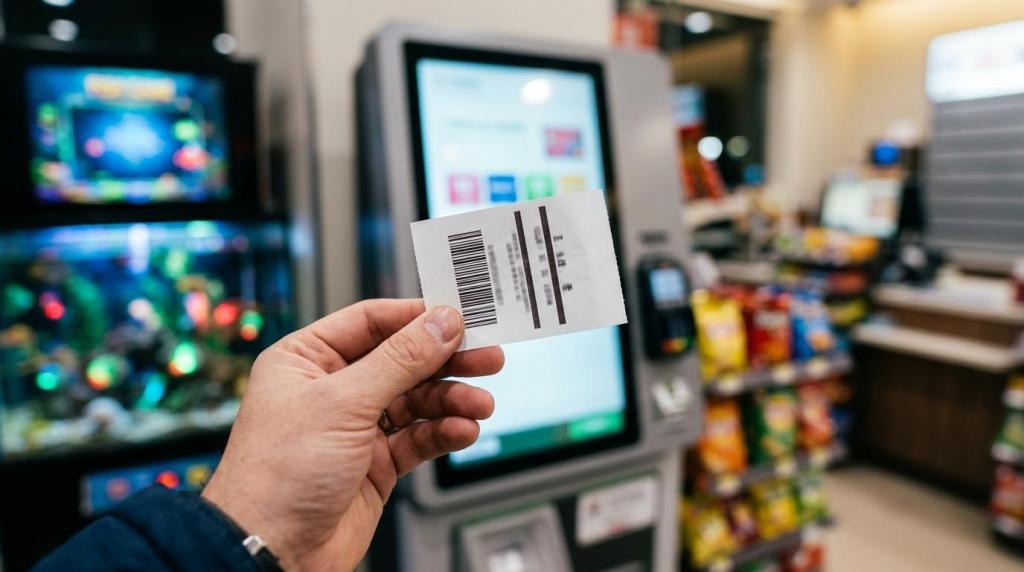
Fish games remain popular in retail locations because they match how modern stores make money: through traffic, time on site, repeat visits, and efficient transactions. If you operate a convenience store, smoke shop, gas station, lounge, kiosk, or game room, that matters more than hype. You need an offering that fits your floor plan, works with your staff, and gives customers a reason to stay a little longer.
That is exactly where fish games have found their place. They are visual, fast to learn, familiar to many players, and adaptable to a wide range of promotional setups. They also fit the retail model better than many owners first assume.
The bigger point is simple. Fish games are not just popular because people enjoy playing them. They are popular because they fit the economics and operating style of high-traffic retail.
Fish games fit convenience-store and small-format retail traffic
The U.S. retail base for fish games is large and still active. According to the National Association of Convenience Stores, U.S. convenience store foodservice and merchandise sales reached $341.2 billion in 2025, with 151,975 locations nationwide. NielsenIQ also reported that the convenience sector added 2,222 new U.S. locations in 2023, more than any other retail format, and that convenience stores see about 165 million transactions a day.
Those numbers matter to you because fish games work best where people already come in frequently. You do not need to build a destination from scratch. You need a format that converts existing traffic into more engagement and more reasons to return.
Fish games fit this environment well because they do not require the footprint, staffing model, or capital profile of a large entertainment business.
| Retail condition | Why fish games fit |
|---|---|
| High daily traffic | Players already visit for fuel, snacks, tobacco, drinks, or quick purchases |
| Small to mid-size floor plans | Fish game setups can work in compact areas and kiosk-style layouts |
| Fast transactions | Promotional credits, POS workflows, and redemptions can be handled quickly |
| Frequent repeat customers | Familiar players often come back regularly, which supports habit-driven traffic |
| Mixed revenue goals | Games can support inside sales rather than compete with them |
If your store lives on convenience, frequency, and margin, fish games can complement that model. They work best when they are treated as part of the store experience, not as a disconnected side business.
Fish games improve dwell time, basket size, and repeat visits
Retail owners increasingly look beyond raw foot traffic. You care about dwell time, basket size, visit frequency, and whether the environment gives customers a reason to stay engaged. The National Retail Federation has highlighted all of these as meaningful store metrics, along with sociability, competitive differentiation, sales velocity, and product experimentation.
Fish games support those goals in a direct way. A customer who stays longer has more opportunity to buy a drink, another snack, or a second item they did not plan to purchase. A customer who associates your location with entertainment and routine interaction is more likely to come back. This is especially useful in formats where many products are easy to buy elsewhere.
You are not only selling products. You are shaping a reason to choose your location.
When fish games are set up well, they can influence several store behaviors at once:
- Longer in-store visits
- More frequent repeat trips
- Higher incidental purchases
- Better use of underperforming floor space
- Stronger differentiation from nearby competitors
This does not happen automatically. The game area needs to feel intentional, clean, easy to access, and connected to the rest of the business. Staff also need simple workflows for player support, redemptions, and account handling. When those parts are organized, fish games can move from “extra activity” to a repeatable in-store driver.
That is one reason these games keep showing up in physical retail instead of fading out after a short spike.
Card-based and noncash payments support fish game workflows
Customer payment behavior has changed in a way that supports fish game operations. The 2025 Federal Reserve Payments Study found that total noncash payments rose to 236.6 billion in 2024. Cards accounted for 79% of those payments, and debit card payments alone reached 120.6 billion.
If your customers already expect card-first transactions, your game operation can fit naturally into that behavior. You are not asking people to adopt a new habit. You are plugging into one they already use all day.
This matters operationally as much as it matters for player convenience. A modern fish game setup often depends on quick funding, fast POS activity, clear reporting, and easier reconciliation. Noncash behavior supports each of those needs.
A strong payment-ready setup should give you:
- Fast account funding: customers can move from store entry to gameplay without slow manual steps
- Cleaner reporting: digital transaction records are easier to track across shifts and locations
- Better cashier control: staff can work from defined POS rules instead of ad hoc handling
- Lower friction at scale: card-heavy workflows are easier to repeat across multiple stores
- More familiar customer behavior: shoppers already trust debit and card use in retail settings
For multi-location operators, this becomes even more important. Standardized payment behavior makes it easier to train teams, compare store performance, and spot exceptions early. If one location is handling credits, redemptions, or player activity differently from another, a good system should make that visible quickly.
Redemption kiosks, vouchers, and compliance rules shape fish game operations
Popularity in retail does not come from entertainment alone. It also comes from whether the business model can operate in a structured, rules-based environment. Fish games remain attractive partly because kiosk and redemption workflows can be organized in ways that support practical retail operations.
You can see that clearly in state and regulatory examples. Ohio law describes a skill-based amusement machine as a device that rewards players only with merchandise prizes or redeemable vouchers redeemable only for merchandise prizes, and it requires those prizes or vouchers to be distributed at the site of the machine at the time of play. Ohio also caps a single-play merchandise prize at a wholesale value of $10.
New York rules describe gaming devices that issue payments via voucher printers as being customarily interfaced to a validation system. The rules also describe kiosks as patron interface units that may perform voucher or coupon redemption, and they require the kiosk to read the voucher and notify the validation system during redemption.
You should not read those examples as one-size-fits-all guidance for every market. A similar operational pattern appears outside gaming as well, where Gentlefox outlines how payment-enabled coffee setups in receptions and showrooms rely on controlled, site-based transaction flows rather than informal handling.
You should read them as proof that voucher validation systems, redemption kiosks, and site-based controls are part of how these environments are often structured.
That is why your software and hardware choices matter. A location-friendly fish game setup needs to support clear redemption processes, location-level controls, and configurable operating modes that can be adjusted to match local requirements. If your workflow depends on manual workarounds, handwritten logs, or disconnected systems, you raise risk and create friction for staff.
A good retail setup keeps the customer experience simple while keeping the operator side controlled.
Web-based fish game software helps single stores and multi-location operators
The software layer is one of the biggest reasons fish games are easier to run today than they were years ago. You no longer need to think in terms of bulky local servers, complicated installs, or custom hardware for every site. A web-based system can give you a faster path from planning to launch.
That matters if you are opening a first location, adding games to an existing retail store, or managing a distributor network. You want tools that help you move quickly without losing control over player accounts, POS activity, reporting, promotions, kiosk management, and redemptions.
If you are comparing platforms, focus on capabilities that improve both speed and oversight:
- Launch speed: web-based deployment with no special hardware requirements
- Cost control: no setup or support fees, with usage tied to consumed credits
- Compliance tools: age gates, geofencing, and configurable location modes
- Retail flexibility: customizable promotions, templates, and kiosk settings
- Scale: support for one store, many stores, or distributor-level management
- Revenue reach: options that extend play beyond the venue where permitted
This is where a provider like RiverSlot fits the current market. A web-based platform built for physical retail can help you launch in under an hour, manage sweepstakes-style game operations from the cloud, and support everything from single-store workflows to multi-location networks. That is valuable because your business does not slow down while you wait for a complicated rollout.
You need software that behaves like retail software: fast, visible, controlled, and easy for staff to use.
Fish games work because they match how customers use stores
Customers are already mixing shopping with quick-service food, digital payments, self-service kiosks, and short entertainment windows. Fish games fit that pattern. They offer immediate engagement without asking customers to commit to a long session or a destination-style visit.
That is a strong match for convenience retail, where many visits are frequent and habit-based. NielsenIQ noted that foodservice has become a primary driver of convenience-store growth. When stores become more experience-oriented, not just transaction-oriented, game-based engagement can make more sense as part of the overall mix.
You can think of fish games as one more layer of store utility. They give some customers a reason to stop, stay, and return.
The key is operational discipline. The stores that benefit most are usually the ones that treat fish games as a managed retail category, with clear staffing, clear redemption handling, clear reporting, and a layout that supports both gameplay and product sales.
Questions to ask before you launch fish games in your location
Before you add fish games, you should evaluate fit at the store level, not just the category level. A format can be popular nationally and still underperform in a location that has poor traffic flow, weak staff processes, or unclear redemption rules.
Start with the basics. Look at where customers enter, where they pause, how long they stay, and what they usually buy. Then ask how a game area would affect sightlines, staffing, checkout, and the rest of your floor.
A practical review should cover:
- Traffic pattern: Do you have enough daily visits and repeat customers to support regular play?
- Store layout: Can you place games without disrupting core product movement and checkout flow?
- Staff workflow: Can your team handle accounts, POS tasks, and redemptions consistently?
- Compliance review: Do your location rules, age controls, and redemption methods match your market?
- System quality: Does your software provide reporting, kiosk tools, and multi-store visibility if you grow?
If the answer is yes across those areas, fish games can become more than a popular add-on. They can become a structured part of your retail model, backed by the same things that drive strong store performance already: traffic, engagement, repeat visits, and operational control.