


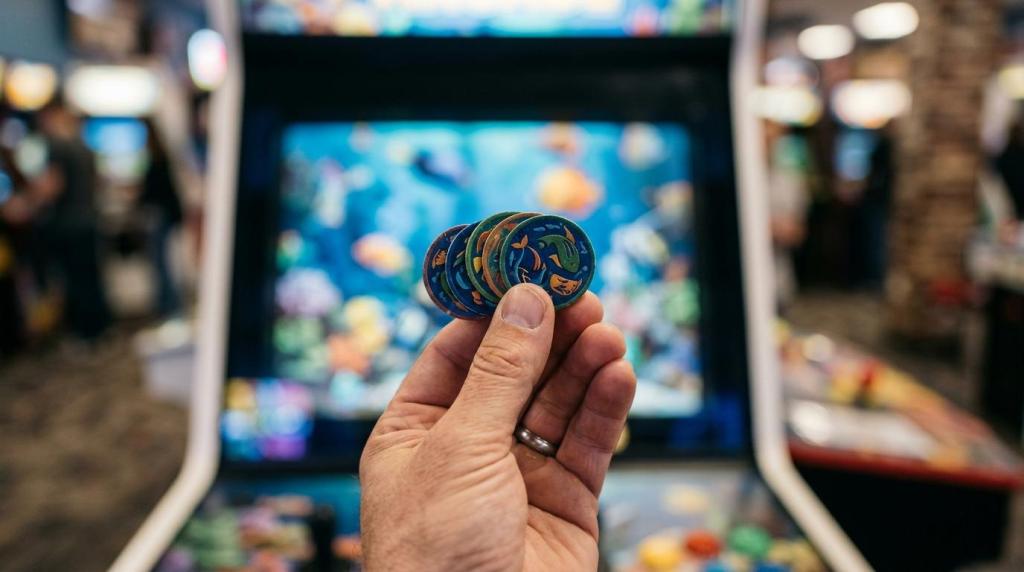
If you run a retail gaming location, you have probably heard both terms used as if they mean the same thing. In day-to-day conversations, they often do. Customers, distributors, and even some operators may say “fish arcade games,” “fish shooting games,” and “fish table games” interchangeably.
Still, the label you use is less important than the business model behind it. The cabinet style, player experience, prize setup, POS flow, and local rules can change how a fish game fits your location. If your operation includes sweepstakes promotions, redemptions, or player accounts, that distinction matters even more.
What fish arcade games and fish table games usually mean
In most U.S. retail settings, fish arcade games are active shooting-style games where players target animated fish on a screen. They are often presented as multiplayer, skill-influenced entertainment rather than passive, slot-style play. That matters because player expectations are different from the start. People expect movement, timing, and visible interaction.
Fish table games usually refer to the same general category, but with more emphasis on the machine format. A fish table setup often means a larger shared surface or a table-style cabinet built for multiple players at once. In some locations, “arcade” points to the gameplay and “table” points to the hardware. In others, both terms describe the same product.
That overlap can create confusion when you are buying software, planning your floor layout, or reviewing compliance. You need to know whether you are comparing a game type, a cabinet type, or a promotional model tied to prizes.
Before you choose a direction, it helps to look at the terms side by side.
| Area | Fish arcade games | Fish table games |
|---|---|---|
| Common meaning | Shooting-style fish game category | Often the same category, described by cabinet format |
| Player expectation | Fast action, visible skill input, arcade feel | Shared play, table-style interaction, group sessions |
| Hardware image | Upright cabinet, kiosk, or screen-based station | Flat or table cabinet with multiplayer positions |
| Retail appeal | Good for attracting attention from a distance | Good for longer dwell time and social play |
| Business question | How do players engage with the game? | How much space and staffing does the format need? |
| Compliance question | How is the promotion structured? | Same question, because format alone does not decide legality |
Fish game gameplay differences that affect customer behavior
From a revenue standpoint, the biggest difference is not always the software title. It is how the game is experienced in your store.
A fish arcade presentation tends to work well when you want energy on the floor. Players can see action instantly. Sound, motion, and competitive play can draw attention from nearby customers. In a gas station, smoke shop, or convenience setting, that visibility can help convert walk-in traffic into short play sessions.
A fish table setup can support a different pattern. Shared seating or side-by-side play often leads to longer sessions and more social interaction. In bars, lounges, game rooms, and internet cafe environments, that can be a better fit because people are already staying longer. The game becomes part of the atmosphere, not just a quick stop.
You should think about fish games as both entertainment and store design. The same core gameplay can perform very differently depending on where it sits, how many people can join, and how staff handle redemptions and customer questions.
A few operational effects show up again and again:
- Faster visual attraction
- Shared multiplayer sessions
- Longer average dwell time
- More staff interaction at redemption
- Better use of idle floor space
Fish game software features matter more than cabinet labels
If you are choosing between “arcade” and “table,” do not stop at the machine style. The software stack will shape your daily operation far more than the name on the cabinet.
You need to ask how the game connects to player accounts, how credits are issued, how promotions are configured, and how redemptions are tracked. If you run multiple locations, reporting and distributor controls matter just as much as the game art. A good fish game setup is not only about what players see on screen. It is also about how smoothly your staff can manage transactions and exceptions.
This is where a web-based model can be attractive. With no special servers or heavy on-site hardware requirements, you can launch faster and keep management simple. A cloud-based platform also gives you more flexibility if you want fish games across kiosks, standup stations, or mixed device setups inside one location or across several stores.
When you compare vendors or systems, keep your attention on practical workflow points:
- POS integration: Your team should be able to issue, track, and reconcile credits without extra manual steps.
- Player accounts: Repeat visits are easier to support when account history and balances are organized.
- Prize redemptions: Clear redemption records help with customer service and internal controls.
- Reporting: You need location-level and network-level visibility if you operate more than one store.
- Support model: Around-the-clock support can reduce downtime during busy hours.
Sweepstakes rules and fish game promotions need close attention
Once fish games are tied to prizes, entries, or promotional credits, the legal model becomes just as important as the gameplay.
At the federal level, sweepstakes rules are clear on a key point: a real sweepstakes is free to enter, and you cannot require payment to enter or to improve the odds of winning. The Federal Trade Commission has also stressed that prize terms, value, odds, and redemption details need to be stated clearly in relevant contexts. If your fish game promotion intersects with purchases, bonus offers, or paid play, you need to structure that carefully.
That does not mean every fish game is treated the same way everywhere. It means terminology alone will not protect you. Calling a product a “skill game” or “arcade game” does not settle whether a state or local authority will see it that way, especially if prizes, payouts, or chance-based outcomes are involved.
For retail operators, that creates a simple rule: treat compliance design as part of the product, not an afterthought.
You should review at least these points before launch:
- Free method of entry: Make sure your promotion includes a genuine no-purchase way to participate where required.
- Odds of winning: Do not imply that a payment improves a player’s chance in a sweepstakes model.
- Purchase linkage: Separate product sales from prize eligibility in a way that matches applicable rules.
- Redemption process: Keep prize handling consistent, documented, and easy for staff to follow.
State and local fish game enforcement can change the picture
Fish games and related skill-game terminals have drawn attention from regulators and courts in several states. That alone should tell you something important: your local legal environment may matter more than national marketing language.
Some officials have taken the position that calling a device a skill game can be misleading if the outcome still depends heavily on chance. Michigan has publicly warned about illegal gaming machines and specifically pushed back on the idea that a chance-based device becomes legal just because it is described as skill-based. In Pennsylvania, the debate over skill-game terminals has been serious enough to reach the state supreme court.
You do not need to memorize every case. You do need to avoid broad assumptions.
A practical operating stance looks like this:
- Check state law
- Check county and city rules
- Review prize structure
- Review age restrictions
- Document your promotional terms
If your provider offers compliance-focused tools, that can help. Age gates, geofencing, configurable game modes, and clear administrative controls are not cosmetic features. They help you build a location model that is easier to manage and easier to review when questions come up.
Choosing fish arcade formats by location type
Not every floor plan needs the same fish game setup. The best format depends on traffic style, available space, staffing, and the role gaming plays in your broader business.
In a smoke shop or convenience store, your goal may be quick engagement with limited square footage. A compact arcade-style presentation can make more sense than a large table footprint. In a lounge or game room, a multiplayer table can create a stronger social draw and keep customers in place longer.
In an internet cafe or dedicated promotional gaming location, your decision may come down to how you want the room to function. If you want strong visibility from the entrance and easy lane planning, upright or kiosk-oriented fish arcade stations may work well. If you want clustered group play and a more communal layout, fish table formats can be the better answer.
The right choice often comes down to a few clear business questions:
- How long do you want the average play session to last?
- How much staff interaction can your team support during busy periods?
- Do you need to maximize visibility, seating, or total player positions?
- Will the games connect to sweepstakes credits, POS workflows, and redemptions?
What to ask before you put fish games on your floor
A smart rollout starts with operations, not graphics. The game should fit your business model before it ever goes live.
Ask whether you need one location or a multi-store framework. Ask whether your provider can launch quickly without server installs or specialty hardware. Ask how reporting works, how player data is managed, and how easy it is to switch promotions or templates when your traffic changes.
You should also look at support and scaling. If a platform charges setup or support fees, your upfront risk rises. If it is web-based and usage-based, your testing phase may be easier to control. That matters when you are validating a new fish game concept in one store before taking it to a larger network.
The strongest fish game setup is the one that gives you control over gameplay access, promotions, staff workflow, and compliance settings while still creating a lively player experience. When those parts work together, the “arcade” versus “table” question becomes much easier to answer because you are choosing the format that fits your location, not chasing a label.