


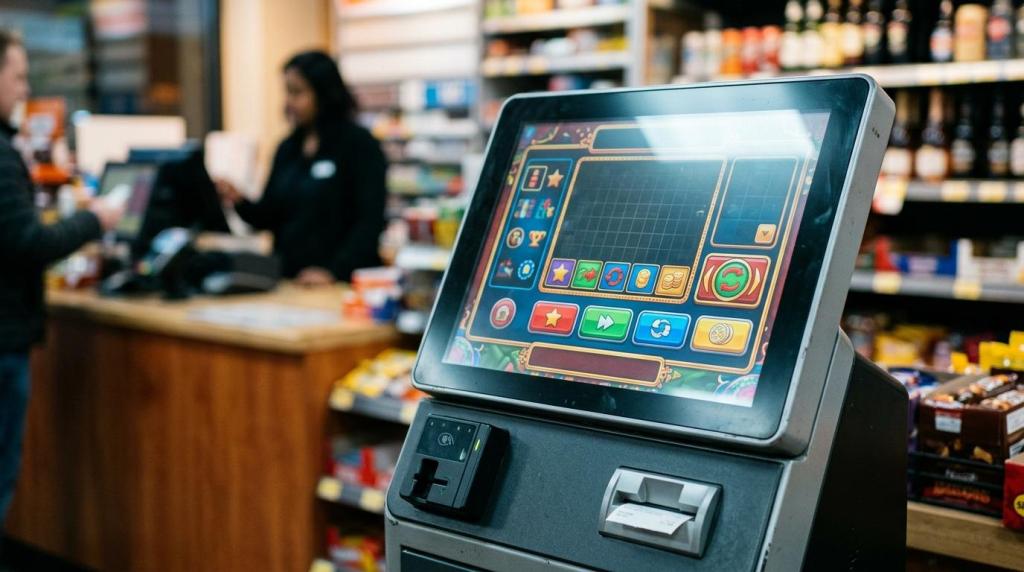
Many retail operators look at Internet café sweepstakes software and online casino software may share visual similarities on the screen, yet they are built for very different business models, legal structures, customer flows, and operating environments. That distinction matters a great deal for smoke shops, gas stations, convenience stores, bars, lounges, kiosks, and distributor networks that want to add a new revenue stream without stepping into the wrong category of product.
For a retail business, the real question is not which option looks more exciting. The question is which platform fits a physical location, supports promotional activity, works with day-to-day store operations, and can be configured for compliance in the markets where the business operates.
What sweepstakes software is designed to do for retail locations
Sweepstakes software is built around a promotional model. A customer purchases a qualifying product or service, then receives entries or promotional credits that can be used to play games for a chance to win prizes. The software supports entertainment and customer engagement inside a retail environment, not direct real-money wagering.
That sounds like a small difference, but from an operator’s point of view it changes almost everything. The store is not running a digital casino. It is running a promotion tied to retail activity, customer retention, and repeat visits. The software needs to support player accounts, point of sale activity, redemptions, reporting, bonus tools, kiosk management, and location controls.
A strong sweepstakes platform is usually shaped around practical store needs:
- age gating
- promotion templates
- redemption workflows
- location-level reporting
- remote management
In this model, the games are part of a broader retail system. The operator needs to manage traffic, sales, loyalty behavior, and prize redemption in one place. That is very different from software built only to process bets and payouts online.
How online casino software is built differently
Online casino software is made for licensed gambling operations. It supports real-money deposits, wagers, wallet balances, withdrawals, identity checks, and regulated gaming workflows. The player experience often includes a large game lobby, banking tools, live dealer areas, and account verification steps that are normal in iGaming.
For physical retail operators, that architecture is usually the wrong fit. A gas station, smoke shop, or neighborhood lounge does not need enterprise casino infrastructure designed for statewide or national gaming websites. It needs software that can work in-store, run in a browser, integrate with redemption and POS activity, and stay simple enough for staff to manage during a normal shift.
This is where confusion can become expensive. A product that resembles casino software visually may still be a sweepstakes platform operationally. The important difference is not the reels, fish games, or jackpot-style presentation. It is the underlying business model, the transaction logic, and the compliance framework.
Sweepstakes software vs online casino software: a side-by-side view
The easiest way to see the gap is to compare how each platform works in daily operations.
| Area | Sweepstakes Software for Retail Locations | Online Casino Software |
|---|---|---|
| Core purpose | Promotional entertainment tied to qualifying purchases or services | Real-money gambling |
| Typical customer setting | Physical retail store, café, kiosk, lounge, shop | Web or mobile gambling site |
| Revenue driver | Product sales, repeat visits, promotions, loyalty activity | House edge on wagers |
| Currency structure | Promotional credits, dual-currency systems, prize redemption flows | Real money deposits and withdrawals |
| Hardware model | PCs, tablets, kiosks, printers, redemption stations | Personal user devices, remote servers |
| Staff involvement | Store staff may assist with accounts, purchases, and redemption | Minimal in-person interaction |
| Compliance tools needed | Age gates, geofencing, configurable modes, location rules | Gambling licenses, AML, KYC, regulated payments |
| Best fit | Retail owners and distributor networks | Licensed gaming operators |
The table also highlights a practical truth: sweepstakes software is a retail operations product as much as it is a game product. If the platform does not help manage the front counter, kiosk access, player promotions, and reporting by location, it will create friction quickly.
Why the business model matters more than the game graphics
From the customer’s point of view, both categories may look familiar. There may be slot-style themes, fish games, bonus events, community features, or progressive-style prize mechanics. Yet the operator cannot judge the platform by the artwork.
What matters is how value enters the system, how play is tracked, and how prizes are handled. In sweepstakes software, the promotional layer is central. The platform should support free entry methods where required, configurable bonuses, account controls, redemptions, and clear records. In online casino software, the central function is wagering and financial settlement.
That difference affects margins, staffing, and rollout speed.
Sweepstakes operations focus on: store traffic, promotional campaigns, loyalty, and local retention
Online casino operations focus on: deposits, wagering volume, payment risk, and formal gaming regulation
Sweepstakes deployments often use: cloud tools, browser access, and existing store hardware
Online casino deployments often require: deep payment integrations, licensing structures, and regulated gaming controls
For retail owners, the better question is not "Does it look like a casino game?" The better question is "Does it support the promotional and operational reality of my location?"
Compliance and legal positioning for sweepstakes software
This is where responsible operators slow down and evaluate carefully.
Sweepstakes software exists in a legal environment that varies by jurisdiction. A retail owner should never assume that one configuration works everywhere. The right platform should offer tools that help the business operate within local requirements, but software alone does not replace legal review.
A modern B2B sweepstakes platform should make compliance easier, not harder. That includes configurable age restrictions, geofencing, promotional modes, reporting records, and flexible controls that can be adjusted by state, market, or venue type. Some operators also need no-chance or alternative configurations depending on local rules.
After the legal framework is reviewed, operators should look for software with features like these:
- Age controls: gate access by age and restrict account creation where needed
- Geofencing: limit use by location or approved geographic area
- Configurable modes: support market-specific operational settings
- Audit trails: keep records of credits, redemptions, and player activity
- Promotion controls: manage bonuses and templates without informal workarounds
For many businesses, this is one of the strongest arguments for using a purpose-built sweepstakes platform instead of trying to adapt another type of gaming product. The right system is designed for retail promotions from the start.
Operational differences inside the store
A physical location has needs that online casino software rarely addresses well.
Store owners need quick onboarding, simple staff workflows, and minimal hardware overhead. If a system requires servers, complex installation, or highly technical maintenance, it becomes a burden fast. The most effective sweepstakes platforms are cloud-based, browser-accessible, and ready to launch on standard devices without specialty infrastructure.
That changes the economics in a good way. A business can test the offering, scale by demand, and add stations or locations without rebuilding its back office. This is one reason web-based platforms are attractive to independent operators and distributor groups alike.
Daily use also looks very different from an online gambling site. A retail location may need to:
- sell qualifying products at the counter
- load promotional credits
- manage player accounts
- handle prize redemption
- review shift-level reports
- [support kiosks during extended hours](#)
When software supports those actions in one workflow, staff confidence goes up and customer wait times go down.
The role of kiosks, POS, and player accounts in sweepstakes software
This is one of the clearest dividing lines between the two categories.
Online casino software is centered on remote users and digital payments. Sweepstakes software for retail locations often needs to connect gameplay with physical business activity. That can include POS functions, self-service kiosks, redemptions, and player account management that stretches across one store or many.
A good platform should treat the kiosk and the back office as part of the same system, not separate add-ons. That means a player can interact with promotions, account balances, and redemption options while the operator keeps visibility into usage, inventory-linked offers, and store performance.
RiverSlot’s approach reflects this retail-first structure. The platform is web-based, supports promotional games, player accounts, redemptions, reporting, kiosk management, and multi-location tools, and it can be launched without servers or special hardware. That kind of design is far closer to what a retail operator needs than a casino-style backend built around deposits and withdrawals.
User experience differences that affect retention
Customer experience matters, but in a store environment it works differently than on a gambling website.
An online casino tries to keep users inside a digital ecosystem for long sessions, multiple game categories, and continuous wallet activity. A sweepstakes location is often working with shorter visits, local customer relationships, repeat traffic patterns, and in-person support. The software should feel fast, clear, and easy to use on shared devices.
This is why simplified navigation is often a strength, not a limitation. A player does not need a giant game lobby and multiple cashier pages when the experience is tied to a retail promotion. They need clear access to games, visible balances, smooth redemption, and incentives that bring them back.
Popular retention tools in sweepstakes software often include:
- daily rewards
- bounceback offers
- cashback promotions
- community prize boards
- flexible bonus templates
These tools are especially useful for operators who want to connect promotions to sales behavior. A campaign can be tied to certain purchase amounts, return visits, specific time windows, or store-level events. That gives the location owner a marketing engine, not just a game menu.
What B2B buyers should look for in a sweepstakes software platform
Once the differences are clear, the evaluation process becomes easier. A retail owner or distributor should look at the platform through an operational lens first and a game-content lens second.
The strongest platforms tend to combine speed, flexibility, and low friction. Fast launch matters. Clear support matters. Predictable costs matter. Remote management matters even more when multiple locations are involved.
Before choosing a provider, buyers should assess a few practical areas:
- Deployment speed: how quickly a store can go live
- Support model: whether help is available around the clock
- Pricing structure: setup fees, support fees, and usage-based billing
- Scalability: one location today, many locations later
- Customization: promotions, branding, and templates for each venue
- Remote reach: whether play-at-home options can extend engagement where permitted
For many operators, a usage-based cloud platform is the most attractive path because it lowers the barrier to entry. No server purchases, no specialized hardware requirement, and no long technical setup cycle means revenue can start sooner.
That is also why sweepstakes software continues to appeal to retail businesses that want a practical, modern growth tool. When the system is built specifically for physical locations, it can support promotions, customer retention, kiosk use, reporting, and expansion without forcing the business into the structure of an online casino.
The two categories may look similar at first glance, but from a B2B standpoint they solve completely different problems. Retail operators need software that fits the floor, the counter, the kiosk, the compliance plan, and the customer relationship. That is the standard worth using when comparing platforms.