


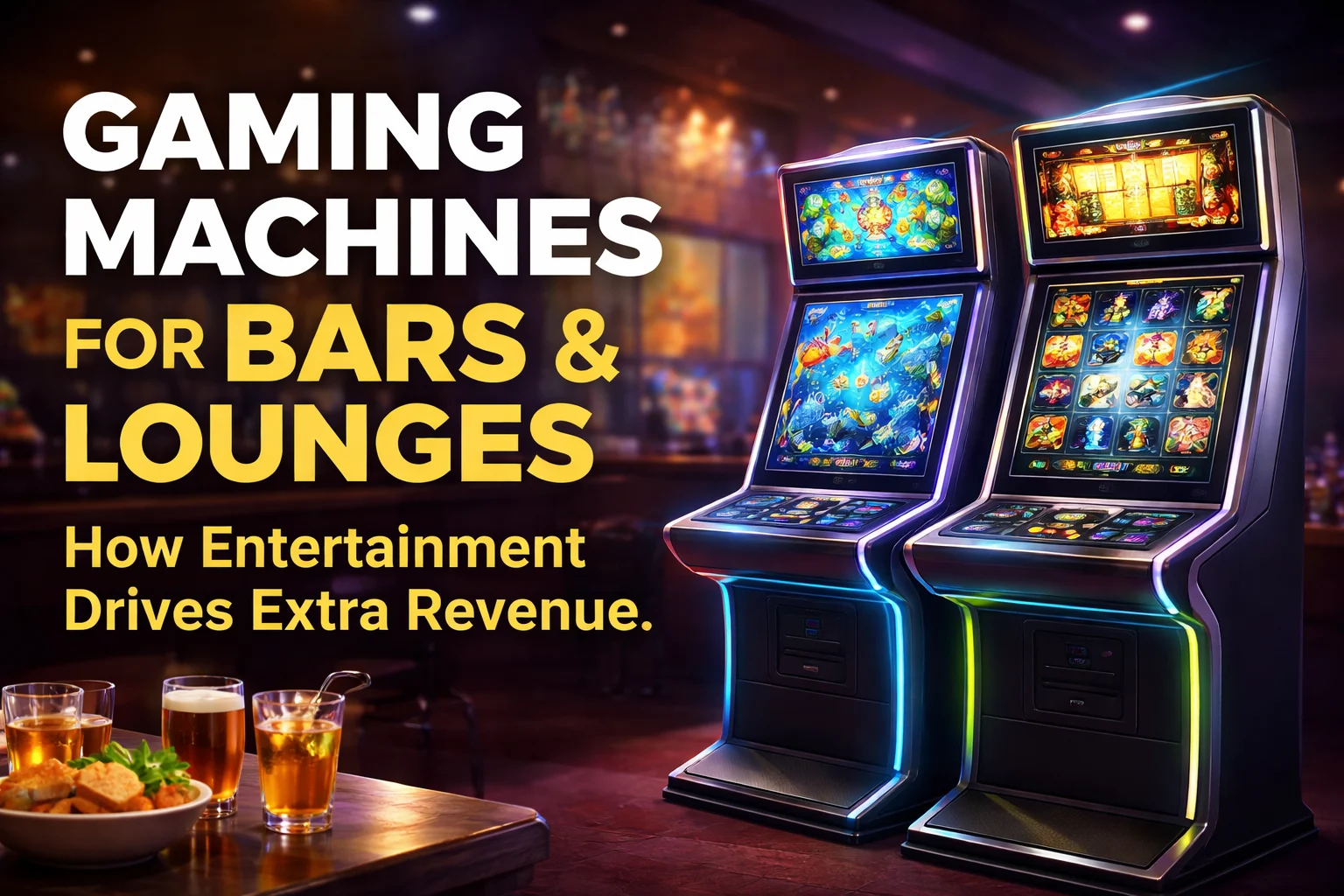
Bars and lounges don’t just sell drinks.
They sell time, atmosphere, and experience.
For many U.S. bar owners, the challenge isn’t foot traffic — it’s how long guests stay and how much they spend while they’re there. That’s where gaming machines come in. Not as a replacement for alcohol sales, and not as casino-style gambling, but as light, engaging entertainment that fits naturally into bar environments.
At Riverslot, we work with bar and lounge operators who want to increase dwell time, boost average tickets, and add a non-core revenue stream — without turning their venue into a game room or casino.
This guide explains how gaming machines actually work in bars, what types perform best, and what business owners should realistically expect.
Why Bars Add Gaming Machines
Bars already monetize time.
Gaming helps extend it.
When guests have something to interact with between drinks, conversations, or live entertainment, they tend to stay longer. Longer stays usually mean:
- More drink orders
- Higher average spend per guest
- Better use of off-peak hours
Gaming machines in bars work best when they act as background entertainment, not the main attraction. They give customers something to do without pulling focus away from the social experience.
Well-chosen games:
- Fill idle moments
- Encourage friendly competition
- Create repeat visits
For many venues, gaming becomes a quiet but consistent contributor to revenue rather than a dominant feature.
Types of Gaming Machines Used in Bars
Not all gaming machines belong in bar environments. Bars require fast, intuitive, visually clear experiences that work with noise, lighting, and alcohol service.
Arcade-Style Machines
Classic, easy-to-understand games that require minimal explanation.
Why they work:
- Immediate engagement
- Short play sessions
- Familiar mechanics
They fit well near seating areas or bar counters where guests can play casually.
Skill-Based Games
Games where outcomes depend on player input rather than chance.
Why bars like them:
- Lower regulatory risk than gambling
- Competitive and social
- Easy to play in short bursts
Skill games work especially well in group settings where friends challenge each other.
Fish Games
Fast-paced, visually dynamic games where players interact with moving targets on screen.
Why fish games perform well in bars:
- Strong visual appeal in low-light environments
- Simple mechanics
- Highly engaging for short sessions
Fish games are popular because they attract attention without needing explanation.
Sweepstakes-Style Entertainment Systems
These systems use promotional sweepstakes mechanics rather than traditional gambling.
Why bars explore sweepstakes formats:
- Designed to operate outside casino licensing
- Structured as entertainment with promotional elements
- Widely used in non-casino environments
Compliance depends on jurisdiction and setup, so operators must work with experienced providers.
Compact Kiosks vs. Full Cabinets
Bars typically favor compact kiosks over large cabinets.
Compact systems:
- Take less floor space
- Fit near walls or unused corners
- Are easier to manage and secure
Full cabinets may work in larger venues but must be placed carefully to avoid crowding.
Why Slots Are Usually Not an Option
Traditional slot machines are heavily regulated and typically restricted to licensed casinos or specific jurisdictions.
Instead, bars use:
- Skill-based games
- Arcade-style entertainment
- Sweepstakes-style systems
These alternatives provide engagement without introducing casino-level compliance complexity.
What Makes Bars Different from Game Rooms
Bars are not arcades or gaming halls — and that matters.
Key differences include:
- Alcohol service
- Loud music and ambient noise
- Variable lighting
- Social, group-focused behavior
Players in bars have shorter attention spans. Games must be understood within seconds and enjoyed in brief sessions.
Games that work best are:
- Visually clear
- Fast-paced
- Intuitive
- Easy to walk away from
Long tutorials, complex rules, or slow mechanics usually fail in bar settings.
Revenue Expectations: A Realistic View
Gaming machines in bars should be viewed as incremental income, not a replacement for core bar revenue.
Performance depends on several factors:
Key Variables That Affect Revenue
- Overall bar traffic
- Peak hours and operating schedule
- Placement within the venue
- Staff engagement and attitude
- Game selection
Weekend evenings often generate more activity than weekday averages suggest. Looking only at daily numbers can be misleading.
What Gaming Usually Delivers
- Supplemental revenue
- Better use of idle space
- Increased drink sales through longer stays
Bars that treat gaming as a supporting system tend to see more consistent results than those expecting casino-level returns.
Legal and Operational Considerations
Bars must be especially cautious with gaming compliance.
Key points to understand:
- Licensed gambling is tightly regulated
- Skill-based and sweepstakes formats operate under different frameworks
- Rules, disclosures, and system transparency matter
While this is not legal advice, bar owners should:
- Avoid ambiguous setups
- Work with experienced providers
- Ensure systems are clearly presented as entertainment
Operational clarity protects both the business and the customer experience.
Space, Setup, and Placement
In bars, placement matters more than quantity.
A few well-placed machines often outperform many poorly positioned ones.
Placement Best Practices
- High visibility without blocking traffic
- Away from entrances and exits
- Near seating or waiting areas
- Accessible but not intrusive
Setup Essentials
- Stable power supply
- Secure mounting
- Reliable connectivity
- Clear line of sight for staff
Overcrowding gaming areas can reduce comfort and hurt overall atmosphere.
Player Behavior in Bar Environments
Understanding player behavior helps choose the right games.
Typical bar gaming behavior includes:
- Short play sessions
- Social and competitive interaction
- Casual engagement rather than deep focus
Players respond well to:
- Bright visuals
- Simple controls
- Immediate feedback
This is why fish games and fast skill-based games consistently perform better than complex formats in bars and lounges.
How Riverslot Solutions Fit Bars and Lounges
Riverslot designs gaming solutions specifically for commercial environments like bars and lounges.
Our systems focus on:
- Compact, durable cabinets
- Games that work in noisy, social spaces
- Stable software built for continuous operation
For owners, our platforms include:
- Reporting tools
- Usage insights
- Simple management features
Everything is designed to complement bar operations, not disrupt them.
Common Mistakes Bar Owners Make
Based on real-world experience, these issues appear most often:
- Installing casino-style machines in unsuitable environments
- Ignoring staff training and awareness
- Poor placement near entrances or exits
- Choosing low-quality hardware that fails under heavy use
Gaming systems must be treated as commercial equipment, not novelty items.
Trends for 2025–2026
Bars are evolving toward experience-driven concepts.
Key trends include:
- Growth of entertainment-focused bars
- Hybrid venues combining drinks and interactive activities
- Increased interest in skill-based and competitive formats
- Demand for low-maintenance, reliable systems
Operators are prioritizing solutions that enhance atmosphere without adding operational complexity.
Final Takeaway
Gaming machines can increase bar revenue — when they fit the environment.
They work best when:
- Chosen for bar-specific behavior
- Placed strategically
- Managed responsibly
Gaming should enhance the experience, not redefine it.
Riverslot provides gaming solutions designed for bars and lounges that want to increase engagement without turning into casinos.
Contact our team to explore the right setup for your venue.