


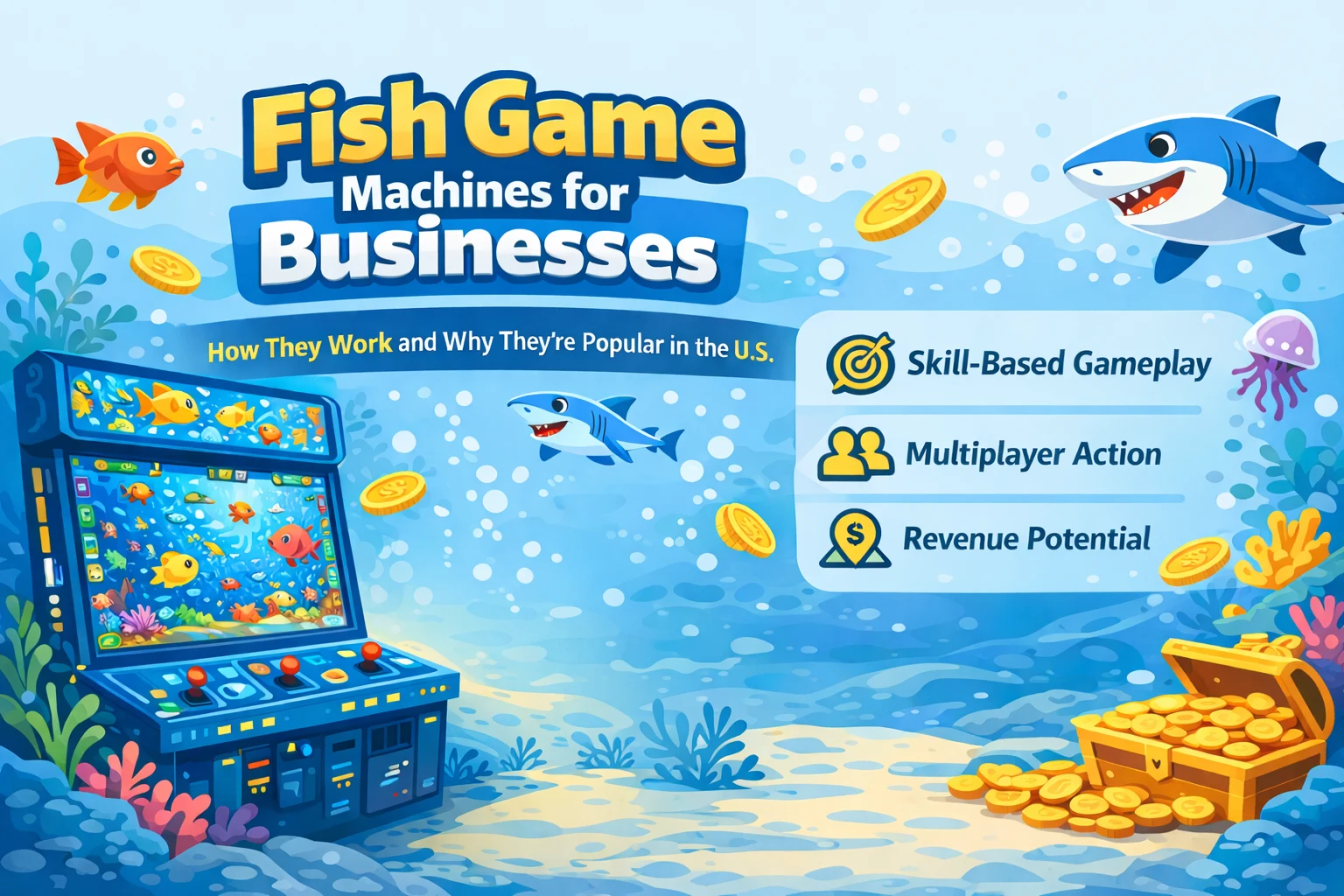
Fish game machines have become a familiar sight in many non-casino locations across the United States. You’ll see them in game rooms, convenience stores, gas stations, and entertainment-focused venues. Operators notice demand, but many still ask the same questions:
- What exactly are fish games?
- How do they work?
- And why do players keep coming back?
This guide explains fish game machines from an operational point of view. The goal is simple: help business owners understand what these games are, how they function, and why they continue to perform in U.S. commercial environments.
What Are Fish Game Machines?
Fish game machines are arcade-style shooting games where players aim at animated fish on a screen. Each fish has a point value. Players shoot using buttons or touch controls, and successful hits earn points or credits.
These games are often called:
- fish shooting games
- fish table games
- fish arcade machines
Why They’re Considered Skill-Influenced
Unlike traditional slot-style games, fish games involve active player input:
- Players choose targets
- Timing and aim matter
- Decisions affect outcomes
While system settings control overall behavior, players feel a direct connection between skill and results. This perception is a key reason fish games are usually positioned as skill-influenced arcade games rather than pure chance-based machines.
Fish Games vs Slot-Style Games
Key differences include:
- Interaction: Fish games are active; slots are passive
- Multiplayer: Many fish games support multiple players at once
- Session length: Fish games encourage longer play sessions
- Visual focus: Continuous action instead of spin-based cycles
Because of these differences, fish game cabinets attract a different type of player than traditional slot-style setups.
Why Fish Games Became Popular in the U.S.
Fish games did not originate in casinos. Their growth came from non-casino environments where interactive entertainment performs better than passive gaming.
Expansion Outside Casinos
Fish arcade machines spread quickly in:
- Game rooms
- Sweepstakes locations
- Convenience stores
- Entertainment lounges
These venues needed games that:
- Keep players engaged
- Encourage repeat visits
- Work in shared public spaces
Fish games fit that need.
Strong Appeal to Competitive Players
Fish games attract players who enjoy:
- Competition
- Visual feedback
- Improving performance over time
Younger and competitive players often prefer games where actions feel meaningful. Multiplayer fish tables amplify this effect by letting players compete on the same screen.
Multiplayer = Longer Sessions
Multiplayer design leads to:
- Social interaction
- Longer average sessions
- Increased engagement without constant resets
This is one reason operators often see steady usage rather than quick, high-turnover play.
How Fish Game Machines Work
Fish game machines may look complex, but the underlying mechanics are straightforward.
Core Gameplay Mechanics
Most fish shooting games include:
- A moving underwater scene
- Fish with different sizes and values
- Weapons with adjustable fire rates
- A scoring or credit system
Players shoot at fish. Larger or faster fish are harder to defeat but offer higher rewards.
Skill vs System Settings
Skill influences:
- Target selection
- Timing
- Resource management
System settings influence:
- Fish spawn rates
- Difficulty balance
- Overall payout behavior
The system creates structure. The player experience creates engagement.
Multiplayer vs Single-Player Setups
Multiplayer fish tables:
- 4–8 players on one screen
- Shared targets
- Competitive environment
Single-player or upright cabinets:
- Individual screens
- Less competition
- Easier placement in smaller locations
Both formats can perform well, depending on space and audience.
Where Fish Game Machines Perform Best
Fish game performance depends heavily on location and placement.
High-Performing Environments
Fish game cabinets tend to do best in:
- Game rooms and sweepstakes locations
- Convenience stores with evening traffic
- Entertainment-focused venues
These locations support longer dwell times and repeat visits.
Why Placement Matters
Important placement factors include:
- Visibility from entrances
- Space for multiple players
- Minimal screen glare
- Comfortable standing or seating positions
Poor placement often leads to underperformance, even with strong software.
Revenue Characteristics
Fish game machines are known for steady engagement rather than short bursts of play.
Engagement Over Quick Cycles
Instead of fast, repetitive spins, fish games create:
- Longer sessions
- Gradual learning curves
- Ongoing player interest
This often results in consistent usage patterns rather than sharp peaks.
Factors That Influence Performance
Performance varies based on:
- Cabinet type and size
- Game balance and tuning
- Number of simultaneous players
- Staff familiarity with gameplay
There are no guaranteed outcomes. Results depend on setup, audience, and daily operations.
Legal & Operational Considerations
Fish games are often positioned as skill-based, but operators should stay informed.
Skill-Based Positioning
Fish games emphasize:
- Player input
- Decision-making
- Active participation
This distinction matters in many jurisdictions, but enforcement attitudes differ by location.
Importance of Transparent Software
Operators should work with systems that provide:
- Clear logic
- Consistent behavior
- Reliable reporting
Understanding how the software works helps operators explain the games if questions arise.
Local Awareness Matters
No single rule applies everywhere. Business owners should understand:
- Local enforcement history
- Regional attitudes toward fish games
- Operational expectations
This is not legal advice—just practical awareness.
Hardware & Cabinet Types
Hardware quality directly affects player experience.
Fish Tables
Fish table games typically feature:
- Large horizontal screens
- Multiple player stations
- Shared underwater environments
They work best in locations with space and social traffic.
Upright Fish Cabinets
Upright cabinets offer:
- Smaller footprint
- Single or dual-player options
- Easier placement
They’re common in convenience stores and compact venues.
Multi-Game vs Single-Title Systems
Multi-game systems:
- Multiple fish game variations
- Broader appeal
- Easier content rotation
Single-title machines:
- Focused experience
- Simpler interface
- Lower complexity
Build Quality Matters
Commercial environments require:
- Durable cabinets
- High-quality screens
- Reliable cooling and power components
Low-quality hardware often leads to downtime and player frustration.
How Riverslot Supports Fish Game Deployments
Riverslot provides fish game solutions designed specifically for U.S. business environments.
Built for Commercial Use
Riverslot fish game systems are:
- Stable under long operating hours
- Designed for public locations
- Optimized for consistent performance
These are not home arcade products.
Software Stability and Reporting
Key features include:
- Reliable game performance
- Clear operational reporting
- Consistent system behavior
This helps operators monitor activity and maintain smooth operations.
Part of a Broader Ecosystem
Riverslot fish games integrate with:
- Sweepstakes-style environments
- Multi-game setups
- Centralized management systems
This allows businesses to offer fish games as part of a larger entertainment mix rather than standalone machines.
Common Mistakes Operators Make
Many underperforming setups fail for avoidable reasons.
Treating Fish Games Like Slots
Fish games need:
- Player learning time
- Explanation from staff
- Interactive positioning
They don’t perform well when treated as “press and wait” machines.
Poor Cabinet Placement
Common issues include:
- Hidden locations
- Screen glare
- Insufficient space for players
Visibility drives engagement.
Low-Quality or Unbalanced Software
Problems include:
- Unclear gameplay
- Inconsistent behavior
- Player frustration
Quality software matters more than flashy visuals.
Ignoring the Learning Curve
New players need time to understand:
- Target values
- Weapon behavior
- Multiplayer dynamics
Locations that support this learning phase often see better long-term results.
Future Outlook for Fish Game Machines
Fish game machines continue to evolve.
Ongoing Demand in Non-Casino Locations
Demand remains strong in:
- Game rooms
- Convenience-focused venues
- Entertainment lounges
These environments value interactive, social games.
Hybrid Models
Many operators now combine:
- Fish arcade machines
- Sweepstakes-style systems
- Multi-game platforms
This hybrid approach spreads engagement across different player types.
Improved Visuals and Mechanics
Future developments focus on:
- Better graphics
- Smoother animations
- Deeper competitive elements
The core concept remains the same, but execution continues to improve.
Final Takeaway
Fish game machines are popular because they combine:
- Skill-based interaction
- Competitive multiplayer gameplay
- Strong visual engagement
But success is not automatic. Performance depends on:
- Proper setup
- Quality software
- Smart placement
- Understanding how players interact with the games
Riverslot provides reliable fish game solutions designed for U.S. businesses.
Contact our team to explore fish game setups that fit your location and audience.